https://global.rokid.com/blogs/articles.atom Rokid - Discover More About AR Glasses 2025-09-17T00:19:38-07:00 Rokid https://global.rokid.com/blogs/articles/how-rokid-ar-spatial-enhances-your-daily-life-from-travel-to-office-1 2025-09-17T00:19:38-07:00 2025-09-17T00:19:40-07:00 How Rokid AR Spatial Enhances Your Daily Life: From Travel to Office KuoAnna Nowadays, striking the perfect balance between productivity, entertainment, and comfort is definitely a challenging task in our fast-paced lives. Whether commuting to work, managing multiple tasks in the office, or trying to relax with a movie at home, the limitations of traditional screens and devices often hold us back. That’s where Rokid AR Spatial comes in. As one of the best affordable AR spatial computing devices, it seamlessly blends into our daily lives, from travel to the office.

How Rokid AR Spatial Upgrades the Viewing Experience

1. Challenges with Traditional Viewing

Whether it's home viewing or on-the-go viewing, we are often restricted by device size. The small screens make it difficult to fully engage with the content, especially for detailed movies or high-definition videos. While IMAX theaters deliver a more immersive viewing experience, they require special trips and often come with high ticket prices, which can be a deterrent..

2. Full-screen Immersive Experience of Rokid AR Spatial

With a 300-inch colossal virtual display, Rokid AR Spatial offers a full-screen immersive experience akin to having your own private cinema, where you can enjoy your favorite movies, shows, and videos, whether you're on your couch at home, on a long-haul flight, or in the park. Simply put on the device to immerse yourself in your content.

Equipped with a 1200p OLED panel (1920×1200 resolution) and a 120Hz refresh rate (adjustable between 60Hz and 120Hz), it ensures ultra-smooth visuals. The higher refresh rate can reduce motion artifacts and flickering, mitigating eye fatigue for prolonged viewing comfort.

How to Create an Immersive Gaming Experience

1. Issues with Traditional Gaming

2D Screens: Traditional gaming devices, such as desktops, laptops, and consoles, rely on flat 2D screens, which limit depth perception. This significantly diminishes immersion, leaving players disconnected from the virtual experience.

VR Headsets: While VR headsets furnish a more immersive experience, they are often bulky and uncomfortable for extended use. For players with myopia, the added inconvenience of wearing glasses underneath the headset further exacerbates discomfort.

High Latency: Another major drawback in traditional gaming, particularly in gesture-based interactions, is high latency. Delayed system responses disrupt gameplay fluidity and negatively impact the overall user experience.

2. How Rokid AR Spatial Reshapes Gaming Experience

What players seek is not just high frame rates and stunning graphics, but complete immersion. Rokid AR Spatial can render highly realistic game visuals, forming a spatial sense with true depth. Its high-precision motion sensors and multi-dimensional interaction capabilities enable players to truly step inside the game world rather than just watching the game.

In addition, this AR solution also includes built-in diopter adjustment (0.00D to -6.00D), allowing nearsighted players to enjoy sharp visuals without additional glasses. For those requiring correction beyond this range or needing solutions for farsightedness or astigmatism, custom prescription lenses are also compatible, ensuring an optimal viewing experience for every player.

Most importantly, Rokid AR Spatial is built on a deep customization of AOSP (Android Open Source Project) and is compatible with the Android ecosystem. Theoretically, all Android applications can run on YodaOS-Master. This means that players can always experience the latest games.

How Rokid AR Spatial Improves Office Efficiency

In a typical office environment, employees often need to juggle multiple tasks simultaneously. Frequent switching between different application windows on a computer can be time-consuming and inefficient, reducing overall productivity. For creative projects, flat displays can't fully showcase 3D models, design concepts, or other creative works.

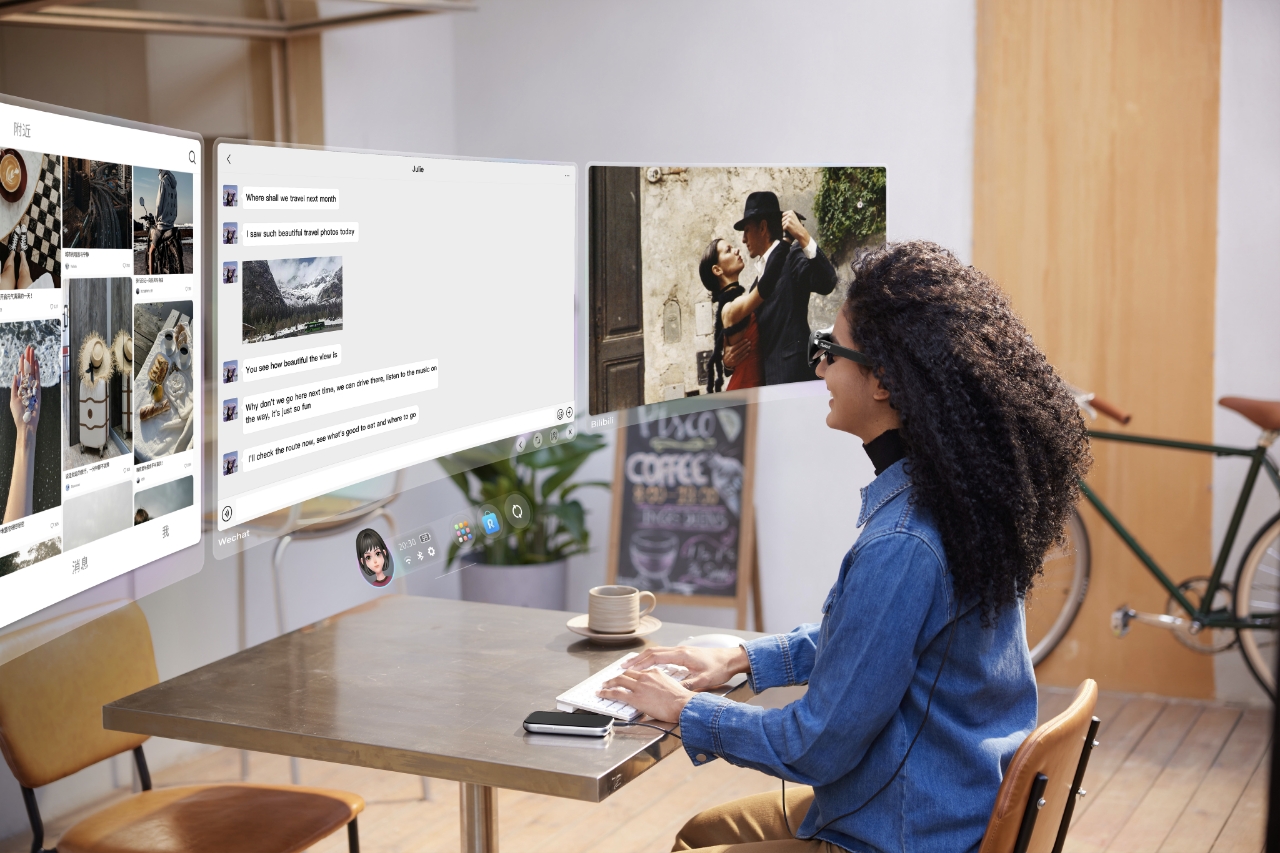
Rokid AR Spatial revolutionizes this experience with multi-screen interaction, projecting up to three virtual screens simultaneously within your field of vision. This breakthrough enables truly seamless multitasking without minimizing windows or losing your workflow. Moreover, the advanced spatial computing capabilities take teamwork to the next level, making ideas and creativity instantly visualizable.

How Rokid AR Spatial Changes Commuting

When commuting by subway or bus, mobile entertainment such as watching videos, e-book reading, or playing games on mobile devices is often affected by the shaking and movement of the vehicle. This can make the viewing or gaming experience uncomfortable and even nauseating.

Rokid AR Spatial introduces a Motion Mode that is designed for use during travel or light physical activity. This mode minimizes motion blur, distortion, and jitter, helping to prevent the dizziness that often occurs when wearing AR glasses during movement. Even during vigorous activity, the display remains stable, with no drift or ghosting, enhancing user comfort.

How Rokid AR Spatial Enhances Business Trips

1. Problems of a Business Trip

Equipment Carry: Business travelers often need to carry a variety of devices, including laptops, projectors, and presentation materials. This can be a heavy burden, especially during long trips or when frequent movement is required.

Presentation Trouble: Setting up presentation equipment in a new location can also be a cumbersome process, often involving complex cables, software compatibility issues, and technical malfunctions. Not to mention that static images or 2D presentations may not be able to fully convey the features and advantages of a product.

2. How Rokid AR Spatial Boosts Business Travel

Enhanced Business Presentation Efficiency: Rokid AR Spatial streamlines the business presentation process. With its augmented reality capabilities, it can directly project interactive and immersive product demonstrations right in front of the audience, eliminating the need to carry bulky projectors or go through complicated setup procedures. This not only saves time but also makes the presentation more engaging and effective, helping business travelers leave a deeper impression on clients and partners.

Mobile Office with Long-Lasting Power: The affordable AR headset is equipped with a 5000mAh battery, supporting 2.5 hours of uninterrupted use. Moreover, it supports charging while in use, ensuring that business travelers can maintain high efficiency throughout their journey.

Conclusion

Rokid AR Spatial is not just a device; it's a gateway to a new era of immersive interaction. Especially in today's fast-paced world, it seamlessly integrates into various aspects of daily life, from travel to office work and beyond.

As one of the best budget AR headsets available, it presents unparalleled value for its price. Whether you're a gamer, a professional, or someone looking to enhance their daily life, Rokid AR Spatial is the perfect choice. Ready to experience?

]]>
https://global.rokid.com/blogs/articles/649-vs-3-499-how-rokid-ar-spatial-breaks-the-price-barrier 2025-09-17T00:16:17-07:00 2025-09-17T00:16:19-07:00 $649 vs $3,499: How Rokid AR Spatial Breaks the Price Barrier KuoAnna Have you ever wondered if you could experience the futuristic spatial computing technology seen in sci-fi movies without breaking the bank? Currently, major tech companies are racing to bring immersive AR experiences to consumers. Among them, Rokid AR Spatial and Apple Vision Pro stand out as two highly anticipated devices. However, while Apple’s offering comes at a premium price of $3,499, Rokid challenges the market with an accessible alternative at $649.

This article will conduct a comprehensive comparison, revealing how Rokid AR Spatial delivers an impressive AR spatial computing experience at just 1/5 the price of Apple Vision Pro.

Overview of Apple Vision Pro vs. Rokid AR Spatial

Apple Vision Pro

Born from Apple's powerful technological ecosystem and deep engineering expertise, Apple Vision Pro stands as the company's flagship entry into spatial computing. Since its launch, it has carried high expectations for revolutionizing human-computer interaction and redefining digital lifestyles. With its $3,499 price point, Apple clearly positions this cutting-edge device for the high-end market segment.

Rokid AR Spatial

Rokid AR Spatial targets the mass consumer market. As an accessible smart device for everyday life, it is suitable for various scenarios, such as daily commuting, work, and relaxation.

Priced at $649, it showcases an affordable gateway for consumers eager to explore AR without breaking the bank. This accessible price point democratizes AR technology, inviting students, young professionals, and tech-curious individuals alike to experience the joy and utility of AR.

Core Feature Comparison

1. Display Quality

Apple Vision Pro is equipped with high-resolution micro-OLED displays, with each eye's display measuring 1.4 inches and boasting 23 million pixels, achieving a pixel density of 4,000 pixels per inch. This allows it to present stunning images with vibrant colors and sharp details. However, the relatively small display size of Vision Pro may limit the amount of content that can be displayed simultaneously.

Rokid AR Spatial facilitates a larger display and higher pixel density, culminating in a more immersive and detailed viewing experience. It is capable of projecting up to three virtual screens simultaneously within your field of view, making it the ultimate AR glasses for productivity. The headset supports a resolution of 1920×1080 and a refresh rate of 120Hz. Additionally, it offers a contrast ratio of 100,000:1 and an eye brightness of 600 nits.

2. Wearing Comfort

The Apple Vision Pro, being a larger and heavier device, might lead to discomfort if used for extended periods. Moreover, it necessitates a headband and an external battery pack, which can raise the overall weight and bulkiness.

On the other hand, the Rokid AR Spatial is characterized by its portable and lightweight design, with the entire device weighing only about 72 grams, ensuring comfortable wear over long-lasting durations. Thoughtful ergonomics distribute weight evenly across your head, thereby minimizing pressure points. The air nose pad lowers pressure on the nasal bridge. Furthermore, it eliminates the need for a separate battery pack.

3. Interaction Experience

The Apple Vision Pro employs a variety of input methods, including hand gestures, eye tracking, and voice commands. While these input methods supply a high degree of precision and flexibility, they can also be complex and difficult for novice users.

In contrast, the Rokid AR Spatial possesses a more intuitive and user-friendly interaction system. It supports touch gestures, voice commands, and a dedicated remote control. These functions lower the learning curve, making it accessible to users of all skill levels.

4. Ecosystem Compatibility

Apple Vision Pro is deeply integrated with the Apple ecosystem, enabling seamless connectivity with devices like the iPhone and Mac, along with exclusive services such as AirPlay screen mirroring and Handoff. While basic cross-platform functionality can be achieved through web browsers or third-party apps, the core experience is optimized for Apple devices, and non-Apple users may not have access to the full range of features.

Powered by YodaOS-Master, a customized operating system based on AOSP (Android Open Source Project), Rokid AR Spatial maintains full compatibility with the Android app ecosystem. In principle, all Android applications can run on the platform. Furthermore, Rokid's expanding ecosystem features regular additions of new applications and services, guaranteeing users access to cutting-edge content and functionality.

5. Visual Adaptation and Intelligent Adjustment Functions

Both devices incorporate ambient light-adaptive display optimization but differ significantly in their vision correction approaches.

The Apple Vision Pro requires users to purchase separate Zeiss optical inserts for vision correction. This not only adds to the overall cost but also creates additional setup steps before first use.

On the other hand, the Rokid AR Spatial offers built-in diopter adjustment covering 0.00D-6.00D, providing immediate visual clarity for most nearsighted users. For those requiring correction beyond this range, including hyperopia or astigmatism cases, the device remains compatible with third-party prescription lenses.

Conclusion

While Apple Vision Pro leads the premium AR market with advanced features, Rokid AR Spatial makes spatial computing technology truly accessible. With its competitive pricing, intuitive design, and strong compatibility, it opens the AR world to a wider audience.

Ready to experience spatial (AR) computing without the luxury price tag? Discover Rokid AR Spatial today.

]]>
https://global.rokid.com/blogs/articles/can-i-use-ar-if-i-wear-glasses-how-ar-smart-glasses-for-myopia-work 2025-09-17T00:08:26-07:00 2025-09-17T00:10:33-07:00 Can I Use AR if I Wear Glasses? How AR Smart Glasses for Myopia Work? KuoAnna In recent years, VR+AR devices have experienced explosive growth in the consumer market. According to the latest data from IDC[1], global AR/VR headset shipments will grow 10% in 2024. These immersive devices are increasingly becoming a part of our daily lives, whether for entertainment, education, or professional applications. Notably, among the growing user base of VR and AR, the proportion of myopic individuals is significant.

So, can glasses-wearing myopic individuals use AR smart glasses? We will address this common concern and offer practical reference suggestions for myopic users when choosing and using these devices in this blog.


Problems of Myopic Users Wearing AR Smart Glasses

1. Degraded Visual Quality

Traditional AR glasses are typically designed with normal-vision users in mind. Myopic users who wear them directly experience blurred virtual images. Some users attempt to wear their prescription glasses underneath AR smart glasses, but this glasses-over-glasses approach causes multiple optical distortions:

First, the air gap between the two lens layers creates additional refraction;

Second, the optical center of the prescription lenses rarely aligns perfectly with the AR display system;

Finally, reflections between lenses cause ghosting and glare.

2. Compatibility Issues

Another significant problem is compatibility. AR smart glasses feature specific optical structures and frame configurations, often lacking adequate space to comfortably accommodate prescription eyewear. This issue becomes particularly acute with fully enclosed AR devices, where the sealed design physically prevents simultaneous wear of corrective glasses. Furthermore, the combined weight distribution of two stacked frames frequently leads to pressure points on the ears and nasal bridge, with most users reporting noticeable discomfort within minutes of use.

3. Wearing Inconvenience

The double-wearing approach not only affects visual experience but also creates numerous practical inconveniences. Users must repeatedly adjust the positioning of both glasses, which is especially challenging to maintain stability during movement. In scenarios requiring frequent removal (such as during conversations), the process becomes particularly troublesome. More critically, this unstable wearing method compromises the eye-tracking accuracy of AR smart glasses, leading to failed interactive functions. In some cases, this improper wearing method may even cause physical damage to either the prescription glasses or the AR device.

How Rokid AR Smart Glasses Solve These Issues

1. Built-in Diopter Adjustment

Our Rokid AR smart glasses innovatively integrate an adjustable electronic diopter system, ranging from 0.00D (no correction) to -6.00D (myopia correction). This system precisely moves internal optical components to change the focal distance of the virtual image, effectively "building in" myopia correction functionality. Users can simply adjust the knob on the device to find the optimal visual setting without any tools.

2. Prescription Lens Support

If your prescription falls outside the built-in adjustment range or if you have hyperopia or astigmatism, our glasses can accommodate other prescription lens solutions.

Additionally, we offer a professional custom lens service. Users can provide the prescription information to obtain correction lenses that perfectly match the AR optical system. These lenses are made of ultra-thin, high-refractive-index materials and are coated with a special anti-reflective coating. Most importantly, the custom lenses are installed as part of the optical path inside the device rather than being added externally, thus completely avoiding the optical loss associated with traditional methods.

3. Comfort and Wearability

At Rokid, we place great emphasis on enhancing wearing comfort. Our smart glasses for myopia are designed to be lightweight, such as the Rokid AR Spatial, which weighs only 75 grams, ensuring that even prolonged use does not impose an excessive burden on the face. The comfortable nose bridge is ergonomically engineered to evenly distribute pressure, reduce discomfort, and prevent skin indentations.

]]>
https://global.rokid.com/blogs/articles/are-ar-lens-glasses-worth-it-do-ar-glasses-hurt-your-eyes 2025-09-17T00:07:17-07:00 2025-09-17T00:07:24-07:00 Are AR Lens Glasses Worth it? Do AR Glasses Hurt Your Eyes? KuoAnna In recent years, the consumer market has witnessed a remarkable surge in the development and popularization of AR lens glasses. These innovative devices offer users a novel and immersive experience that harmoniously integrates digital content with the physical environment. As they become increasingly accessible, questions naturally arise: Are AR lens glasses truly worth the investment? And do they pose any risks to our eye health? This article will answer these queries, providing comprehensive insights and practical suggestions to assist consumers in making informed decisions.

Are AR Lens Glasses Worth it?

1. Convenience in Daily Life

Entertainment: AR lens glasses revolutionize our engagement with games and movies, presenting an immersive experience that far surpasses traditional screen-based entertainment. Virtual characters and scenes blend seamlessly into reality. Therefore, players can chase projected game monsters around their living room or enjoy a cinema-sized screen in their bedroom. This technology transforms entertainment from passive "watching" to active "participation," transcending physical limitations.

Work Scenarios: AR lens glasses have proven to be invaluable tools for enhancing productivity. In fields such as design and architecture, they enable designers to visualize their 3D creations within the actual physical space, facilitating more accurate and efficient design processes. In remote collaboration, team members can use AR lens glasses to share and interact with virtual models and documents in real time, breaking down geographical barriers and improving communication and collaboration.

Education: These smart AR glasses open up new possibilities for interactive and immersive learning. They can bring textbooks to life by overlaying 3D models, animations, and interactive content onto printed pages, making learning more engaging and effective. Students can explore historical events, scientific concepts, and complex structures in a hands-on and interactive manner, enhancing their understanding and retention of knowledge.

2. Potential for Technological Development

AR lens glasses are not just a passing trend; they may represent the future of smart terminal devices. They are expected to become more powerful, versatile, and deeply integrated into our daily lives, serving as our primary interface for accessing information, communicating with others, and interacting with the digital world.

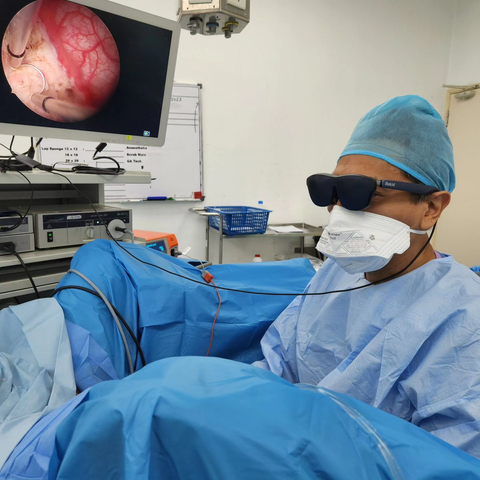
Moreover, their applications are rapidly expanding across various industries. In healthcare, AR lens glasses can be used for surgical training, remote consultations, and patient education. They also deliver immersive shopping experiences to customers, allowing them to visualize products in their own homes before making a purchase.

Do AR Glasses Hurt Your Eyes

1. Safety under Scientific Use

Contrary to some concerns, when used within reasonable time limits and in the correct manner, AR lens glasses do not have a significant adverse impact on vision. A study[1] found that when users adhered to the recommended usage guidelines, there was no notable decline in visual acuity or increase in eye strain over an extended period. This indicates that as long as users are mindful of their usage habits, AR glasses can be safely incorporated into our daily routines.

2. Key Factors of AR Lens Glasses Affecting Vision

However, several factors related to AR lens glasses can influence visual comfort and potentially affect eye health.

(1) Equipment Parameters

A high-resolution display ensures sharp and clear images, reducing the strain on the eyes to focus. A high refresh rate, on the other hand, minimizes motion blur and flickering, which can cause eye fatigue and discomfort. For example, a display with a 1080p resolution and 60Hz or higher is typically considered more comfortable for extended use.

(2) Display Characteristics

Improper brightness and contrast settings can cause glare, eye strain, and headaches. It is vital to adjust these settings based on the ambient light and personal preferences to ensure a comfortable viewing experience.

Additionally, for users with myopia or hyperopia, the lack of diopter adjustment in some AR glasses may trigger visual discomfort and worsen eye conditions. Choosing smart safety glasses with a diopter adjustment function is highly recommended for these users, such as Rokid AR Spatial.


Explore the Design Advantages of Rokid AR Spatial

As one of the best AR lens glasses, Our Rokid AR Spatial prioritizes user comfort and eye protection, incorporating several eye-friendly features: 

1. Sleek and Lightweight Design

Rokid AR Spatial can significantly reduce the discomfort associated with long-term wear. Weighing only 75 grams, it can be worn for extended wear without causing fatigue or strain on the nose and ears.

2. High Resolution and High Refresh Rate Displays

The safety smart glasses are equipped with a 1200p OLED panel, and the resolution of each eye reaches 1920×1200 pixels, surpassing many other AR glasses on the market. Additionally, its refresh rate reaches up to 120Hz, which can be adjusted between 60Hz and 120Hz according to user preferences. This high refresh rate not only makes images and animations smoother but also effectively reduces screen flickering, thereby minimizing eye fatigue and discomfort.

3. Built-in Blue Light Filtering Technology

Blue light emitted from digital devices is correlated with eye strain, sleep disruption, and other health issues. Rokid AR Spatial effectively filters out a significant portion of harmful blue light, safeguarding eyes from potential harm and mitigating the likelihood of eye fatigue or other related problems.

4. Diopter Adjustment Function

Rokid AR Spatial allows users with myopia or hyperopia to customize their vision correction according to their individual needs, with adjustments ranging from 0.00D (no correction) to -6.00D (myopia correction). This not only ensures a clear and comfortable viewing experience but also enhances eye protection by reducing the strain on the eyes to focus. If your prescription falls outside the built-in adjustment range, or if you have hyperopia or astigmatism, Rokid AR Spatial can also accommodate other prescription lens solutions.

How to Use AR Lens Glasses Scientifically

1. Reasonable Usage Time

To ensure the safe and comfortable use of AR lens glasses, it is crucial to adhere to reasonable usage times. It is advisable to limit continuous engagement to no more than 30 minutes at a time, with breaks of at least 10 minutes to make eyes rest and recover. This approach helps minimize the risk of eye strain and other vision-related issues.

2. Ambient Light

The ambient light conditions can also have a significant impact on visual comfort and eye health. Avoid excessively bright or dark settings, as they can cause glare or decrease display clarity. If needed, enable anti-glare filters or tweak brightness/contrast settings for optimal viewing through AR optics.

3. Regular Inspection

Schedule an eye exam at least once a year. An optometrist can assess eye health and suggest adjustments for safer AR headset operation. If you notice persistent discomfort, blurred vision, or headaches while wearing smart glasses, consult a professional immediately.

Conclusion

AR lens glasses represent a transformative leap in how we interact with digital content, facilitating unparalleled convenience across entertainment, work, and education. As demonstrated by our Rokid AR Spatial, which combines high-resolution displays (1200p per eye), adjustable refresh rates (up to 120Hz), and built-in eye protection features (including blue light filtering and diopter adjustment), it conveys immersive experiences without compromising visual comfort.

Final Verdict:

ü Are AR Lens Glasses Worth It? Absolutely—ideal for immersive multitasking, gaming, and beyond.

ü Do AR Glasses Hurt Your Eyes? Minimal, with proper use and quality hardware.

Reference

[1]. Available at: https://pubmed.ncbi.nlm.nih.gov/38583059/

]]>
https://global.rokid.com/blogs/articles/rokid-x-gamesir-co-branded-ar-game-controller-is-here 2025-09-09T00:56:50-07:00 2025-09-09T00:57:06-07:00 Rokid x GameSir Co-Branded AR Game Controller is Here! KuoAnna Amid the trend of deep integration between mobile gaming and augmented reality (AR) technology, the co-branded AR game controller from Rokid and GameSir is here! This revolutionary collaboration showcases the combined expertise of both parties in the realms of technology and design. This article will explore the journey behind this innovative AR game controller and the development process, uncovering how it brings an unprecedented immersive game experience to players.


The Genesis of Collaboration

With AR technology maturing, the demand for AR immersive experiences in the gaming market continues to grow. As a pioneer in the AR field, we possess extensive expertise in optical display and spatial computing technologies. Meanwhile, our partner, GameSir, with its rich experience in gaming peripherals, has a deep understanding of players' control needs.

Both Rokid and GameSir observed a gap in the market for a portable, multifunctional AR game controller that could seamlessly integrate with AR glasses. Recognizing the potential of combining AR technology with a game controller to significantly enhance the immersion of mobile gaming, we agreed that a collaborative effort was necessary. Consequently, we joined forces to develop an AR game controller that not only interfaces perfectly with AR smart safety glasses but also offers a variety of features, filling a void in the market.

Development Process of the Co-branded AR Game Controller  

This collaboration has united the core team from Rokid and GameSir. Rokid's spatial computing experts, with their profound technical acumen, ensure robust AR compatibility and visual performance for the product. Meanwhile, GameSir's seasoned industrial designers and interaction engineers, focusing on ergonomics and control logic, guarantee the controller's comfort and operational responsiveness. The team from both sides has convened numerous in-depth discussions to map out the product's development trajectory and fine-tune its details. From initial game controller drawings to 3D modeling, this AR game controller has undergone several evolutionary phases.

At the project's inception, both teams engaged in several brainstorming sessions, generating innovative ideas ranging from the controller's button layout and material selection to its connection methods with AR glasses. However, the development process presented numerous challenges, the most significant of which was how to integrate advanced haptic feedback capabilities while maintaining the controller's palm-sized portability and comfort for extended use. Team members conducted extensive user research and data analysis, continuously experimenting with different design schemes to find the optimal balance between functionality and comfort.


Presentation of the Co-branded AR Game Controller

1. Design Aesthetics

The Rokid x GameSir co-branded AR game controller showcases an exquisite blend of technology and aesthetics. Its ergonomic design, with smooth curves that naturally conform to the palm's contour, effectively reduces hand fatigue during extended gaming sessions or casual play.

In addition, this AR game controller features a two-tone color scheme; the front boasts a metallic silver-gray finish that exudes a stylish and sophisticated look, highlighting its technological allure. The sides and back are classic black, adding a sense of stability to the controller.


2. Core Features

The controller comes equipped with GameSir's advanced ultra-responsive control system, ensuring swift button feedback for an enhanced gaming experience. When combined with Rokid AR Spatial's 300-inch virtual screen, 120Hz refresh rate, and 4K resolution, players enjoy a seamless integration of controls and visuals. Whether you're battling demons in "Black Myth: Wukong" or exploring open-world landscapes, the immersive experience is truly unparalleled. Additionally, the controller supports Bluetooth connectivity with Rokid Station2, making it user-friendly and accessible for newcomers to quickly master.

This bundle offers the freedom to play anywhere. The Rokid Max2 glasses, weighing a mere 75 grams, are designed for high portability. Its motion stabilization mode guarantees stable visual effects even during bumpy journeys or flights. Paired with the ergonomically crafted AR game controller, this kit easily fits into your bag, permitting you to indulge in thrilling gaming experiences during commutes, travels, or relaxed weekends.


Conclusion

The introduction of the Rokid x GameSir co-branded AR game controller is a shining example of the profound integration of AR technology with gaming peripherals. This collaboration not only fills a significant gap in the market but also redefines the immersive experience in mobile gaming by leveraging the advantages of AR.

We are committed to working with more outstanding partners to bring users the ultimate experience.

]]>
https://global.rokid.com/blogs/articles/how-immersive-will-ar-get-which-spatial-apps-can-you-enjoy-with-the-rokid-ar-spatial 2025-09-09T00:06:05-07:00 2025-09-09T00:06:12-07:00 How Immersive Will AR Get? Which Spatial Apps Can You Enjoy with the Rokid AR Spatial? KuoAnna AR has evolved dramatically over the past decade, transitioning from basic overlays to full spatial computing experiences. This shift has been fueled by advancements in processing power, sensor technology, and artificial intelligence, allowing for increasingly immersive and interactive digital overlays. Rokid AR Spatial stands at the forefront of this evolution, breaking the boundaries of real-world integration, interactivity, and immersion. But how immersive will AR get, and what can we experience right now?

How Immersive Will AR Get?

AR continues to push the boundaries of how we interact with the digital and physical worlds. The question "How immersive will AR get?" depends on existing technologies and future advancements that aim to deepen sensory integration and environmental interaction.

1. Current AR Technologies

  • SLAM (Simultaneous Localization and Mapping): As a foundational technology, it facilitates AR devices to construct real-time maps of the environment while tracking their own positions, thereby accurately overlaying virtual content.
  • Depth Perception: Modern AR systems, with advanced sensor technology, can accurately detect the spatial relationship between objects and accurately measure parameters such as distance, size, and shape. This lays a more realistic foundation for the integration of virtual elements with real scenes.

2. Future Trends

  • Hardware Advancements: Future AR headsets will feature a wider field of view (FoV) with more ergonomic and lighter design. Meanwhile, the enhanced battery life and increased computing power will support longer-lasting and more complex AR immersion experiences.
  • AI-Driven Real-Time Environmental Adaptation: AI will empower dynamic environmental understanding in AR applications, allowing virtual objects to intelligently respond to changes in the real world. This includes automatic adjustments of lighting, shadows, and physical interactions, making digital elements appear more natural.
  • Toward Full Immersion: Future AR technology is expected to achieve more comprehensive sensory immersion. For example, the haptic feedback technology may permit users to feel realistic touch sensations when interacting with virtual objects. Additionally, brain-computer interface technology may allow users to interact with AR systems directly through brain signals, promoting more natural and efficient operations.

With the convergence of these technologies, the answer to the question "How immersive will AR get?" may be: indistinguishable from reality.


Which Spatial Apps Can You Enjoy with the Rokid AR Spatial?

As an innovative product in the AR field, Rokid AR Spatial is reshaping the way people interact with the digital due to its unique technological advantages and rich functionalities. It features lightweight design, high-resolution display, outstanding interaction capabilities (such as gesture recognition and voice control), ensuring users to naturally and smoothly interact with virtual elements. So, what amazing spatial applications can we experience with this device? Let's delve into this exploration together.

1. Productivity Tools

Rokid AR Spatial supports a wide range of productivity apps, transforming everyday tasks into immersive experiences:

  • Microsoft Mesh: Leverage Rokid AR Spatial for collaborative 3D meetings where users can brainstorm on virtual whiteboards, share and edit 3D models, and engage in real-time discussions. It is particularly effective for global teams working on complex projects like product design or architectural planning, bridging the gap between physical and digital workspaces.
  • Spatial: Our Rokid AR Spatial turns your workspace into a 3D command center. Users can clearly organize and view documents, pictures, videos, and other materials through Rokid AR Spatial's high-resolution display and wide field of view. Meanwhile, its excellent interactive functions facilitate real-time collaboration with team members.
  • Gravity Sketch: With the support of Rokid AR Spatial, users can freely draw, stretch, and deform in the air to quickly create various 3D models. Whether it is a designer coming up with creative ideas or an engineer making a concept model, Rokid AR Spatial can help greatly improve work efficiency and allow creativity to flow more freely.
  • Adobe Aero: Using Rokid AR Spatial, designers can convert their flat design works into 3D scenes with interactive functions, adding animations and interactive elements. These 3D scenes can then be showcased to clients or team members, presenting design concepts more intuitively and enhancing communication effectiveness.


2. Entertainment Experiences

Rokid AR Spatial enriches your leisure time with a diverse array of entertainment-oriented apps, making every moment immersive and engaging.

(1)Immersive Gaming Experience

  • Pokémon GO AR+: Rokid AR Spatial upgrades the "Pokémon GO AR+" experience with its advanced spatial perception and interaction technologies. The high-performance processor and optimized graphics rendering ensure smooth and stable game visuals, making the lively Pokémon appear lifelike in various environments, with vivid lighting and detailed actions. Additionally, its gesture-based interaction system enhances the natural and smooth interaction between players and Pokémon.
  • Ingress Prime: This game combines virtual strongholds with real-world locations, creating unique outdoor AR adventures. Rokid AR Spatial's precise spatial mapping and tracking enable seamless integration of virtual elements into the physical environment, allowing players to fully engage in the game as they explore the real world.

(2) Cinematic Experiences

  • Giant Screen Mode: No matter where you are, with just a wall, Rokid AR Spatial can create a private IMAX-level cinema for you. You can watch movies, TV shows, or other video content on this virtual giant screen, enjoying an immersive viewing experience as if you were in a luxurious movie theater.
  • Sports Mode: Specifically designed for use during commuting or light physical activities, this mode eliminates visual drift and ghosting. It ensures clear and stable visuals even in dynamic environments. By minimizing motion blur, distortion, and jitter, it effectively prevents the dizziness commonly associated with wearing smart AR glasses while in motion.

In addition to the apps mentioned above, Rokid AR Spatial also supports a range of other available entertainment apps, including YouTube, Peacock TV, Amazon Prime Video, Disney+, Netflix, Kodi, Paramount+, MAX, PLEX, and VLC.

3. 3D Educational Models

Beyond work and entertainment, Rokid AR Spatial also serves as a dynamic educational partner, facilitating access to various 3D educational models:

  • Labster: It provides a virtual laboratory simulation environment for science education. Students can enter the virtual laboratory through Rokid AR Spatial and conduct various experiments in chemistry, biology, and other fields. In the virtual environment, students can safely operate a variety of experimental equipment and reagents, observe experimental phenomena, and learn experimental principles.
  • AnatomyX AR: It offers interactive 3D human anatomy models, specifically designed for medical training. Medical students and healthcare professionals can use Rokid AR Spatial to observe in detail the structure and location of various human organs. They can also perform virtual dissection operations to learn human anatomy knowledge.

Rokid AR Spatial delivers immersive experiences to users through a rich variety of spatial applications. Thanks to its Android-based compatibility, it theoretically supports the installation of various Android AR applications. Additionally, through the screen mirroring function, it can display content from iPhones, further expanding the content options. For a complete list of supported apps, you can click to download.


]]>
https://global.rokid.com/blogs/articles/what-is-rokid-yodaos-master-how-does-it-enhance-ar-immersive-experience 2025-09-08T23:49:51-07:00 2025-09-08T23:49:54-07:00 What is Rokid YodaOS Master? How Does it Enhance AR Immersive Experience? KuoAnna The swift evolution of technology is significantly altering the manner in which humans engage with digital systems. Traditional 2D interfaces increasingly fail to meet modern demands for immersive and personalized experiences. In this context, spatial computing has emerged, making digital content breakthrough screen limitations and achieving seamless interaction in a 3D environment. Based on these insights, we have launched our revolutionary Rokid YodaOS Master system. It redefines how people connect with devices, spaces, and services, surpassing traditional human-computer interaction models and delivering an unparalleled AR immersive experience. 

What is YodaOS Master?

YodaOS-Master is our new-generation AR spatial computing system, built upon core AR capabilities such as SLAM (Simultaneous Localization and Mapping), gesture recognition, and spatial audio. It bridges the gap between people, the digital realm, and the physical world, facilitating natural interactions between virtual and real environments.

To bring these technical capabilities to life, YodaOS Master leverages Rokid AR Lite technology (a lightweight AR solution supporting spatial awareness and basic interaction) and follows the "Flowing Light and Shadow" design philosophy, integrating spatial, 3D, and dynamic lighting elements. This empowers users to interact with digital content in an intuitive and immersive way, enhancing the overall AR immersive experience.


How Rokid YodaOS Master Beyond Human-Computer Interaction?

Traditional human-computer interaction relies on physical buttons, touchscreens, or voice commands, which, though mature, lack naturalness and struggle with complex 3D operations. Our Rokid YodaOS Master has transformed these interactions, aligning them more closely with natural human behavior.

1. Real-time Spatial Computing

YodaOS Master can scan and understand the physical environment in real time, including object locations, spatial depth, plane detection (such as tables and walls), and motion tracking. This capability anchors virtual content precisely in the real world, blending the virtual and physical seamlessly, and delivers a brand-new visual and interactive experience. For instance:

  • Users can pin a virtual screen to a specific spot in a room, maintaining a stable view no matter where they move.
  • In AR games, virtual characters can navigate around real-world obstacles naturally, achieving a seamless blend of virtual and physical elements.
  • In office settings, multiple virtual screens/windows can float in the air, allowing for free adjustment of position and size.

This spatial computing-based interaction approach enables devices to adapt to natural human behaviors instead of forcing humans to conform to the devices, thereby enhancing human-computer interaction and user experience.


2. Multi-modal Interaction

  • Trackpad Interaction: By using gestures such as swiping and tapping on the trackpad, users can achieve precise control of the interface, like adjusting the position, size, and direction of virtual objects.
  • Ray Casting Interaction: Users can interact with virtual content through gaze, gestures like grasping, and movements without the need for physical contact. This interaction method is particularly suitable for long-distance operations in three-dimensional space.
  • Other Interactions: YodaOS Master also supports external keyboards, mice, and game controllers to meet the efficient input needs of professional scenarios such as office work, entertainment, and gaming.


3. High-performance Rendering and Low Latency

  • Graphical Rendering Optimization: It supports high-resolution, high-frame-rate AR content display, avoiding frame drops or trailing images.
  • Low Latency Transmission: The delay from user operation to visual feedback is controlled at the millisecond level to prevent dizziness.
  • Dynamic Load Balancing: Automatically allocates computing power based on the complexity of the scene to ensure stability during long-term use.


How Rokid YodaOS Master Enhance AR Immersive Experience?


1. Theater Mode

Theater Mode can transform any space into a private cinema, redefining immersive content consumption. When activated via the bottom window bar, the system projects a large-scale virtual screen that delivers a true theater-like experience without physical display limitations. The expansive cinematic field of view, combined with intuitive spatial UI controls, ensures that digital content like movies, presentations, and games seamlessly blend into your environment, providing a truly engaging AR immersive experience.

2. Reading Mode

By utilizing advanced spatial computing and low-latency interaction, Reading Mode makes digital text feel as natural as ink on paper. The window automatically adjusts to a compact, zoomed-in layout that mimics the size and perspective of a physical book, reducing excessive eye movement and fatigue. Adaptive brightness adjusts to ambient lighting conditions, ensuring readability in any environment, from dimly lit rooms to outdoor settings, offering a truly immersive alternative to e-readers or tablets.

3. Sports Mode

Sports Mode redefines the AR immersive experience by creating a groundbreaking solution for fitness enthusiasts and active users. The system's virtual window intelligently tracks user movements, maintaining perfect screen positioning regardless of physical activity intensity - whether running, cycling, or gym workouts. Powered by advanced spatial algorithms, it can ensure content stability and readability during even the most vigorous movements.

Unlike traditional static screens, this AR immersive experience offers truly dynamic digital content that synchronizes seamlessly with user motions rath----er than working against them.

4. Application Experience

In addition to its aforementioned features, YodaOS Master offers a rich app experience. The system seamlessly integrates desktop apps, spatial apps, and mini-programs, supporting a diverse range of applications across various fields, including office, entertainment, and education, meeting a wide array of user needs. YodaOS Master also focuses on app compatibility and scalability, being compatible with the Android ecosystem. Typically, all Android apps can run on YodaOS Master, allowing users to install and uninstall applications as they wish and personalize their settings and adjustments according to their preferences.


Conclusion

As an innovative spatial computing system, Rokid YodaOS Master seamlessly blends the digital and physical worlds to deliver an unparalleled AR immersive experience. From Theater Mode's cinematic immersion to Reading Mode's paper-like comfort and Sports Mode's dynamic adaptability, it transforms everyday activities into spatially aware, interactive experiences. Don't miss out—browse our website today to explore and purchase Rokid AR products!

]]>
https://global.rokid.com/blogs/articles/how-ai-translation-glasses-breakthrough-language-barriers-revolutionizing-global-communication 2025-09-07T23:48:30-07:00 2025-09-07T23:48:33-07:00 How AI Translation Glasses Breakthrough Language Barriers: Revolutionizing Global Communication KuoAnna Picture yourself on a stroll through the charming streets of Paris, as the alluring aroma from a nearby bistro guides your way. You step in, eager to savor the restaurant’s signature coq au vin, only to be confronted with a menu entirely in French. Every word looks like a cryptic code, and you find yourself stuck. This frustrating scenario is not unique to a tourist in France; it is a common predicament faced by millions of people worldwide as globalization deepens.

In today’s interconnected world, cross-border activities have become an integral part of life. However, language barriers remain the most formidable obstacle to smooth communication.

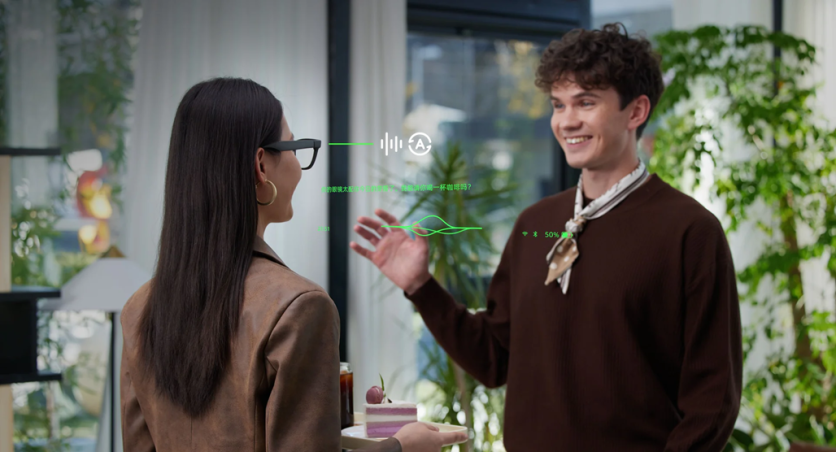
It is in this context that Rokid AR glasses with AI enable real-time two-way translation, seamlessly converting spoken words or written text from one language to another. The AI translation glasses transform the once-daunting task of cross-language communication into a smooth and natural process.

4 Core Functions of Rokid AI Translation Glasses

Our Rokid smart glasses stand out in the market not only for their portability but also for their powerful and comprehensive language functions. These four core features work in harmony to meet the diverse needs in different scenarios:

1. Intelligent Captioning

The Rokid AI translation glasses project real-time captions directly into your field of vision. The subtitles appear instantly, synchronizing perfectly with the speaker’s pace, pauses, and tone. Moreover, the glasses support seamless two-way translation, thus empowering all participants in a conversation to understand each other naturally in real time.

Equipped with the world's smallest 0.15cc Micro-LED engine, these AI translate glasses can deliver an impressive 1500 nits of brightness with 10-level dimming control, ensuring crisp and highly readable captions under any lighting conditions.

2. Multi-modal AI Interaction

Rokid smart glasses offer much more than simple translation. Featuring a built-in virtual assistant, they unlock a world of multi-modal interaction. Just say, "Hi Rokid," to activate it and start a natural conversation.

The possibilities are limitless: ask it questions, use the camera to identify what you're seeing, pull up directions, and so much more—all through a seamless, intuitive interface.

3. Text Translation

In addition to speech translation, our Rokid AR glasses with AI can also translate text in real time. Whether it’s a menu, sign, or document, users simply need to look at the text, and the glasses will instantly overlay the translation onto the original content. This feature is a game-changer for travelers exploring unfamiliar places, eliminating the need to learn a local language to navigate with ease. 

4. Audio Transcription

For longer discussions, the AR glasses with translation also function as an automatic audio transcription tool. This feature is typically suitable for interviews or lectures, as it enables you to follow topics seamlessly without encountering unnecessary language barriers.

Users can also jot down notes and record ideas whenever inspiration strikes. These capabilities are particularly valuable for professionals in business meetings, researchers conducting interviews, and learners reviewing course material.

Application Scenarios of Rokid AI Translation Glasses 

So, how can all of the above AR glasses translate features be used in our day-to-day life? Here’s how:

1. Learning

As suggested earlier, AI translation glasses can be highly beneficial for students and learners. Many are deterred from studying abroad due to unfamiliarity with the local language and the difficulties of cross-cultural communication. This tool can help overcome that barrier. With it, students can easily understand their lectures, receive real-time feedback from instructors, and even use the glasses as an aid to learn the new language itself.

2. Work

Business and work now operate on a global scale, where people regularly communicate and negotiate across borders. It would be unfortunate if gaps in communication and language cost opportunities. That’s why AR glasses with translation make global collaboration far more efficient in the following ways:

(1) Business Communication and Negotiation: It is widely recognized that clear communication is vital for successful negotiations. Rokid smart glasses facilitate seamless two-way translation that won’t keep either party out of the loop. Everyone can comfortably speak in their native language without compromising the impact of their messages.

(2) Remote Collaboration and Project Management: The need for clarity doesn’t end once partnerships are formed. Our AI translation glasses are essential for online meetings, allowing every participant to follow and contribute to discussions in their preferred language. This guarantees seamless collaboration and precise project management.

(3) Content Production: Similarly, journalists and interviewers struggle to create content when the second party is speaking in a language entirely different from their own. The Rokid AI +AR glasses can streamline this process by providing instant translations and transcriptions of their discussions, enabling professionals to efficiently tailor content for both domestic and international audiences.

3. Life

Language and communication with others are a constant in everyone's lives. That consistency, however, tends to halt when we come across a language we can’t understand. There are many instances where this can happen, which is why the AI translation glasses can be beneficial. Here’s how:

(1) Travel and Exploration: As mentioned earlier, travel is a common instance where people encounter languages they can’t decipher. Whether it’s trying to read signs and menus or conversing with locals, you will always need a translator. The Rokid AI glasses furnish real-time translations, wherever you may be. That way, you’ll be able to engage fully in your travels.

(2) International Families/Couples: Language barriers can also arise in relationships, as families and significant others often come from different cultural backgrounds. With our AI translation glasses, these individuals can easily engage in daily conversations about routines or emotions without sacrificing their native tongue.

(3) Immigration and Adaptation to a New Life: Moving to a new country is often overwhelming, especially when the local language is unfamiliar to you. Our Rokid AI Glasses serve as a practical translator for immigration matters, instantly deciphering documents, job applications, and public instructions. You’ll be able to adapt to your new environment quickly.

Conclusion

Our Rokid AI Glasses are redefining cross-language communication by offering a truly practical, wearable, and real-time translating solution. You can also benefit from it, whether for travel, work, or education. These AI translation glasses can support you through it all. Buy yours today and experience communication without barriers.

]]>
https://global.rokid.com/blogs/articles/why-rokid-ai-glasses-are-a-better-recording-tool 2025-09-07T23:43:44-07:00 2025-09-07T23:46:21-07:00 Why Rokid AI Glasses are a Better Recording Tool KuoAnna In the digital age, documenting life has evolved from a simple personal habit to an indispensable part of social interaction, creative expression, and professional work. People share snippets of their daily lives—delicious meals with friends, breathtaking sunsets during travels, or heartwarming moments with family. In professional contexts, accurate and detailed documentation is equally critical, essential for everything from project management to field reporting.

However, traditional recording tools often struggle to keep pace with the growing demand for convenience, efficiency, and high-quality documentation.

It is against this backdrop that Rokid AI Glasses emerge as a revolutionary approach to redefining life documentation. Unlike conventional cameras or smartphones that require manual operation, these AI-powered smart glasses truly liberate users’ hands, making recording effortless and seamless like never before.

Disadvantages of Traditional Photography

Traditional photography and recording methods, relying on devices such as smartphones, digital cameras, and camcorders, come with several inherent disadvantages that limit their effectiveness in real-life scenarios. So, before we explore Rokid AI glasses, let’s walk through the problems with traditional photography:

1. Hands Occupied

The most obvious drawback is that you need to hold these devices with your hands. When you want to take a photo or shoot a video, you have to set down what you're holding—whether it's a hiking pole, a cooking utensil, or a work tool—or stop your current action. This interrupts the natural flow of activities and increases the risk of missing unexpected moments.

2. Limited Field of View

Unlike smart AI wearables, a standard recording device only captures a single, third-person perspective. The angle of the lens determines what can be captured in the frame, and users often have to adjust the device's position repeatedly to include all the desired elements. Additionally, it only records what you point at, meaning that anything happening outside the frame remains unrecorded. Especially in dynamic scenarios like sports events, it's even harder to capture the entire action within the limited field of view, resulting in incomplete or fragmented recordings.

3. Missed Interaction

When you’re behind a camera, you miss out on fully interacting with the environment. Instead of fully living in the moment, you’re busy adjusting angles, fixing lighting, or focusing on the subject. This takes away the beauty of the moment from you.

4. Poor Environmental Adaptability

Traditional recording devices also struggle with poor environmental adaptability. In low-light conditions such as indoor parties or night scenes, the quality of photos and videos deteriorates significantly—images become blurry, colors are distorted, and noise increases. In bright sunlight, glare can wash out the details, making it hard to capture clear shots.

How Rokid AI Glasses Achieve Better Recording

Our Rokid AR+AI Glasses address the shortcomings of traditional recording methods through innovative design and advanced technology, providing users with a superior recording experience.

1. Hands-Free Shooting

The best part about Rokid AI glasses is that you remain totally hands-free, even when shooting your best shots. Simply wear them and let the glasses capture the scene effortlessly while you stay immersed in the moment. Using voice commands like “Hi Rokid, take a photo” or “Hi Rokid, record a video,” you can shoot ultra-high-quality photos and videos without any interruption. So whether you’re exploring nature or immersed in work, you can focus entirely on the experience—the glasses will handle the rest.

2. Immersive Shooting Experience

Equipped with high-definition cameras and professional-grade microphones, Rokid AI Glasses capture strikingly clear, detailed images and rich, natural sound. They feature a wide field of view that effortlessly encompasses more of the scene, eliminating the need for constant manual adjustment.

Moreover, Rokid smart glasses support high-frame-rate 60FPS video recording—ideal for capturing dynamic action. This high frame rate guarantees exceptionally smooth and fluid footage, free from blurring or stutter, even with fast-moving subjects.

3. AI-Powered Intelligence

Our Rokid smart glasses are integrated with advanced artificial intelligence algorithms capable of real-time scene and object recognition. They automatically adjust key settings, including brightness, contrast, focus, and white balance, to ensure every capture achieves optimal quality.

Beyond image enhancement, these AI-powered smart glasses offer a suite of practical functions: voice summarization, real-time translation, and instant sharing. After a meeting or lecture, the AI can generate a concise voice summary of the key points. For global users, the real-time translation feature converts spoken content into multiple languages, effortlessly breaking down language barriers. 

Wide Applications of Rokid AI Glasses

With their incredible features, it’s clear that Rokid AR glasses with AI are anything but ordinary, rendering them highly useful across multiple areas. Here are some of the most common applications of these AR glasses:

1. Travel/Store Exploration/Vlogging

When exploring a new city, Rokid AI Glasses let you effortlessly capture beautiful scenery, iconic landmarks, and unique cultural moments—all without ever holding a camera. For store tours or video blogging, the completely hands-free design allows you to move naturally, interact with your surroundings, and even take notes via voice commands. The immersive first-person perspective creates a truly authentic experience, making viewers feel as though they are right there with you, living the moment in real time.

2. Education/Training/Presentation

Trainers or educators can use these AI-powered smart glasses to record sessions while they’re fully engaged with the students. Since the gadget also supports voice summaries, it’s a win-win when it comes to knowledge sharing.

3. Industrial/Medical

In industrial or medical fields, Rokid AI glasses permit professionals to record hands-free while they carry on with their work. These recordings then serve as accurate, real-time documentation for research purposes.

Conclusion

While we still rely on traditional recording methods, the typical equipment can only take us so far. Fortunately, with the incredible Rokid AI glasses, folks can enjoy hands-free recording along with top-notch quality and intelligent features.

Whether you’re a vlogger, a tourist, or a professional, there’s no better way to document your life than these AR+AI glasses. So, get yours today!

]]>
https://global.rokid.com/blogs/articles/rokids-ai-glasses-can-translate-languages-show-live-subtitles 2025-09-02T00:01:33-07:00 2025-09-02T00:01:35-07:00 Rokid's AI glasses can translate languages, show live subtitles KuoAnna Rokid has announced its new AI Glasses on Kickstarter—think AR-powered specs that can translate 89 languages in real time, show live subtitles, help you navigate, recognize objects around you, and even let you take hands-free calls.
Powered by OpenAI's GPT-5, they're built for both fun and function.


They weigh just 49g

You get dual micro-LED displays, a 12MP camera for crisp photos, plus easy controls via the Hi Rokid app.
They're lightweight at 49g, splash-resistant (IPX4), super bright (1,500 nits), and give you a 23-degree field of view—so they're ready for everyday adventures.


They last up to 45 minutes recording video

With Qualcomm AR1 and NXP RT600 chips inside, these glasses last up to 45 minutes recording video or six hours streaming music.
Four mics help block out noise so your voice comes through clearly.


Prescription lenses will also be available

The price is $599 (or $479 if you back early on Kickstarter), with shipping set for November.
Need prescription lenses? No worries—they'll be available through Rokid's partners or local stores.
If you want futuristic features right on your face without waiting years for mainstream brands to catch up, these might be worth checking out.

]]>
https://global.rokid.com/blogs/articles/rokid-is-bridging-the-gap-between-physical-and-digital-worlds 2025-09-01T21:23:48-07:00 2025-09-01T21:23:54-07:00 Rokid is Bridging the Gap Between Physical and Digital Worlds KuoAnna

The company teased the next phase of its vision this year, the Rokid Glasses, a pair of AI+AR eyewear. Weighing only 49 grams, Rokid Glasses resemble everyday eyewear. But beneath this lightweight form lies an intricate combination of camera modules, the Snapdragon AR1 platform, and a Micro-LED diffraction waveguide optical system. This design allows the glasses to project contextual digital overlays into the wearer’s field of view, while maintaining comfort.

Rokid balances AR display functionality, structural simplicity, and cost control. This move opens space for camera modules and enhanced internal wiring without compromising user experience. A strategic approach illustrates Rokid’s deep understanding of what it takes to embed technology into everyday life.

Rokid is Bridging the Gap Between Physical and Digital Worlds

In the words of founder and CEO Misa Zhu, “AR glasses are the best vehicle for AI.” This conviction manifests in a rich portfolio of use cases:

  • Real-time translation in multiple languages
  • Voice-commanded Q&A and semantic search
  • Context-aware reminders and navigation
  • First-person content capture with visual framing
  • Smart health and fitness monitoring via Garmin integration
  • Voiceprint-enabled mobile payments

Unlike other smart glasses on the market that prioritize social content creation, Rokid’s vision is functional utility first. It’s an AI assistant on your face, as Rokid anchors itself in a digital ecosystem converging hardware, software, and cloud AI.

Despite upcoming competition from tech giants like Meta, Rokid remains grounded. Misa Zhu explained, “If big players build awareness, we benefit,” he noted. If they build great products, we shall deliver better.”

It’s a pragmatic mindset built on years of resilience. Founded in 2014, Rokid has raised capital through 13 funding rounds and now sits in its C+ stage. With over 250,000 active users and 2.75 hours of average daily usage, the company commands a 99% market share in the museum AR space with a growing community of 6,200+ developers.

While most technology aims to distract or immerse, Rokid’s vision is anchored on enhancing reality. This interface design philosophy steers the competition away from the digital world and the physical. Through lightweight, intelligent glasses and a growing spatial ecosystem, Rokid is making the invisible visible, delivering information when needed, in a useful space.

Rokid is developing cutting-edge AR and AI technologies that bring digital experiences into real-world settings. Here are a few common questions about how their products are making that connection possible:

1. What does it mean that Rokid is bridging the gap between the physical and digital worlds?

Rokid is creating technologies—such as augmented reality (AR) glasses and AI solutions—that overlay digital information onto the real world. This allows users to interact with virtual elements in real-time physical environments, enhancing experiences in fields like manufacturing, education, entertainment, and more.

2. What products or innovations from Rokid are helping connect these two worlds?

Rokid’s AR glasses, like Rokid Max and Rokid Air, are key innovations. These wearable devices enable hands-free access to digital content, holographic instructions, and remote collaboration tools, making it easier to blend digital functionality into everyday tasks and work settings.

3. Who can benefit from Rokid’s technology bridging the physical and digital gap?

Industries such as logistics, healthcare, field service, and education can greatly benefit. Workers can perform complex tasks more efficiently with digital guidance, students can experience immersive learning, and consumers can enjoy interactive entertainment—all through Rokid’s technology.

]]>
https://global.rokid.com/blogs/articles/how-rokid-is-leading-the-next-wave-of-human-computer-interaction 2025-09-01T21:20:40-07:00 2025-09-01T21:24:08-07:00 How Rokid Is Leading the Next Wave of Human-Computer Interaction KuoAnna China's new generation of tech disruptors is capturing worldwide attention. From the stunning aesthetics of Black Myth: Wukong to the powerful DeepSeek large language models and agile humanoid robots, a cohort of companies is reclaiming what it means to innovate in the East. Among these rising stars is Rokid, the Hangzhou-based pioneers reshaping the future of human-computer interaction through its AI+AR smart glasses.

At the center of this revolution stands Misa Zhu, founder and CEO of Rokid. During a recent interview, Zhu demonstrated the promise of AI+AR, delivering part of the interview through his own Rokid Glasses, hinting at the progressive fusing of the boundary between the digital and physical world.

Rokid


From "Tech Mirage" to Reality

At only 49 grams, Rokid Glasses appear deceptively simple. But beneath the familiar eyewear frame lies a powerful fusion of diffractive optical waveguide, natural language processing, real-time translation, navigation, and payment capabilities. Rokid has achieved a futuristic, instantly usable consumer product with this form factor.

"We've seen people willing to pay multiple times the price to get their hands on the first batch," said Misa. "The curiosity and acceptance among everyday users is real." But with viral attention comes pressure. "Going viral is a test," Misa added. "Now, we must meet rising expectations with product quality." In the final development stage, Rokid Glasses are expected to hit the US market in Q4 2025.

Rethinking the AI Glasses Market

Misa responded to many technologists asking: Will smart glasses replace smartphones?

Unlike smartphones, which sacrifice screen size for portability, smart glasses offer hands-free, full-screen augmentation without physical limitations. Rokid's vision isn't about eliminating phones but about how we use them. In this future, the phone may remain in your bag, quietly handling processing tasks, while the glasses act as your primary interface.

While many international AI glasses today focus on camera and social functions, Rokid has intentionally charted a different path. From the outset, its product was conceived as an "AI assistant"—an always-available, screen-equipped companion designed for practical, high-frequency interactions.

Rokid


This core philosophy has led to powerful features like multi-language offline translation, with real-time subtitles projected directly onto the lens. Whether for global business travelers, doctors in remote clinics, or industrial workers in high-risk environments, Rokid Glasses unlock new capabilities without increasing cognitive load.

Internally, Rokid operates on a three-generation cycle, one generation in production, one in design, and one in R&D. This pipeline has helped Rokid stay one year ahead of global competitors in product maturity. Moreover, Rokid's domestic supply chain advantage allows it to move faster and control quality at every level. As global demand rises, this vertically integrated model positions Rokid as a formidable player in the international AI/AR race.

Leading with Purpose

Despite Rokid's estimated $1B valuation, Misa keeps his life simple, wearing cheap sneakers and company hoodies and believing that wealth is a responsibility. "If we don't use tech to empower more people," he says, "then we're not doing it right."

With ambition, humility, and persistent innovation, Rokid is building a new paradigm for how humans and machines interact. And that future may be closer than we think.

]]>
https://global.rokid.com/blogs/articles/rokid-s-ar-glasses-make-spatial-computing-finally-feel-casual 2025-09-01T21:09:32-07:00 2025-09-01T21:09:37-07:00 Rokid’s AR Glasses Make Spatial Computing Finally Feel Casual KuoAnna The AR future was supposed to be cool. Instead, it’s mostly been sweaty visors, eye fatigue, and headsets that make you look like you’re training to be a NASA pilot. That future just took a detour.

Rokid, a name you may not have heard unless you’ve been tracking AR quietly evolving behind the scenes, has launched Rokid AR Spatial. It’s a lightweight, low-profile pair of glasses that delivers on the promise of Spatial Computing without making you feel like you’re cosplaying sci-fi.


You don’t need a tutorial. You don’t need to clear your living room. You just put them on, and they work. You get a floating 300-inch screen in front of you. You can run three apps at once. You can watch Netflix, reply to messages, and check your calendar without picking up your phone. And you don’t feel like you’re broadcasting to the world that you’re “trying tech.”

The Rokid Spatial isn’t trying to replace your laptop or take over your face. It’s there when you need it, light enough to forget, smart enough to impress. And at $649, it’s a price point that doesn’t feel like a punchline.


5 Features You’ll Use

●     300-Inch Virtual Display
Watch shows, read emails, or scroll in a screen that feels like a personal movie theater.

●     Multi-Window Support
You can run up to three apps at once. Yes, you can watch YouTube while taking notes and monitoring Slack.

●     Lightweight & Comfortable
At just 75g, it’s closer to regular glasses than a headset. You can wear it for hours without pressure points.

●     Myopia Adjustment Built-In
If you wear glasses, you won’t need extra inserts—just dial in your vision and go.

●     Gaming Ready
Steam Link, PS Remote Play, and Moonlight support allow you to take your gaming anywhere.

This feels like AR for people who don’t care about AR. It’s for people who care about convenience, not packing an extra screen when they travel, binge-watching without bothering their partner in bed, and getting more space to think, play, and unwind without extra friction.

You can buy the Rokid AR Spatial now at global.rokid.com.

]]>
https://global.rokid.com/blogs/articles/rokid-launches-ar-spatial-glasses-with-300-inch-virtual-display 2025-09-01T20:59:31-07:00 2025-09-01T20:59:37-07:00 Rokid Launches AR Spatial Glasses with 300-Inch Virtual Display KuoAnna Rokid has officially launched its AR Spatial system, which bundles the lightweight Rokid Max 2 AR glasses with the new Station 2 wearable computing unit, offering a portable multi-display experience that aims to replace laptops, projectors, or even gaming monitors.

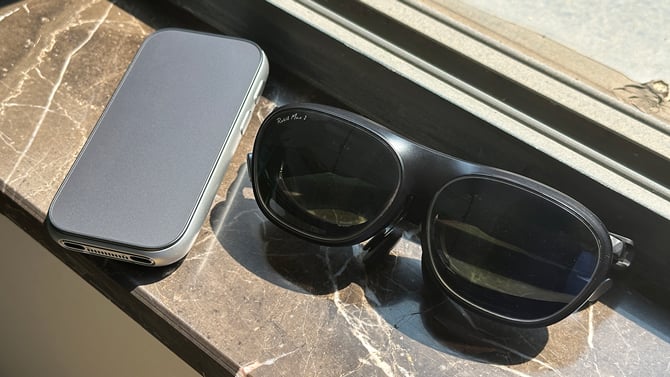
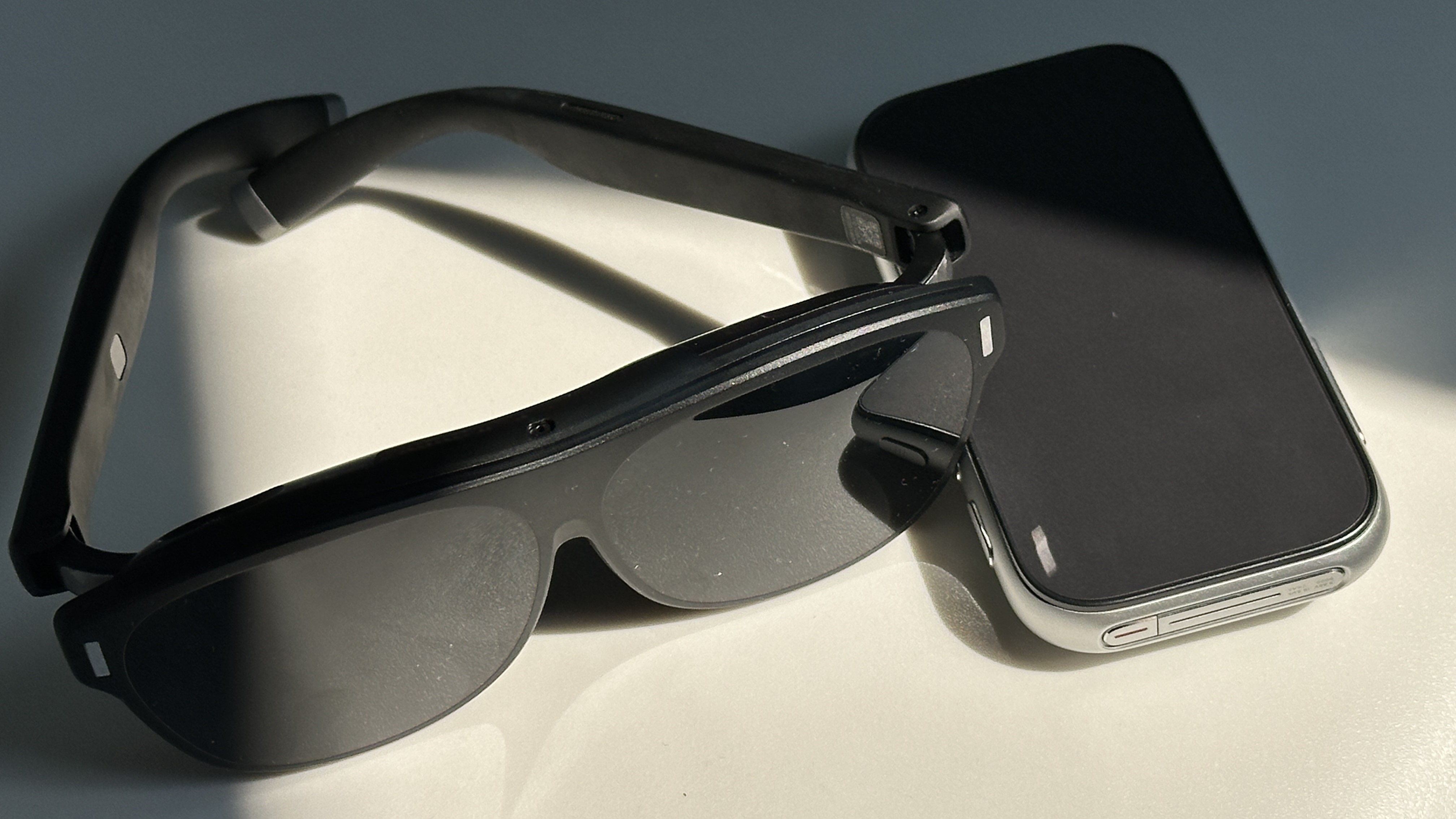
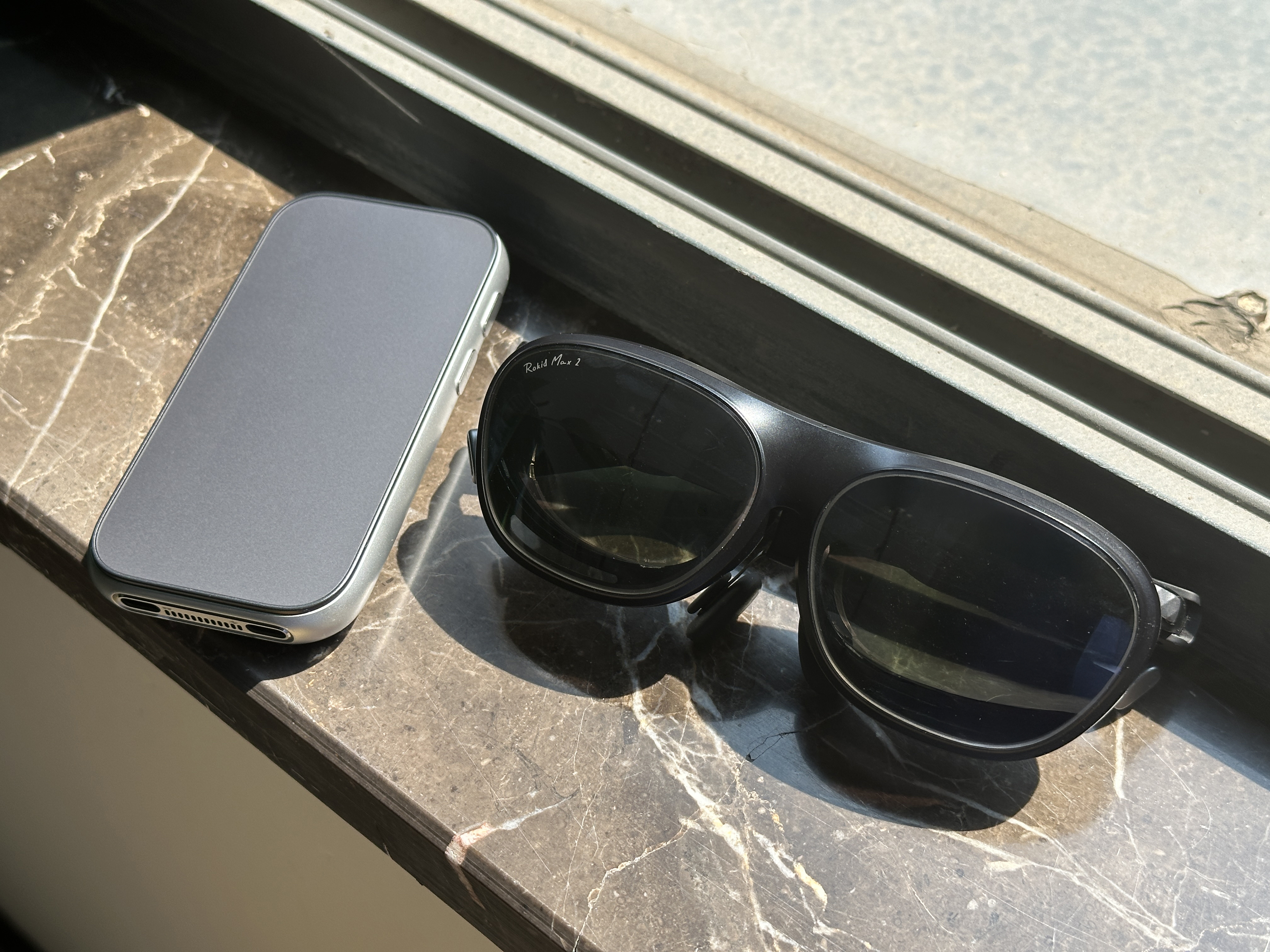
Rokid AR Station 2 on the left and the Max 2 glasses on the right


The glasses themselves weigh just 75 grams and feature Sony’s 0.68-inch Micro OLED displays, delivering a sharp 1200p resolution per eye, 100,000:1 contrast, and up to 600 nits of brightness. When paired with the Station 2, users can access a 300-inch equivalent virtual display that supports up to three windows simultaneously. Rokid’s proprietary YodaOS Master system enables a true multi-screen environment for multitasking, presentations, or entertainment.

One of the key features is the inclusion of the world’s first intelligent myopia and interpupillary adjustment system in an AR headset, allowing users with nearsightedness (up to -6.00D) to achieve clear visuals without prescription lenses. The system also provides software-based IPD adjustments between 53mm and 75mm, making it more accessible to a wider user base.

Station 2 acts as both a spatial controller and a computing hub, running Android-based apps and supporting Bluetooth peripherals like keyboards and mice. With 3DOF spatial tracking and a 9-axis IMU, users can interact with apps using head and hand movement. The system connects with devices such as laptops, smartphones, the Nintendo Switch, and Steam Deck for a hybrid productivity and entertainment setup.

The AR Spatial kit is available now on Rokid.com and other retailers for $648, with a launch promotion that brings the price down to $598 using the code NEWLAUNCH100 on the Rokid site.

]]>
https://global.rokid.com/blogs/articles/rokid-s-new-ar-glasses-are-basically-a-laptop-you-wear-on-your-face 2025-09-01T20:56:52-07:00 2025-09-01T20:56:56-07:00 Rokid’s new AR glasses are basically a laptop you wear on your face KuoAnna Rokid AR glasses in black alongside an external YodaOS-Master OS controller


What you need to know

  • Rokid’s AR Spatial glasses ditch the traditional desk and toss a massive 300-inch virtual screen right in your face.
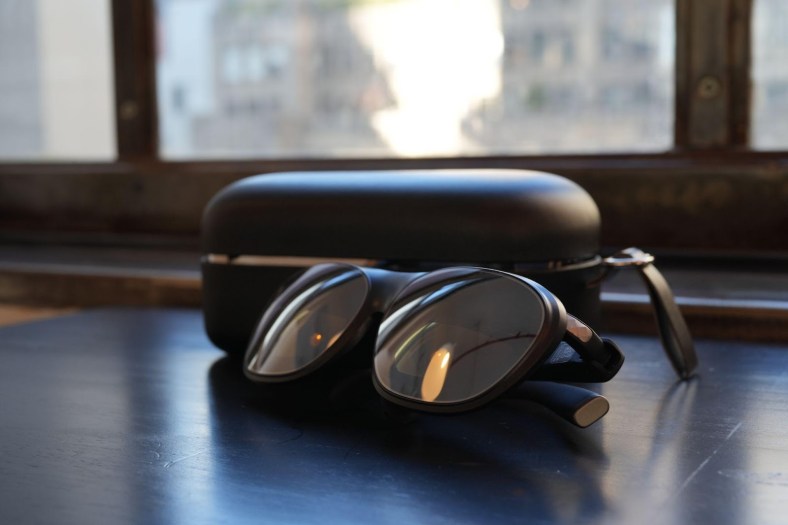
  • At just 75 grams and made with aerospace-grade materials, the Max 2 glasses are built for long hauls, and they play nice with prescription eyewear.
  • Powered by Rokid’s own YodaOS Master, the system handles multiple windows and apps without the lag or bugginess you’d expect from typical AR gear.


Rokid today released the AR Spatial glasses that aim to blend AR into your everyday life, ditching the usual desk setup and changing how (and where) you get things done.

AR Spatial's setup pairs the Max 2 AR glasses with the new Station 2 hub, and together they whip up a giant 300-inch virtual screen that hangs in your line of sight.

Rokid's announcement says it's built with the always-on-the-go crowd in mind, so it might just be useful for remote workers juggling apps or anyone tired of squinting at a cramped laptop screen in busy spots.


Light, tough, and prescription glasses-friendly

The Max 2 AR glasses are lightweight at just 75 grams and tough enough thanks to aerospace-grade materials. They’re comfy enough to wear for hours, and if you’ve got prescription glasses, they’ll fit right over them without a hitch.

Rokid AR glasses in black alongside an external YodaOS-Master OS controller


These AR glasses also have built-in diopter adjustment from 0.00D to -6.00D for nearsighted users, plus customizable pupillary distance so everything lines up just right.

AR Spatial skips the usual AR headache and just works with what you already have, like your phone, tablet, or laptop. If you want the full desktop experience, just hook up a Bluetooth keyboard and mouse, and you’ve got a portable setup that actually feels familiar.

Smooth moves with YodaOS

Rokid AR Spatial virtual display


Rokid’s AR Spatial runs on its own custom OS, YodaOS Master. You can juggle multiple virtual windows, jump between apps without lag, and skip the usual slowdowns that drag other AR glasses down.

Rokid’s AR Spatial has already made the rounds at big-name events like CES 2025 and Milan Design Week.

It’s not the cheapest gear out there, but at $648, the AR Spatial bundle brings a lot to the table. If you want to knock the price down, just punch in LAUNCH70 at checkout and it drops to $578. You can snag it now from Rokid’s site or one of its retail partners.

]]>
https://global.rokid.com/blogs/articles/okid-ar-spatial-is-a-pair-of-spatial-computing-glasses-that-don-t-make-you-look-like-a-cyborg 2025-09-01T20:46:32-07:00 2025-09-01T20:48:32-07:00 Rokid AR Spatial Is a Pair of Spatial Computing Glasses That Don’t Make You Look Like a Cyborg KuoAnna First impressions? It’s not trying too hard. And that’s precisely why it works.


The new Rokid AR Spatial is everything most AR headsets aren’t: featherlight, affordable, and understated. At a time when spatial computing is still synonymous with $3,500 face computers, Rokid is putting out a $649 pair of glasses that look like something you’d wear on purpose. That alone feels like a plot twist.

The Spatial is functional, surprisingly intuitive, and—for once—realistically built for how we already live. It doesn’t try to reinvent your world; it adds a few smart layers.


Three screens, zero friction

Up to three app windows can be displayed in space, and unlike most other AR demos, they’re not laggy or confusing to control. The glasses handle YouTube, messages, and Spotify running side by side without forcing you to switch back and forth. Multitasking feels native, not like you’re pushing a desktop metaphor into your face.


The 300-inch virtual screen looks sharp and stable, even in non-optimal lighting. It supports 3D video playback, and yes, you can watch Dune on a fake IMAX screen while lying flat in bed. We tried it, and we’d do it again.

The screen doesn’t feel glued to your head, either. Rokid’s Sport Mode keeps visuals locked even if you move, whether shifting in a seat or walking through an airport terminal.


Vision-corrected, travel-friendly, gaming-ready

The sheer amount of thoughtful detail pushes this past the novelty category. The built-in diopter and IPD adjustment mean people with myopia (up to -6.00D) can see clearly without prescription lenses. It also weighs just 75 grams, about the same as your average pair of sunglasses and 1/8th the weight of the Apple Vision Pro.


And then there’s Station 2, Rokid’s companion processing unit. It runs Android, supports Google Play apps, and handles Netflix, Prime Video, Hulu, and Disney+ without workarounds or jailbreaking. It also charges while in use, so you don’t have to plan your screen time around battery life.

Oh, and yes—it supports Steam Link, Moonlight, and PS Remote Play, meaning your entire gaming backlog can now be played in an AR cinema from your hotel bed. Add a Bluetooth controller, and you’re running Elden Ring on a screen floating in the middle of your living room.

It’s ready.

The Rokid AR Spatial isn’t trying to be everything. It doesn’t have full passthrough, ultra-dense sensor mapping, or hand tracking that maps each of your fingers. But here’s the thing, it doesn’t need to. It’s not a science experiment. It’s not a dev kit. It’s a finished product; more importantly, you’ll want to use it. The Rokid AR Spatial looks like something you’d wear in a co-working space without getting side-eyed.

This might not be the AR headset for everyone. But it’s the first one that feels like it could be. That’s not hype. That’s progress.

]]>
https://global.rokid.com/blogs/articles/rokid-bets-on-light-affordable-ar-to-capture-the-next-billion-users 2025-09-01T20:45:51-07:00 2025-09-01T20:45:54-07:00 Rokid Bets on Light, Affordable AR to Capture the Next Billion Users KuoAnna As Apple and Meta continue to battle it out in the premium AR headset space, a quiet but confident competitor is carving out a different lane—one that’s lighter in form and cost. Rokid, a Hangzhou-based augmented reality company steadily building its ecosystem since 2014, has launched the most accessible spatial computing product to date: the Rokid AR Spatial, priced at $649.


Where Apple’s Vision Pro commands a $3,499 price tag and more than 600 grams of hardware weight, Rokid’s alternative weighs just 75 grams. It delivers many core features, multi-window computing, immersive display, spatial media support, and gaming integration at a fraction of the bulk and cost.

A Strategic Product Positioning

The AR Spatial is not a “headset” in the traditional sense. It’s designed as wearable eyewear, built with magnesium-aluminum alloy and subtle enough to pass as everyday tech. The goal is to make AR ordinary, not experimental. And that plays well into Rokid’s larger strategy: get spatial computing into as many hands and homes as possible.

Rather than positioning the Spatial as a laptop replacement or productivity powerhouse, Rokid offers a lifestyle-centric utility product. It supports the Google Play ecosystem, allowing access to mainstream apps like Netflix, YouTube, Disney+, Prime Video, and productivity and messaging platforms. The glasses can project a virtual 300-inch screen with 3D support and a 90Hz refresh rate for entertainment. For work, they support three floating app windows for true multitasking.

Because vision matters when projecting digital overlays inches from your eyes, Rokid’s built-in diopter and pupillary adjustment (from 0 to -6.00D) enables users to skip custom lenses entirely. Rokid is thinking beyond the early adopters of this detailed, low-profile functionality.

Targeting the Mid-Market Before It Becomes Premium


The release of Rokid AR Spatial positions the company to capture an entry/middle-market consumer base. In a space where innovation typically comes at a $3,000+ price point, Rokid is betting that scale will come from affordability.

“We’re not trying to build luxury,” said a Rokid spokesperson at CES earlier this year. “We’re trying to build normal.” Normal, in this case, means compatibility with Steam Link and PS Remote Play for gamers. It means a “Sport Mode” to stabilize the display while in motion. It means air-cushioned nose pads and a companion Station 2 unit that charges while in use, small features that make AR feel less like a demo and more like a utility.

There’s a strategic elegance in what Rokid isn’t doing: it isn’t chasing photorealistic avatars, 6DOF mapping, or high-end passthrough. Instead, it’s optimizing for media consumption, communication, and casual productivity, which most people do with their phones and laptops. Rokid is not asking users to leave those devices behind. It’s simply offering a new, hands-free layer to extend them.

Expanding Globally

With over 1 million end users and sales across 100+ countries, Rokid is quietly becoming one of the world’s most widely distributed AR platforms. Their previous success in industrial and automotive applications is now being translated into consumer channels, with momentum carried from their appearance at Milan Design Week, where the AR Spatial won the Zona Sarpi Design Award for technological aesthetic.

This latest release signals a pivot from niche use cases to everyday scale. With more than 6,000 developers contributing and 35 spatial apps already in circulation, Rokid’s ecosystem is maturing quickly, with less dependence on proprietary app development than competitors like Apple or Meta.

The AR Spatial is available now via global.rokid.com, and early buyers receive a bundled wireless game controller. More interesting than any promotion, however, is the market response. As other firms position themselves for spectacle, Rokid is focused on the fundamentals: functionality, comfort, and price. And that may be the winning formula for turning AR into something more than a buzzword.

]]>
https://global.rokid.com/blogs/articles/how-rokid-ar-spatial-enhances-your-daily-life-from-travel-to-office 2025-07-25T03:54:19-07:00 2025-09-01T20:00:13-07:00 How Rokid AR Spatial Enhances Your Daily Life: From Travel to Office KuoAnna Nowadays, striking the perfect balance between productivity, entertainment, and comfort is definitely a challenging task in our fast-paced lives. Whether commuting to work, managing multiple tasks in the office, or trying to relax with a movie at home, the limitations of traditional screens and devices often hold us back. That’s where Rokid AR Spatial comes in. As one of the best affordable AR spatial computing devices, it seamlessly blends into our daily lives, from travel to the office.

How Rokid AR Spatial Upgrades the Viewing Experience

1. Challenges with Traditional Viewing

Whether it's home viewing or on-the-go viewing, we are often restricted by device size. The small screens make it difficult to fully engage with the content, especially for detailed movies or high-definition videos. While IMAX theaters deliver a more immersive viewing experience, they require special trips and often come with high ticket prices, which can be a deterrent..

2. Full-screen Immersive Experience of Rokid AR Spatial

With a 300-inch colossal virtual display, Rokid AR Spatial offers a full-screen immersive experience akin to having your own private cinema, where you can enjoy your favorite movies, shows, and videos, whether you're on your couch at home, on a long-haul flight, or in the park. Simply put on the device to immerse yourself in your content.

Equipped with a 1200p OLED panel (1920×1200 resolution) and a 120Hz refresh rate (adjustable between 60Hz and 120Hz), it ensures ultra-smooth visuals. The higher refresh rate can reduce motion artifacts and flickering, mitigating eye fatigue for prolonged viewing comfort.

How to Create an Immersive Gaming Experience

1. Issues with Traditional Gaming

2D Screens: Traditional gaming devices, such as desktops, laptops, and consoles, rely on flat 2D screens, which limit depth perception. This significantly diminishes immersion, leaving players disconnected from the virtual experience.

VR Headsets: While VR headsets furnish a more immersive experience, they are often bulky and uncomfortable for extended use. For players with myopia, the added inconvenience of wearing glasses underneath the headset further exacerbates discomfort.

High Latency: Another major drawback in traditional gaming, particularly in gesture-based interactions, is high latency. Delayed system responses disrupt gameplay fluidity and negatively impact the overall user experience.

2. How Rokid AR Spatial Reshapes Gaming Experience

What players seek is not just high frame rates and stunning graphics, but complete immersion. Rokid AR Spatial can render highly realistic game visuals, forming a spatial sense with true depth. Its high-precision motion sensors and multi-dimensional interaction capabilities enable players to truly step inside the game world rather than just watching the game.

In addition, this AR solution also includes built-in diopter adjustment (0.00D to -6.00D), allowing nearsighted players to enjoy sharp visuals without additional glasses. For those requiring correction beyond this range or needing solutions for farsightedness or astigmatism, custom prescription lenses are also compatible, ensuring an optimal viewing experience for every player.

Most importantly, Rokid AR Spatial is built on a deep customization of AOSP (Android Open Source Project) and is compatible with the Android ecosystem. Theoretically, all Android applications can run on YodaOS-Master. This means that players can always experience the latest games.

How Rokid AR Spatial Improves Office Efficiency

In a typical office environment, employees often need to juggle multiple tasks simultaneously. Frequent switching between different application windows on a computer can be time-consuming and inefficient, reducing overall productivity. For creative projects, flat displays can't fully showcase 3D models, design concepts, or other creative works.

Rokid AR Spatial revolutionizes this experience with multi-screen interaction, projecting up to three virtual screens simultaneously within your field of vision. This breakthrough enables truly seamless multitasking without minimizing windows or losing your workflow. Moreover, the advanced spatial computing capabilities take teamwork to the next level, making ideas and creativity instantly visualizable.

How Rokid AR Spatial Changes Commuting

When commuting by subway or bus, mobile entertainment such as watching videos, e-book reading, or playing games on mobile devices is often affected by the shaking and movement of the vehicle. This can make the viewing or gaming experience uncomfortable and even nauseating.

Rokid AR Spatial introduces a Motion Mode that is designed for use during travel or light physical activity. This mode minimizes motion blur, distortion, and jitter, helping to prevent the dizziness that often occurs when wearing AR glasses during movement. Even during vigorous activity, the display remains stable, with no drift or ghosting, enhancing user comfort.

How Rokid AR Spatial Enhances Business Trips

1. Problems of a Business Trip

Equipment Carry: Business travelers often need to carry a variety of devices, including laptops, projectors, and presentation materials. This can be a heavy burden, especially during long trips or when frequent movement is required.

Presentation Trouble: Setting up presentation equipment in a new location can also be a cumbersome process, often involving complex cables, software compatibility issues, and technical malfunctions. Not to mention that static images or 2D presentations may not be able to fully convey the features and advantages of a product.

2. How Rokid AR Spatial Boosts Business Travel

Enhanced Business Presentation Efficiency: Rokid AR Spatial streamlines the business presentation process. With its augmented reality capabilities, it can directly project interactive and immersive product demonstrations right in front of the audience, eliminating the need to carry bulky projectors or go through complicated setup procedures. This not only saves time but also makes the presentation more engaging and effective, helping business travelers leave a deeper impression on clients and partners.

Mobile Office with Long-Lasting Power: The affordable AR headset is equipped with a 5000mAh battery, supporting 2.5 hours of uninterrupted use. Moreover, it supports charging while in use, ensuring that business travelers can maintain high efficiency throughout their journey.

Conclusion

Rokid AR Spatial is not just a device; it's a gateway to a new era of immersive interaction. Especially in today's fast-paced world, it seamlessly integrates into various aspects of daily life, from travel to office work and beyond.

As one of the best budget AR headsets available, it presents unparalleled value for its price. Whether you're a gamer, a professional, or someone looking to enhance their daily life, Rokid AR Spatial is the perfect choice. Ready to experience?

]]>
https://global.rokid.com/blogs/articles/how-rokid-ar-spatial-reshaping-the-mobile-office-experience 2025-06-18T01:19:47-07:00 2025-09-01T20:00:37-07:00 How Rokid AR Spatial Reshaping the Mobile Office Experience Rokid Global In today's digital workplace era, we're constantly challenged to achieve more with limited resources, dealing with constrained office space, tight time frames, and productivity losses caused by information overload. The screen limitations of conventional devices have become a bottleneck, forcing us to compromise with cramped laptop displays or cumbersome equipment.

At Rokid, we recognize these issues and aim to revolutionize workspaces with our groundbreaking spatial computing technology. Our Rokid AR Spatial can transform any environment into an expansive digital canvas, dynamically adapting to your workflow needs. More than just AR glasses for productivity, it's a fundamental shift—liberating professionals from the constraints of physical screens and static workspaces. 

AR Glasses Market Challenges

While wearable AR technology has long promised to revolutionize the way we work, for many professionals, AR spatial computing remains a concept that seems out of reach rather than a tangible productivity tool. Early AR devices suffered from issues such as excessive weight, insufficient battery life, and blurry display effects, resulting in a poor user experience. Additionally, the software ecosystem is not fully developed, with a scarcity of compatible applications that can meet diverse work needs. Even some high-end devices, despite their advanced features, are priced so high, preventing spatial AR devices from gaining widespread adoption in office settings. With real user pain points in mind, our Rokid AR Spatial delivers comprehensive optimizations in hardware design and software ecosystems, making spatial computing a part of everyday work.

The Core Feature of Rokid AR Spatial

1. Minimalist Design Meets Robust Performance

Featherlight 75g Frame: Resembling a premium pair of sunglasses, our Rokid AR Spatial shatters the stereotype of bulky traditional AR wearable headsets, blending sleek aesthetics with all-day comfort. The ergonomic design conforms to various face shapes, eliminating pressure even during extended use. Whether on a multi-hour flight or in fast-paced, mobile work scenarios, users can wear it effortlessly without fatigue.

Immersive 300-inch Virtual Display: Equipped with an immersive spatial interface, it supports multi-screen interaction (up to 3 virtual screens simultaneously). Paired with seamless Bluetooth connectivity for keyboards and mice, it converts any setting into a mobile office cabin on demand. Boasting a 4K-level resolution, the display offers accurate color reproduction and razor-sharp text, ensuring intricate details in high-definition images, video materials, and precise engineering drawings are rendered with lifelike clarity.

2. Seamless Cross-Device Synergy

Universal Platform Compatibility: Compatible with iOS, Android, and Windows, it turns smartphones and tablets into spatial computing engines, enabling effortless cross-device data flow without disrupting existing workflows.

Powered by YodaOS Master: The proprietary operating system guarantees low latency and stable rendering, making app switching as intuitive as thought. The built-in smart voice assistant allows users to launch apps, switch screens, and search for information via voice commands, freeing up hands for greater operational convenience.

How Rokid AR Spatial Reshaping the Working Experience

The revolutionary power of Rokid AR Spatial lies not in display size but in its reinvention of how information is structured in physical space:

1. Multi-Task Parallelism

Arrange copywriting on the left virtual screen, reference materials on the right, and a video conference floating at the periphery, all visible without clutter yet instantly accessible. For new media operators, this means opening a resource library, reference articles, and data analytics platforms simultaneously while creating content, enabling real-time access to inspiration and data that drastically shortens production time.

2. Elevated Creative Workflows

During marketing planning, visualize data charts, design prototypes, and presentation notes in parallel, allowing ideas to collide freely in a three-dimensional space. Designers can overlay multi-angle blueprints, material libraries, and client feedback in the virtual workspace, conducting side-by-side comparisons and adjustments to enhance design quality and efficiency.

3. New Dimensions in Remote Collaboration

Geographically dispersed teams can share a virtual workbench to annotate CAD models or revise design drafts in real time, dissolving physical barriers. For architecture projects, team members in different cities can collectively review blueprints and discuss plans in a shared virtual environment, achieving the same efficiency as in-person collaboration.

Conclusion 

In an era of information overload, our Rokid AR Spatial frees productivity through minimalist design. For groups sensitive to spatial efficiency, such as architects, engineers, designers, and remote teams, this wearable virtual office could be the key to breaking free from the constraints of traditional screens.

Ready to experience the new paradigm of limitless screens? Click to explore Rokid AR Spatial details and secure your purchase today!

]]>
https://global.rokid.com/blogs/articles/what-is-rokid-ar-spatial-a-comprehensive-ar-solution-from-entertainment-to-productivity 2025-06-18T01:19:36-07:00 2025-09-01T19:59:04-07:00 What is Rokid AR Spatial? A Comprehensive AR Solution From Entertainment to Productivity Rokid Global With the ongoing integration of our digital and physical worlds, users are increasingly seeking solutions that allow them to seamlessly switch between tasks, access information on the go, and interact with digital content more intuitively and engagingly. This shift in user expectations has driven AR (augmented reality) technology beyond its early role in gaming and entertainment, transforming it into a versatile productivity tool capable of enhancing work, learning, and daily life.

Recognizing this evolution, we have developed Rokid AR Spatial—a comprehensive AR solution designed to meet modern demands for multitasking, cross-device compatibility, and immersive experiences. So, what is Rokid AR Spatial? 

What is Rokid AR Spatial

Rokid AR Spatial is a spatial computing AR solution that delivers seamless augmented reality across entertainment, office, and mobility scenarios. It includes the Rokid Max 2 and the Rokid Station 2.

1. Rokid Max 2

As the core component of this AR solution, the Rokid Max 2 smart glasses present breakthrough visual performance through:

High-Definition Display

Rokid Max 2 features a 1200p OLED panel with a single-eye resolution of 1920×1200 pixels. Compared to standard 1080p AR glasses, it offers clearer details, richer colors, and a wider field of view.

The refresh rate of Rokid Max 2 can reach up to 120Hz and is adjustable between 60Hz and 120Hz. When used in combination with Rokid Station 2, the AR solution operates at a global refresh rate of 90Hz (a rate widely recognized as the most eye-friendly and stable in the industry), which is a first in the AR industry.

Personalized Fitting with Diopter Adjustment

Built-in diopter adjustment (from -6.00D to 0.00D) enables users with myopia to easily fine-tune clarity without additional accessories. For users whose prescriptions fall outside this range or those with hyperopia (farsightedness) or astigmatism, Rokid Max 2 is compatible with other prescription lens solutions.

Cross-platform Compatibility and Flexible Connectivity

Designed to meet diverse user needs, the Rokid Max 2 eyeglasses for reading and computer connects seamlessly to various devices, including iPhones, Android devices, and gaming consoles.

2. Rokid Station 2

Serving as the intelligent backbone of this AR solution, the Rokid Station 2 unlocks advanced capabilities with:

YodaOS-MasterRokid

Station 2 is powered by the YodaOS-Master spatial operating system, a deeply customized OS based on AOSP (Android Open Source Project) that effortlessly integrates with the Android ecosystem. This means virtually all Android apps can run smoothly on YodaOS-Master. Additionally, YodaOS-Master offers robust AR spatial computing capabilities, supporting 3DoF (three degrees of freedom) perception and multi-screen interaction for an immersive AR experience.

Multiple File Synchronization and Battery Supply

Station 2 supports a variety of file synchronization methods, including computer copy, cloud storage, or file transfer features. Equipped with a 500mAh battery, it provides 4-5 hours of continuous use. Plus, Station 2 can be used while charging, effectively offering unlimited battery life. The charging process is also efficient, taking just 1.5-2 hours to fully recharge.

Core Functions of Rokid AR Spatial

1. Multi-Apps/Screen Mode

Rokid AR Spatial offers a Multi-App/Screen Mode that permits users to open and project as many as three distinct application windows. In this way, users can fluidly switch between apps without minimizing current tasks or losing progress. Moreover, each virtual screen can be adjusted in width (narrow, wide, or ultra-wide) to provide the best possible user experience. This innovative AR solution not only eliminates the physical limitations of traditional multi-screen setups but also significantly enhances multitasking capabilities.

2. Sports Mode

Sports Mode is a key feature of our cutting-edge AR solution, designed specifically for use while commuting or engaging in light physical activities. This mode eliminates visual drift and ghosting (faint residual images), guaranteeing clear and stable visuals even in dynamic environments. By minimizing motion blur, distortion, and jitter, it effectively prevents the dizziness commonly experienced when wearing smart AR glasses during movement.

3. Theater Mode

In addition, our AR solution brings you Theater Mode, tailored for entertainment and perfect for watching movies or playing games. Users can freely adjust the screen size in the virtual space, indulging in the AR immersive experience of a large-screen display as if they were sitting in their very own private cinema.

Conclusion

As a versatile AR solution, Rokid AR Spatial offers unparalleled flexibility and efficiency, whether you're immersed in a virtual cinema experience or tackling multiple tasks in a virtual workspace. Don't miss out on the opportunity to elevate your digital experience. Place your order now!

Looking ahead, Rokid remains committed to pushing the boundaries of what's possible with AR technology. We will keep enhancing the performance of our AR products, providing higher-quality image rendering and more precise spatial positioning, delivering the true potential of interactive solutions.

]]>
https://global.rokid.com/blogs/articles/early-access-maximum-savings-rokids-10th-anniversary-black-friday-prices-start-now 2024-11-14T02:57:23-08:00 2025-09-01T19:57:15-07:00 Early Access, Maximum Savings – Rokid's 10th Anniversary, Black Friday Prices Start Now! Rokid Global

1. Best Prices of the Year on All Official Channels

Price Guarantee for 60 Days

  • Max: $399  now $279
  • Joy Pack: $499  now $399
  • Rokid Station: World's First Google-Certified Android TV Device for AR– $199 now $99

2. Exclusive Offers On Four Official Websites 

Grand Opening and Special Gifts

(Global, DE, UK, JP)

  • Max 2: $449 now $399
  • Joy Pack 2: $548 now $498
  • Magic Pack: $599 now $499

3. Global AR Celebration, Unending Surprises and Exclusive Gifts!

New DE Official Website Launch Special: The first 100 buyers of JOY 2 on the DE official website receive a complimentary $99 HUB.JP Exclusive: The first 200 buyers on the JP official website or Amazon JP will receive a surprise gift box or a $19 eyeglass frame.US Exclusive: The first 200 buyers get a complimentary eyeglass frame or lanyard.AR Streaming Discount: GOOVIS + Max – $478 now $378Daily Surprise Draw: Purchase any glasses product from the Rokid official website or official Amazon store for a chance to win a $99 keyboard and earbuds set.

Bonus Draws: On 11/15, 11/18, 11/21, 11/29, and 12/2, two lucky winners each day will receive a Black Myth: Wukong CD key (Chinese version, 12 languages supported), totaling 10 winners.

Details:

Daily Giveaway Campaign

Purchase any Rokid glasses or bundle from the Rokid website or Amazon during the event to join.

Prize: 

One lucky participant each day will win a Bluetooth foldable keyboard and earbuds set worth $99.

How to Participate:

  1. Make a Purchase: Place an order for any Rokid glasses or bundle between November 15 and December 2, 2024, only on the Rokid website or Amazon.
  2. Share on Twitter: Post a tweet with a screenshot of your order, tag @RokidGlobal, and use the hashtag #Rokid.
  3. Follow Rokid’s Official Twitter: Ensure you are following @RokidGlobal to receive winner notifications.
  4. Submit Your Order Number: Your order number will be used for verification during the draw. Ensure your order is valid for prize eligibility.

 Draw and Notification Rules:

  • Winner Selection: One winner will be chosen daily.
  • Notification: Winners will be notified via Twitter direct message and must confirm within 3 days.
  • Giveaways Distribution:
  • Rokid Website Orders: Prizes shipped with the original order.
  • Amazon Orders: Prizes shipped separately; winners must provide shipping details.

Important Notes:

  • One entry per order number.
  • Daily results announced the following day via Twitter direct message.
  • Response time: Winners must respond within 3 days or forfeit the prize.
  • This giveaway is part of Rokid’s 10th Anniversary celebration, and Rokid reserves the right to make the final interpretation of the event.
]]>
https://global.rokid.com/blogs/articles/rokid-air-and-kov-cryotherapy-revolutionizing-cryotherapy-and-the-wellness-industry 2024-02-27T01:53:29-08:00 2025-08-05T00:59:27-07:00 How KOV Cryotherapy Transformed Customer Experience with Rokid AR Glasses Han Xu In Miami, KOV Cryotherapy is redefining the standards of the health and wellness industry. As a leading company specializing in innovative cryotherapy, they consistently integrate cutting-edge technology into the customer experience, having successfully incorporated technologies such as 360° cameras, AR/VR, and interactive gaming. Now, they have achieved a revolutionary breakthrough  the Rokid Air AR Smart Glasses.

This advanced AR eyewear not only enhances the cryotherapy experience but also enables clients to enjoy entertainment or learn about health and wellness while relaxing. Today, we’ll explore how the Rokid AR glasses enhance the customer experience and why this technology is set to become a benchmark for the future of the health industry.

A woman using Rokid Air smart AI glasses while doing treatments   A man using Rokid Air smart AI glasses while doing treatments


About KOV Cryotherapy

KOV Cryotherapy was co-founded by Venkat Gopalan and Karla as a premium wellness recovery center based in Miami. Leveraging Venkat’s expertise as Chief Digital, Data, and Technology Officer at Belcorp, along with his experience in creating innovative tech solutions for brands like Sephora and Nike, KOV Cryotherapy has remained at the forefront of health technology.

  • KOV Cryotherapy offers a range of cutting-edge cryotherapy and wellness recovery services, including:
  • Whole Body Cryo – Accelerates recovery and reduces inflammation
  • Focused Healing – Targeted cryotherapy for pain relief
  • Facial Glow – Stimulates collagen production for radiant skin
  • Body Sculpting – Non-invasive fat-freezing technology
  • T-Shock Therapy – Combines hot and cold treatments for skin tightening
  • EMS (Electrical Muscle Stimulation) – Enhances muscle activity and boosts metabolism
  • Leg Compression Therapy – Improves circulation and reduces swelling

While these treatments deliver remarkable results, the KOV Cryotherapy team recognized limitations in the traditional therapy experience. Venkat explains, "Our therapies are highly effective, but the process can sometimes feel monotonous for clients. We’ve been searching for innovative solutions that maintain therapeutic benefits while enhancing the overall experience."


Integration of Rokid AR Glasses

After exploring various technological solutions, KOV Cryotherapy selected Rokid AR Glasses as the core technology to elevate the customer experience. Featuring high-quality optical components and advanced AR technology, this device delivers truly immersive experiences with crystal-clear visuals and interactive capabilities, perfectly aligning with their requirements:

Immersive Entertainment Experience: Customers can enjoy Netflix, YouTube, and other content on a virtual 120-inch mega-screen during treatments

Educational Features: Customized wellness content playback helps customers better understand treatment principles

Comfort-Optimized Design: Lightweight construction with prescription-friendly design ensures comfortable use for all customers

Since the introduction of Rokid AR Glasses, KOV Cryotherapy has achieved remarkable outcomes, including a significant improvement in customer satisfaction, more engaging therapy sessions, and increased session duration and repeat visits.

One regular client shared, "Before, cryotherapy sessions felt slow and tedious. Now, with Rokid smart glasses, I can watch movies or learn about wellness—it’s a completely different experience."

A woman lying on the bed using Rokid Air smart AI glasses

Why Rokid Air AR Smart Glasses?

Venkat explained their decision: "We needed a device that was lightweight yet delivered high-quality AR experiences. Rokid AR Glasses not only met these requirements but also impressed us with its ease of use and reliability. Most importantly, our customers love the enhanced experience it brings."

Industry Inspiration

The success story of KOV Cryotherapy fully demonstrates how AR technology is revolutionizing the health and wellness industry.

First, in terms of customer experience, the immersive capabilities of Rokid AR Glasses turn routine therapy sessions into engaging experiences, allowing clients to stream content or access educational materials during treatments.

Second, in brand building, the application of cutting-edge technology has effectively strengthened competitive differentiation, allowing KOV Cryotherapy to stand out in the crowded wellness market and establish itself as an industry benchmark for technology-driven solutions.

Most importantly, this innovative integration has created entirely new business value. Rokid AR Glasses has not only increased customer satisfaction and retention rates but also pioneered a new business model that blends health services with digital technology, providing a replicable example for the digital transformation of the entire wellness industry.

This case study vividly illustrates the tremendous potential that emerges when innovative technology meets traditional services, while also charting a course for the future development of the health and wellness sector.

Conclusion

As an innovative company specializing in AR technology research and development,  we are committed to empowering digital transformation across various industries through advanced AR solutions.

Want to learn how Rokid AR Glasses can transform your business? Contact one of our solutions experts.

]]>
https://global.rokid.com/blogs/articles/exploring-rokid-max-in-surgery-visual-quality-comfort-and-future-research-prospects 2024-02-27T01:09:10-08:00 2024-02-27T01:09:10-08:00 Exploring Rokid Max in Surgery: Visual Quality, Comfort, and Future Research Prospects XuHan

I am a Consultant Urologist at a private hospital located in Petaling Jaya, Selangor, Malaysia. As a Urologist, I perform many endoscopic and laparoscopic surgical procedures.


I have Rokid Max connected to our surgical device after surgery was completed. I was interested to know about the visual quality, latency, and comfort if Rokid Max HUD eyewear is worn throughout surgery.Using Endolaparoscopic Video System from Karl Storz, I connected a DVI to HDMI adapter to the HD monitor. Then I connected Rokid (or UGreen) HDMI to USB-C adapter, which is then connected via a 5m USB-C cable to Rokid Max.


I used Rokid Max AR glasses with and without the Blackout Cover. Without the Blackout Cover, I have better awareness of surroundings in case if I need to change my surgical instruments. The visual quality is excellent, far better quality than the video monitor. I did not notice any significant latency, when moving my endoscope all around. I was able to keep my neck straight during the procedure, so maintaining a good ergonomic position. If I was looking at the monitor, it is always placed at the side so I have to turn my head towards it during surgery.

A Consultant Urologist is using Rokid Max AI smart glasses

So far, I am very happy with the purchase. I am using it at home to watch streaming videos, and also when I take a train to go to work. My future plan would be to formally do a Pilot Study, after getting approval from the hospital's Research Committee, to study the benefit of using a Head-Mounted-Device, such as Rokid Max, during certain endoscopic surgery, such as Resection of Prostate and Ureteroscopy. I hope to share more cases with you in the future!

]]>
https://global.rokid.com/blogs/articles/headphone-glasses-the-immersive-future-of-audio-and-vision 2024-02-18T00:38:11-08:00 2024-02-18T00:38:11-08:00 Headphone Glasses: The Immersive Future of Audio and Vision Jolie Ji

Welcome to the cutting edge of audio technology, where the lines between sight and sound blur into a seamless, immersive experience. We're talking about headphone glasses, a revolutionary innovation that combines high-fidelity audio with visual displays embedded into the lenses, ushering in a new era of entertainment, communication, and digital interaction.

This comprehensive guide delves deep into the world of headphone glasses, exploring their evolution, design, features, functionalities, and potential within the broader technological landscape. Whether you're a tech enthusiast, an audiophile, or simply curious about the future, this exploration will equip you with the knowledge to navigate the exciting possibilities of headphone glasses.

Definition and Overview: What are Headphone Glasses?

Headphone glasses, also known as smart glasses with audio, are wearable devices that integrate high-quality speakers or open-ear audio systems with visual displays embedded into the lenses. This unique combination allows users to enjoy immersive audio experiences while simultaneously accessing visual information, notifications, or even engaging with augmented reality (AR) content.

Imagine listening to music while seeing lyrics or album art displayed right before your eyes. Picture attending a virtual meeting where you can see your colleagues in a lifelike, holographic presentation. These are just a glimpse of the transformative potential held by headphone glasses.

Evolution of Headphone Glasses: From Idea to Reality

The concept of headphone glasses has been around for decades, appearing in science fiction films and futuristic predictions. However, technological limitations and high development costs hampered their progress for a long time.

The turning point came in the late 2010s, with advancements in miniaturization, display technology, and wireless connectivity. Leading tech companies and startups began investing heavily in research and development, leading to the emergence of commercially available headphone glasses in recent years.

Today, the market is witnessing a rapid evolution with new models and features constantly being introduced. This rapid progress suggests that headphone glasses are poised to become a game-changer in the audio and visual technology landscape.

Design and Technology of Headphone Glasses: Unpacking the Magic

Headphone glasses are marvels of engineering, meticulously designed to deliver superior audio and visual experiences in a compact and comfortable form factor. Let's explore some of the key technological components:

Innovative Features:

  • Micro displays: These miniaturized screens embedded in the lenses can project text, images, videos, or even holographic content directly onto the user's field of view.
  • Open-ear or bone conduction audio: Different approaches are used to deliver sound. Open-ear systems project sound towards the user's ears without blocking the surrounding environment, while bone conduction transmits vibrations directly to the inner ear bones.
  • Head tracking and gesture control: Advanced sensors allow the glasses to track head movements and respond to gestures, enabling intuitive interaction with the visual displays.
  • Voice assistants and AI integration: Integrating with voice assistants like Google Assistant or Amazon Alexa allows for hands-free control and interaction with various applications.

Integration of Audio and Visual Technology:

The true magic of headphone glasses lies in the seamless integration of audio and visual elements. This synergy opens up a world of possibilities:

  • Immersive entertainment: Imagine watching movies or playing games where the sound perfectly blends with the visuals, creating a truly captivating experience.
  • Enhanced communication: Video calls and virtual meetings can feel more natural and engaging with eye contact and shared visual elements.
  • Augmented reality applications: Overlaying digital information onto the real world unlocks a plethora of use cases, from navigation and information access to interactive gaming and educational experiences.

Comparing Headphone Glasses with Traditional Headphones: A Shifting Paradigm

Headphone glasses offer several distinct advantages over traditional headphones:

User Experience Comparison:

Feature Traditional Headphones Headphone Glasses
Audio experience Limited to audio Immersive audio & visual
Situational awareness Can isolate users Increased awareness
Comfort May cause discomfort during extended wear Designed for comfort

Beyond the technical aspects, headphone glasses offer a paradigm shift:

  • Enhanced engagement: Visual elements enrich the audio experience, making it more interactive and captivating.
  • Multitasking capabilities: Users can access visual information and even interact with apps without taking off the glasses, improving multitasking efficiency.
  • Increased situational awareness: Open-ear audio systems allow users to stay aware of their surroundings, enhancing safety and comfort compared to closed-back headphones.

Types of Headphone Glasses: Exploring the Variety

The headphone glasses market is diverse, offering various models catering to different needs and budgets. Some popular types include:

Various Models and Brands:

  • Sports and fitness glasses: Designed for durability and sweat resistance, often featuring open-ear audio for situational awareness. Popular brands include Bose Frames Tempo and AfterShokz Aeropex.
  • Fashion-focused glasses: Blending style with technology, these glasses offer a sleek and discreet design for everyday use. Brands like Gucci and Oakley are entering this space with their offerings.
  • Gaming glasses: Optimized for immersive gaming experiences, featuring high-resolution displays, low latency, and compatibility with gaming platforms. Check out Rokid Air glasses specifically designed for gamers, offering an exceptional AR gaming experience: glasses that display video: https://global.rokid.com/.
  • Enterprise glasses: Geared towards professional applications, these glasses prioritize functionality and security, often featuring voice control and compatibility with enterprise software. Microsoft HoloLens and Vuzix M400 are popular examples.

Specific Use Cases for Different Types:

  • Commuting: Stay entertained with music or podcasts while staying aware of your surroundings with open-ear audio glasses.
  • Workouts: Track your fitness data, listen to motivational music, and even see coaching cues through AR overlays with sports glasses.
  • Gaming: Immerse yourself in virtual worlds with high-resolution visuals and responsive audio in gaming glasses like Rokid Air (link above).
  • Travel: Translate languages in real-time, get directions, and access information hands-free with travel-friendly glasses.
  • Presentations: Deliver dynamic presentations with interactive elements and visual aids using enterprise glasses.

Choosing the right type of headphone glasses depends on your individual needs and preferences. Consider factors like budget, desired features, comfort, and intended use case when making your decision.

Audio Quality in Headphone Glasses: Striking the Right Chord

Audio quality is paramount for any audio device, and headphone glasses are no exception. Here's what to consider:

Sound Technology and Performance:

  • Open-ear vs. bone conduction: Open-ear systems offer a natural listening experience but may leak sound. Bone conduction delivers private audio but may lack bass response.
  • Audio codecs and processing: Look for glasses that support high-quality codecs like aptX or LDAC for superior sound reproduction.
  • Equalizer and customization options: The ability to adjust the sound signature to your preferences is crucial for a personalized experience.

Comparison with High-End Headphones:

While high-end headphones may still offer superior audio fidelity in terms of pure sound quality, headphone glasses excel in creating an immersive and interactive audio experience. The integration of visual elements and spatial audio capabilities opens up new possibilities for sound enjoyment.

Visual Aspects of Headphone Glasses: Seeing is Believing

The visual component plays a vital role in the overall experience of headphone glasses. Here's what to consider:

Lens Technology and Options:

  • Micro LED, OLED, or LCD displays: Each technology offers different advantages in terms of brightness, resolution, and power consumption.
  • Field of view (FOV): A wider FOV creates a more immersive experience, but it can also be more power-hungry.
  • Adjustable focus: The ability to adjust the focus ensures a clear and comfortable viewing experience for users with different prescriptions.

Style and Aesthetics:

Headphone glasses are available in a variety of styles, from sporty and rugged to sleek and sophisticated. Choose a pair that complements your personal style and reflects your individuality.

Looking for stylish and powerful smart glasses? Explore Rokid's latest collection: shop smart glasses: https://global.rokid.com/products/rokid-max.

Connectivity and Compatibility: Seamless Integration

Seamless connectivity is essential for a smooth user experience. Here's what to look for:

Wireless Technology in Headphone Glasses:

  • Bluetooth: The most common connection standard, offering good compatibility with various devices.
  • Wi-Fi: Enables access to online content and streaming services directly on the glasses.

Compatibility with Devices and Platforms:

  • Ensure the glasses are compatible with your smartphone, computer, gaming console, or other devices you plan to use them with.
  • Check for software updates and app availability to ensure you have access to the latest features and functionalities.

Rokid glasses, like Rokid Air, offer seamless compatibility with various devices and platforms, making them a versatile choice for all your needs.

Looking for the best AR glasses for your needs? Check out Rokid's offerings and discover the perfect match: [best ar glasses](<invalid URL removed>

Applications of Headphone Glasses:

Beyond entertainment, headphone glasses unlock a plethora of applications across various aspects of life:

Everyday Use and Lifestyle:

  • Navigation and wayfinding: See turn-by-turn directions overlaid on your real-world view, ensuring you never get lost again.
  • Fitness tracking and coaching: Receive real-time feedback and coaching cues through AR overlays, maximizing your workouts and achieving your fitness goals.
  • Translation and language learning: See translated text in real-time or use language learning apps with AR overlays, breaking down language barriers and fostering communication.
  • Shopping and information access: View product information, compare prices, and access reviews instantly while browsing in stores, making informed purchase decisions.

Professional and Gaming Use:

  • Remote collaboration and presentations: Deliver dynamic presentations with interactive elements and share virtual workspaces with colleagues remotely, enhancing collaboration and engagement.
  • Industrial applications: Access maintenance manuals, view schematics, and receive real-time guidance through AR overlays, increasing efficiency and safety in industrial settings.
  • Immersive gaming: Experience breathtaking visuals and spatial audio that transport you into the heart of the game, blurring the lines between reality and virtual worlds. Check out Rokid Air, designed specifically for gamers, for an unparalleled AR gaming experience: best ar glasses: https://global.rokid.com/blogs/articles/the-best-ar-glasses-for-steam-deck-enhancing-your-gaming-experience.

User Comfort and Ergonomics:

Design for Comfort:

  • Lightweight and well-balanced design minimizes fatigue and ensures comfortable extended wear.
  • Adjustable nose pads and temples provide a secure and personalized fit.
  • Breathable materials prevent overheating and discomfort.

Long-term Wear and Health Impacts:

  • Look for glasses that comply with safety regulations and emit low levels of blue light to minimize potential eye strain.
  • Take regular breaks to avoid eye fatigue and ensure proper hygiene practices to maintain good eye health.

Battery Life and Power Management:

Battery Technology in Headphone Glasses:

  • Battery capacity and efficiency vary depending on the model and display technology.
  • Look for glasses with efficient power management features to extend battery life.

Tips for Optimizing Battery Life:

  • Adjust display brightness and volume levels.
  • Turn off features you're not using.
  • Utilize quick charging options when available.

Durability and Maintenance:

Build Quality and Durability Factors:

  • Look for glasses made from high-quality materials that can withstand everyday wear and tear.
  • Water resistance and dustproof features are beneficial for active lifestyles.

Maintenance and Care Tips:

  • Follow the manufacturer's cleaning instructions to avoid damaging the delicate components.
  • Store your glasses in a protective case when not in use.

Customization and Personalization:

Personalization Options:

  • Adjustable audio profiles and EQ settings.
  • Custom lenses or prescription inserts.
  • Changeable frames or temple styles.

Custom Fit and Accessories:

  • Some models offer adjustable straps or temple tips for a personalized fit.
  • Explore accessories like prescription lenses or sunglass overlays to tailor the glasses to your needs.

Price Range and Value for Money:

Cost Analysis:

  • Compare features and functionalities across different models within your budget.
  • Consider the long-term value proposition, including potential use cases and future-proofing capabilities.

Comparing Value with Traditional Audio Devices:

While headphone glasses may have a higher initial cost than traditional headphones, they offer a unique blend of audio and visual experiences, increased situational awareness, and potential for hands-free interaction. Weigh the added value against the price tag to determine if they're the right investment for you.

Consumer Reviews and Feedback:

Overview of User Reviews:

  • Read reviews from various sources to get a well-rounded perspective.
  • Pay attention to recurring themes in both positive and negative feedback.

Analysis of Feedback Trends:

  • Identify common praises and concerns regarding comfort, audio quality, features, and value.
  • Use this information to make an informed decision based on your priorities.

Challenges and Limitations:

Technical Challenges:

  • Battery life, miniaturization, and display technology are areas of ongoing development.
  • Balancing processing power and heat dissipation remains a challenge.

Market Acceptance and Limitations:

  • Cost, user adoption, and content availability are currently limiting factors.
  • Addressing privacy concerns and ethical considerations is crucial for wider adoption.

The Future of Headphone Glasses: A Glimpse into Tomorrow's Vision

The lines between science fiction and reality continue to blur as headphone glasses evolve at an exhilarating pace. Let's delve deeper into the exciting developments shaping their future:

Technological Advancements:

    • Micro displays are shrinking and getting sharper: Imagine high-resolution, near-eye displays offering crystal-clear visuals that seamlessly blend with the real world. MicroLED and OLED advancements promise vibrant colors, deeper blacks, and wider viewing angles, enhancing immersion and reducing eye strain.
    • Battery breakthroughs unlock extended play: Imagine using your headphone glasses for hours on end without worrying about running out of power. Solid-state batteries and improved power management systems are on the horizon, offering significant leaps in battery life, freeing users from the limitations of current models.
    • AI integration personalizes the experience: Imagine headphone glasses that anticipate your needs and preferences. AI-powered features like adaptive noise cancellation, dynamic content adjustment, and real-time translation will personalize the experience, making them even more intuitive and user-friendly.

Brain-Computer Interfaces (BCIs): Merging Minds and Machines:

The future might hold the integration of BCIs, enabling direct communication between your brain and the headphone glasses. Imagine controlling menus, manipulating virtual objects, or even experiencing augmented reality through thought alone. While still in its early stages, BCI holds immense potential to revolutionize human-computer interaction and push the boundaries of what's possible with headphone glasses.

Predictions and Market Growth: A Thriving Landscape:

Industry experts predict significant market growth in the coming years. Falling costs, wider content availability, and increasing user adoption will fuel this expansion. Headphone glasses are expected to transcend niche markets and become mainstream wearables, integrated into various aspects of our lives.

    • Gaming: Imagine fully immersive worlds where you don't just play the game, you live it. Advanced BCI integration could create unparalleled levels of control and sensory feedback, blurring the lines between reality and the virtual world.
    • Education and Training: Imagine interactive learning experiences where complex concepts come to life through AR overlays. Students could dissect virtual models in biology class, explore historical events in 3D, or practice surgical procedures in a risk-free environment.
    • Healthcare: Imagine remote consultations where doctors can examine patients virtually, overlaying medical data onto the patient's body in real-time. AR-guided surgery could improve precision and efficiency, while therapeutic applications could leverage the immersive power of headphone glasses for pain management and rehabilitation.

The possibilities are truly endless. As technology continues to evolve, headphone glasses have the potential to redefine the way we interact with information, entertainment, and the world around us. The future is bright for this transformative technology, and it's an exciting time to be a part of the journey.

Remember, this is just a glimpse into the vast potential of headphone glasses. As research and development continue, we can expect even more groundbreaking advancements that will shape the future of this revolutionary technology.

Buying Guide for Headphone Glasses: Demystifying Your Perfect Pair

Navigating the exciting yet complex world of headphone glasses can feel daunting. This comprehensive guide empowers you to make informed decisions and find the perfect pair that aligns with your needs and preferences.

Factors to Consider Before Purchase:

  • Intended Use: Identify your primary use case (entertainment, gaming, productivity, etc.) to prioritize relevant features.
  • Budget: Determine your comfortable spending range and explore options that offer the most value within your budget.
  • Comfort and Ergonomics: Prioritize lightweight design, adjustable features, and breathable materials for extended wearability.
  • Audio Quality: Evaluate sound signature, noise cancellation, and compatibility with desired codecs for an immersive audio experience.
  • Visual Capabilities: Consider display resolution, field of view, and compatibility with prescription lenses if needed.
  • Connectivity and Compatibility: Ensure seamless pairing with your devices and desired platforms.
  • Battery Life: Assess battery capacity and available power-saving features to match your usage patterns.
  • Durability and Warranty: Opt for well-built models with adequate warranty coverage for peace of mind.

Recommended Brands and Models:

  • Rokid: Renowned for its diverse offerings, including Rokid Air for gamers and Rokid Max for a large virtual screen experience.
  • Microsoft: Focuses on enterprise applications with models like HoloLens 2, ideal for professionals seeking AR integration.
  • Magic Leap: Pioneering in advanced AR technology, Magic Leap 2 offers powerful features for developers and creators.

Headphone Glasses FAQs:

  • Q: Are they safe for my eyes? A: Reputable brands adhere to safety regulations and offer low blue light emission. However, take regular breaks and follow good eye care practices.
  • Q: Can I wear them with glasses? A: Some models offer prescription inserts or adjustable nose pads for compatibility with eyeglasses.
  • Q: Will they replace traditional headphones? A: Both have their strengths. Headphone glasses offer unique immersive experiences, while traditional headphones may excel in portability and affordability.

Remember, this is just a starting point. Conduct further research, explore online reviews, and consider trying different models before making your final decision.

The future of headphone glasses is brimming with potential, and choosing the right pair today opens doors to a world of immersive experiences and innovative possibilities. By considering your needs and exploring the available options, you're well on your way to unlocking the magic of this groundbreaking technology.

I hope this comprehensive guide empowers you to find the perfect pair of headphone glasses and embark on your own unique journey into the future of audio and visual immersion!

]]>
https://global.rokid.com/blogs/articles/unveiling-the-future-a-deep-dive-into-ai-smart-glasses-with-rokid-at-the-forefront 2024-02-03T16:00:02-08:00 2024-02-03T16:00:02-08:00 Unveiling the Future: A Deep Dive into AI Smart Glasses with Rokid at the Forefront JiJolie

Imagine a world where information seamlessly blends with your reality, where language barriers dissolve, and your glasses become an extension of your mind. This is the future promised by augmented reality (AR) smart glasses, a revolutionary technology poised to transform how we interact with the world around us.

Rokid, a leading innovator in the field, is at the forefront of this exciting development, pushing the boundaries of what's possible with smart glasses display technology. This comprehensive guide delves into the fascinating world of AI smart glasses, exploring their inner workings, diverse applications, and potential impact on various aspects of our lives.

I. Introduction to AI Smart Glasses

Defining AI Smart Glasses:

AI smart glasses are a type of high-tech glasses that integrate artificial intelligence (AI) with AR capabilities. They typically feature a smart glasses display embedded within the lenses, projecting digital information onto your real-world view. AI algorithms analyze data from the environment, user interactions, and other sources to provide contextually relevant information and perform various tasks.

Brief History and Evolution:

The concept of smart glasses has been around for decades, but early models were bulky and limited in functionality. The advent of advanced AI and AR technologies has fueled a recent surge in innovation, with Rokid playing a pivotal role. Their smart glasses display technology, showcased in models like the Rokid Max, exemplifies the potential of this technology, offering features like voice translation, real-time information overlays, and hands-free interaction.

II. How AI Smart Glasses Work

Core Technologies Behind AI Smart Glasses:

  • Augmented Reality (AR): AR technology seamlessly blends digital elements with the physical world, creating an interactive overlay. This allows users to see information like directions, translations, or even 3D models superimposed on their surroundings.
  • Artificial Intelligence (AI): AI algorithms power the intelligence behind smart glasses. They process data from sensors, cameras, and user interactions to understand the context, recognize objects, and provide relevant information or perform actions.
  • Microdisplays: Tiny displays embedded in the lenses project digital information directly onto the user's retinas, creating a natural viewing experience.
  • Sensors: Various sensors like cameras, accelerometers, and gyroscopes collect data about the environment and user interactions, providing valuable input for AI algorithms.

User Interface and Interaction:

AI smart glasses offer multiple ways to interact, including:

  • Voice commands: Users can speak natural language commands to control the glasses, access information, or perform actions.
  • Touchpad or gesture control: Some models feature touchpads on the side of the glasses or allow for gesture control using hand movements.
  • Eye tracking: Advanced models can track eye movements, enabling users to select options or interact with elements by simply looking at them.

Rokid AI smart glasses


III. Applications of AI Smart Glasses

The potential applications of AI smart glasses are vast and span across various industries and sectors:

In Healthcare:

  • Remote patient monitoring: Doctors can remotely monitor patients' vital signs and health data through the glasses.
  • Surgical guidance: Surgeons can access real-time patient information and 3D medical models overlaid onto the surgical field.
  • Rehabilitation therapy: Patients can receive visual and audio cues to guide them through rehabilitation exercises.

In Education and Training:

  • Interactive learning: Students can access additional information and explanations about their surroundings through AR overlays.
  • Remote training: Trainees can receive real-time guidance and feedback from instructors located remotely.
  • Language learning: Real-time translation overlays can facilitate communication and language learning in real-world scenarios.

Students using Rokid ai smart glasses

Business and Industry Use Cases:

  • Field service and maintenance: Technicians can access manuals, schematics, and real-time data about equipment through AR overlays.
  • Warehouse management: Workers can receive visual guidance for picking and packing tasks, improving efficiency and accuracy.
  • Remote collaboration: Teams can share information and collaborate on projects using AR annotations and live video feeds.

IV. Benefits of AI Smart Glasses

  • Enhanced Accessibility Features: AI smart glasses can provide essential assistance to people with disabilities, such as visually impaired individuals who can receive audio descriptions of their surroundings.
  • Productivity and Efficiency Gains: By providing instant access to information and automating tasks, augmented reality AR glasses can significantly improve productivity in various fields.
  • Immersive and Engaging Experiences: AR overlays can transform everyday activities, making learning, entertainment, and even shopping more interactive and engaging.

V. Leading Brands and Models

Market Leaders in AI Smart Glasses:

Several companies are developing and producing AI smart glasses, each with its unique strengths and target markets. Here are some notable players:

    • Rokid: Renowned for its innovative smart glasses display technology, offering models like the Rokid Max and Rokid Air that cater to both consumers and enterprise users. These glasses boast high-resolution displays, powerful AI processors, and a wide range of features like voice control, translation, and AR overlays.
    • Microsoft: Focusing on enterprise applications, Microsoft offers the HoloLens 2, a high-end mixed reality headset known for its advanced holographic capabilities and spatial mapping technology. It's primarily used for industrial training, design visualization, and remote collaboration.
    • Google: Google Glass Enterprise Edition 2 targets businesses with a focus on ruggedness and enterprise-specific features like barcode scanning and document viewing. However, its consumer version remains discontinued.
    • Envision: Primarily caters to visually impaired individuals, offering glasses like the Envision Glasses that utilize AI to narrate surroundings, recognize objects, and read text aloud, promoting greater independence and accessibility.

Rokid ai smart glasses

Comparison of Popular Models:

Feature Rokid Max Microsoft HoloLens 2 Google Glass Enterprise Edition 2 Envision Glasses
Display Type MicroOLED LCoS MicroOLED MicroOLED
Field of View (FOV) 50° 52° 32° 40°
Resolution 1920 x 1080 per eye 2560 x 1440 per eye 640 x 360 per eye 1920 x 1080 per eye
Operating System Android 11 Windows Holographic Android 11 Android 10
Connectivity Wi-Fi, Bluetooth 5.0 Wi-Fi, Bluetooth 5.1 Wi-Fi, Bluetooth 5.2 Wi-Fi, Bluetooth 5.0
Weight 75g 540g 50g 170g
Battery Life Up to 4 hours Up to 3 hours Up to 3 hours Up to 4 hours
Price $399 USD $3,500 USD $3,500 USD $3,499 USD
Key Features Voice translation, multi-language subtitles, AR content browser, hands-free interaction High-resolution holographic displays, gesture control, hand tracking Enterprise-focused, rugged design, remote management, voice control Designed for visually impaired users, text-to-speech, object recognition, obstacle avoidance


VI. Design and Aesthetics

Style Meets Functionality:

AI smart glasses are no longer clunky prototypes. Leading brands like Rokid prioritize both functionality and aesthetics, offering sleek and stylish designs that blend seamlessly with everyday wear. The Rokid Max, for example, boasts a lightweight form factor and comes in various colors to cater to individual preferences.

Customization Options:

Some models offer customization options, allowing users to personalize their experience. This could include interchangeable frames, different lens types, and even custom software features.

VII. AI Smart Glasses in Everyday Life

Consumer Applications:

Beyond specialized fields, AI smart glasses have the potential to revolutionize our daily lives. Imagine:

  • Navigating unfamiliar cities with real-time directions and cultural information overlaid on your surroundings.
  • Receiving hands-free notifications and messages without needing to pull out your phone.
  • Translating languages in real-time, fostering meaningful conversations and breaking down communication barriers.
  • Accessing information seamlessly while on the go, such as recipes while cooking or repair manuals while fixing something.

Enhancing Personal Experiences:

AI smart glasses can enrich personal experiences. Imagine:

  • Attending concerts or sporting events with live statistics, player information, and behind-the-scenes content displayed directly in your field of view.
  • Exploring museums with interactive exhibits and historical information brought to life through AR.
  • Learning new skills with personalized, step-by-step instructions overlaid on real-world objects.

A man using Rokid ai smart glasses for sports events

VIII. AI Smart Glasses in Specialized Fields

Use in Military and Law Enforcement:

AI smart glasses offer significant advantages in these fields. Soldiers can access tactical information, maps, and communication tools directly in their field of view. Law enforcement officers can leverage facial recognition and real-time data analysis for improved situational awareness and safety.

Innovations in Sports and Entertainment:

Athletes can receive real-time performance data and coaching cues during training and competitions. Spectators can enjoy enhanced viewing experiences with AR overlays displaying statistics, player information, and even instant replays.

IX. Privacy and Ethical Considerations

Data Security Challenges:

AI smart glasses collect and process sensitive data, raising concerns about privacy and security. It's crucial for manufacturers to implement robust security measures and ensure transparent data usage practices.

Ethical Implications and Public Perception:

The widespread adoption of AI smart glasses raises ethical questions about potential misuse, such as facial recognition for surveillance or the manipulation of AR content. Open discussions and clear regulations are necessary to address these concerns and ensure responsible development.

X. Future of AI Smart Glasses

Emerging Trends and Predictions:

  • Advancements in miniaturization and battery life will lead to sleeker and more comfortable glasses.
  • Improved AR displays will offer wider fields of view and higher resolutions, blurring the lines between the real and virtual worlds.
  • AI capabilities will become more sophisticated, enabling more natural and intuitive interactions.
  • Integration with other technologies like the Internet of Things (IoT) will unlock new possibilities and applications.

Potential Breakthroughs on the Horizon:

The future of AI smart glasses is brimming with potential breakthroughs. Imagine:

  • Brain-computer interfaces that allow direct control of the glasses with your thoughts.
  • Haptic feedback integrated into the glasses, creating a more immersive and interactive experience.
  • Real-time medical diagnostics and health monitoring through sensors embedded in the glasses.

XI. Integration with Other Technologies

IoT and AI Smart Glasses:

AI smart glasses will seamlessly integrate with the IoT, allowing them to interact with and control various smart devices in your environment. Imagine adjusting your thermostat, turning on lights, or even starting your car, all through voice commands or gestures using your glasses.

Compatibility with Existing Devices:

For widespread adoption, AI smart glasses need to be compatible with existing smartphones, computers, and other devices. This will ensure a smooth user experience and allow users to leverage their existing data and applications.

XII. User Experience and Feedback

Consumer Reviews and Testimonials:

Understanding user experiences is crucial for the development of AI smart glasses. Reading consumer reviews and testimonials can provide valuable insights into user preferences, pain points, and areas for improvement.

User-Friendly Features and Limitations:

AI smart glasses must be user-friendly and intuitive to use. This includes features like voice control, natural language processing, and clear visual interfaces. It's also important to acknowledge and address limitations, such as battery life and potential compatibility issues.

XIII. Challenges and Limitations

Technical Hurdles:

Despite significant advancements, technical challenges remain. These include miniaturization of components, improving battery life, and ensuring seamless integration with existing infrastructure.

Market Adoption Barriers:

Cost, privacy concerns, and lack of compelling use cases are some of the barriers to widespread adoption of AI smart glasses. Addressing these concerns and developing killer applications will be crucial for mainstream success.

XIV. Regulatory Landscape

Industry Standards and Regulations:

Clear industry standards and regulations are necessary to ensure responsible development, data privacy, and user safety. Regulatory bodies are actively working on establishing frameworks for AI smart glasses, addressing issues like data collection, device security, and potential ethical implications.

Impact of Global Policies:

The global landscape of AI smart glasses regulations is evolving rapidly. Different countries and regions have varying policies and approaches, which can create challenges for manufacturers and users alike. Staying informed about evolving regulations and ensuring compliance will be essential for companies operating in this space.

XV. Cost and Affordability

Pricing Analysis:

AI smart glasses are currently a relatively expensive technology, with prices ranging from a few hundred to several thousand dollars. As the technology matures and production scales up, prices are expected to decrease, making them more accessible to a wider audience.

Cost-Benefit Evaluation:

The decision to purchase AI smart glasses depends on individual needs and budgets. Carefully evaluate the potential benefits of this technology for your specific use case and weigh them against the current cost. Consider factors like improved productivity, enhanced accessibility, or enriched personal experiences to make an informed decision.

XVI. AI Smart Glasses: Deep Dive

Features of Rokid Smart Glasses:

As a leading innovator in the field, Rokid offers a range of AI smart glasses packed with advanced features, including:

  • High-resolution microdisplays: Delivering a crisp and clear viewing experience.
  • Powerful AI processors: Enabling real-time data processing and advanced functionalities.
  • Voice control and gesture recognition: For intuitive and hands-free interaction.
  • Multi-language translation: Breaking down communication barriers in real-time.
  • AR overlays and information visualization: Enhancing your surroundings with valuable information.
  • Open app ecosystem: Allowing developers to create innovative applications for various needs.

Real-World Impact and Case Studies:

AI smart glasses are already making a positive impact in various industries and sectors. Here are some real-world examples:

  • Healthcare professionals: Using them for remote patient monitoring, surgical guidance, and rehabilitation therapy.
  • Manufacturing workers: Receiving real-time instructions and data visualizations for improved efficiency and accuracy.
  • Field service technicians: Accessing manuals, schematics, and real-time data to troubleshoot issues faster.
  • Tourists and travelers: Enjoying enhanced sightseeing experiences with translated information and cultural insights.

A doctor using Rokid ai smart glasses

XVII. FAQs About AI Smart Glasses

Common Questions and Expert Answers:

Here are some frequently asked questions about AI smart glasses, answered by experts in the field:

  • What are the privacy concerns associated with AI smart glasses?
    • Experts emphasize the importance of robust data security measures and transparent data usage practices. Users should have control over their data and be able to opt out of data collection when desired.
  • How will AI smart glasses impact our daily lives?
    • Experts believe they have the potential to revolutionize various aspects of our lives, from communication and learning to entertainment and work. The impact will depend on how responsibly and ethically this technology is developed and used.
  • What are the limitations of AI smart glasses currently?
    • Experts acknowledge limitations like battery life, cost, and the need for more compelling use cases. Continuous development and innovation are addressing these limitations to pave the way for wider adoption.

XVIII. Conclusion and Future Outlook

Summarizing Key Takeaways:

AI smart glasses represent a transformative technology with the potential to reshape the way we interact with the world around us. From enhancing accessibility and boosting productivity to creating immersive experiences and fostering communication, the possibilities are vast.

The Road Ahead for AI Smart Glasses:

The future of AI smart glasses is bright. As technology advances, costs decrease, and regulations adapt, we can expect:

  • Sleeker and more comfortable designs.
  • More powerful AI capabilities and intuitive interfaces.
  • Wider adoption across various industries and daily life.
  • Integration with other technologies like the IoT, unlocking even more possibilities.

While challenges remain, the potential benefits of AI smart glasses are undeniable. By embracing responsible development, addressing ethical concerns, and focusing on user needs, this technology can truly revolutionize the way we see and experience the world.

I hope this comprehensive blog post provides valuable insights into the exciting world of AI smart glasses. Stay tuned for further developments in this rapidly evolving field!

]]>
https://global.rokid.com/blogs/articles/augmented-reality-smart-glasses-revolutionizing-the-way-we-see-the-world 2024-02-02T16:00:00-08:00 2024-02-02T16:00:00-08:00 Augmented Reality Smart Glasses: Revolutionizing the Way We See the World GlobalRokid Imagine a world where digital information seamlessly overlays your physical surroundings, enhancing your everyday experiences and revolutionizing various industries. This is the promise of augmented reality (AR) smart glasses, and it's no longer science fiction. These innovative devices are rapidly evolving, blurring the lines between the physical and digital realms and offering endless possibilities for the future.


I. Introduction to Augmented Reality Smart Glasses

Defining Augmented Reality (AR):


AR differs from virtual reality (VR) by augmenting our existing perception of the world, instead of replacing it entirely. AR glasses superimpose digital elements onto our real-world view, such as directions, notifications, or even fantastical creatures. Think of it as a transparent digital window enriching your vision with valuable information and interactive experiences.


Evolution of Smart Glasses:

The concept of wearable computing isn't new, but advancements in display technology, miniaturization, and processing power have paved the way for sophisticated AR glasses. Early iterations were bulky and clunky, often relegated to niche industrial applications. However, recent years have witnessed a surge in sleek, consumer-friendly AR glasses like Rokid's TV glasses and augmented reality glasses, making them accessible to a wider audience.

 A woman using Rokid augmented reality smart glasses on the beach


II. How Augmented Reality Smart Glasses Work

Basic Components and Technology:


AR smart glasses consist of several key components:

  • Head-mounted display (HMD): Projects digital information onto the user's field of view, often utilizing micro-LED or OLED technology.
  • Sensors: Capture data about the environment, including depth, movement, and spatial mapping, to accurately position and anchor digital elements.
  • Processing unit: Analyzes sensor data and renders the AR experience in real-time.
  • User interface (UI): Allows users to interact with the digital content through gestures, voice commands, or eye tracking.


AR Visualization Process:

1. Sensors: Capture 3D data of the surroundings.
2. Processing unit: Analyzes the data and identifies key points and surfaces.
3. HMD: Projects digital elements onto these real-world surfaces, creating the AR experience.


III. Key Features of AR Smart Glasses


Display and Image Quality:


A crucial aspect of AR glasses is the display technology. High-resolution micro-LED or OLED displays offer vibrant colors, sharp text, and a comfortable viewing experience, even in bright environments. Rokid's augmented reality glasses, for example, boast a stunning 1080p display with a wide field of view for immersive AR experiences.


User Interface and Control Methods:


Intuitive and seamless interaction is paramount. Touchpad controls, voice commands, and even eye tracking allow users to navigate menus, manipulate objects, and interact with the AR content effortlessly.


A man using Rokid augmented reality smart glasses


IV. Augmented Reality Smart Glasses in Everyday Life


Consumer Applications:


AR smart glasses are transforming everyday activities. Imagine navigating your city hands-free with real-time directions overlaid on your vision, or translating foreign languages on the fly. You can even browse recipes while cooking, having step-by-step instructions projected right onto your kitchen counter.


Lifestyle Enhancements with AR Glasses:


Beyond practical applications, AR heads-up display glasses enhance leisure activities. Imagine watching movies or playing games on a virtual cinema screen wherever you go, or attending virtual concerts and events from the comfort of your living room.


V. Augmented Reality Smart Glasses in Business and Industry


AR in Manufacturing and Logistics:

AR is revolutionizing industries like manufacturing and logistics. Technicians can receive real-time instructions and overlay maintenance schematics onto machinery, streamlining repair processes. Warehouse workers can pick and pack orders with augmented guidance, significantly improving efficiency and accuracy.


AR for Training and Education:

AR provides immersive training experiences for various professions. Surgeons can rehearse complex procedures on virtual models, pilots can navigate simulated flight scenarios, and firefighters can train for emergency situations in augmented environments.

Students using Rokid augmented reality smart glasses in the museum


VI. Leading Brands and Models in AR Smart Glasses


Market Leaders and Innovators:


Several companies are vying for dominance in the AR smart glasses market. Brands like Rokid, Microsoft (with their HoloLens 2), and Vuzix are leading the charge with innovative models designed for consumer, enterprise, and industrial applications.


Comparison of Popular Models:

Feature Rokid Max Microsoft HoloLens 2 Vuzix M400
Price $399 $3,500 $1,300
Display 1080p Micro-LED 2K OLED Micro-LED
Field of View 50° 110° 70°
Other features 600 nits brightness, HD speakers, noise-canceling mic, diopter adjustment Gesture and voice control, hand tracking, environment mapping Adjustable nosepiece, interchangeable headbands, ruggedized design


Rokid Max augmented reality smart glasses


VII. The Future of Augmented Reality Smart Glasses


Emerging Trends and Future Developments:


The future of AR smart glasses is brimming with possibilities. Key trends include:

  • Miniaturization and increased processing power: AR glasses will become even lighter, sleeker, and more powerful, offering seamless integration into our daily lives.
  • Advanced sensors and spatial mapping: LiDAR and other advanced sensors will enable more precise environment tracking and interaction with digital objects.
  • Improved user interfaces and natural language processing (NLP): Brain-computer interfaces and intuitive voice commands will revolutionize how we interact with AR, making it seamless and effortless.
  • Integration with the Internet of Things (IoT): AR glasses will connect seamlessly with smart devices, creating a truly interconnected and immersive experience.


Predictions for AR in the Next Decade:


In the next decade, we can expect AR smart glasses to become ubiquitous. They will likely:

  • Transform the way we work and learn: AR will empower remote collaboration, enhance training experiences, and personalize education.
  • Revolutionize how we shop and interact with businesses: Imagine trying on clothes virtually, or receiving personalized product recommendations overlaid on real-world displays.
  • Blur the lines between entertainment and reality: AR will immerse us in virtual worlds, enhance live events, and redefine storytelling.


VIII. Design and Aesthetics of AR Smart Glasses


Ergonomics and Wearability:


As AR glasses become part of our daily lives, comfort and style become crucial. Manufacturers are focusing on lightweight, ergonomic designs that minimize eye strain and ensure all-day wearability. Rokid's TV glasses, for example, feature a stylish and comfortable design perfect for everyday use.


Style Versus Functionality:


Finding the balance between functionality and aesthetics is key. AR glasses should not only be technologically advanced but also look sleek and complement the user's style. Manufacturers are collaborating with fashion designers to create AR glasses that are both functional and fashionable.


A woman using Rokid augmented reality smart glasses


IX. Privacy and Security Concerns with AR Smart Glasses


Data Security and User Privacy:

With AR glasses capturing and collecting data about our surroundings, privacy concerns are inevitable. Robust security measures and transparent data usage policies are crucial to ensure user trust and ethical development of AR technology.


Addressing Privacy Challenges:

Companies like Rokid are prioritizing user privacy. Their AR glasses incorporate advanced security features and anonymize data collection, putting user control and transparency at the forefront.


X. Augmented Reality Smart Glasses for Gaming and Entertainment


Gaming Experiences Enhanced by AR:

Imagine exploring fantastical worlds overlaid on your own environment, or battling virtual creatures amidst your living room. AR is poised to revolutionize gaming, blurring the lines between reality and virtual worlds.


AR in Film and Interactive Media:

AR can personalize storytelling, allowing viewers to interact with movies and shows, or even become part of the narrative themselves. Imagine exploring fictional worlds beyond the screen, or interacting with characters in real-time.


People using Rokid augmented reality smart glasses for gaming


XI. Health and Safety Implications of AR Smart Glasses


Eye Health and Ergonomics:

Prolonged use of AR glasses raises concerns about eye strain and potential impacts on vision. Manufacturers are focusing on developing eye-friendly displays and promoting responsible usage practices.


Safe Usage Guidelines:

It's essential to use AR glasses responsibly, being mindful of surroundings and avoiding distractions while walking or driving. Responsible development and usage guidelines are crucial to ensure the safety of both users and the public.


XII. Integration of AR Smart Glasses with Other Technologies


Compatibility with Smartphones and IoT:

AR glasses will seamlessly connect with smartphones and other smart devices, creating a unified ecosystem for a truly interconnected experience. Imagine controlling your smart home appliances or accessing information from your phone directly through your AR glasses.


Synergies with VR and Other Immersive Tech:

The lines between AR and VR will continue to blur, with hybrid technologies offering immersive experiences that blend the physical and digital realms. VR headsets can complement AR glasses for specific tasks, such as virtual training simulations or deep-dive entertainment experiences.


XIII. The Role of Augmented Reality Smart Glasses in Education


Interactive Learning and AR:

AR can revolutionize education by making learning interactive and engaging. Imagine exploring historical events in augmented reality, dissecting virtual models in biology class, or practicing complex skills in a simulated environment.


Case Studies in Educational AR:

Companies like Rokid are partnering with educational institutions to develop AR learning experiences. Rokid's AR glasses are being used in classrooms to bring concepts to life, foster student engagement, and personalize the learning process.


XIV. The Economic Impact of AR Smart Glasses


Market Growth and Investment:

The AR smart glasses market is projected to experience explosive growth in the coming years, attracting significant investments from leading tech companies.


XV. AR Smart Glasses in Healthcare and Medicine


Applications in Surgery and Diagnosis:

AR has the potential to revolutionize healthcare. Surgeons can visualize patient anatomy through overlaid diagrams, guiding them during delicate procedures with increased precision. Doctors can access patient data and medical imaging in real-time, improving diagnosis and treatment decisions.


Telemedicine and Patient Care:

AR enables remote consultations and medical assistance, bridging the gap between patients and healthcare professionals. Specialists can remotely guide medical staff on procedures, or even provide virtual consultations to patients in remote areas.


XVI. Environmental Considerations and Sustainability in AR Smart Glasses


Energy Efficiency and Materials:

As a responsible technology, AR development should prioritize environmental sustainability. Manufacturers are focusing on energy-efficient components and utilizing recycled materials to minimize the environmental footprint of AR glasses.


Sustainable Manufacturing Practices:

Implementing sustainable manufacturing practices throughout the lifecycle of AR devices, from resource extraction to end-of-life recycling, is crucial to minimize environmental impact.


XVII. Legal and Ethical Aspects of AR Smart Glasses


Regulatory Landscape:

The legal framework surrounding AR is still evolving, raising questions about data privacy, intellectual property, and responsible usage in public spaces. Clear regulations and ethical guidelines are needed to ensure responsible development and deployment of AR technology.


Ethical Implications and Debates:

There are ongoing debates surrounding the ethical implications of AR, such as the potential for social inequalities, data exploitation, and manipulation of perception. Open discussions and ethical considerations are crucial to ensure responsible development and use of AR.


XVIII. Augmented Reality Smart Glasses: A Comprehensive Overview


AR smart glasses are not just a futuristic fad; they represent a transformative technology with the potential to reshape the way we live, work, and interact with the world around us. From enhancing everyday experiences to revolutionizing industries like healthcare and education, AR is poised to become an integral part of our lives.


The Future Vision of AR Technology:


The future of AR is boundless. Imagine a world where information seamlessly blends with the physical environment, empowering us to learn, collaborate, and experience the world in entirely new ways. With responsible development and ethical considerations, AR has the potential to create a future that is not only technologically advanced but also more informed, interconnected, and enriching for all.


Frequently Asked Questions about AR Smart Glasses:


1. What are the health risks of using AR glasses?

Eye strain is a potential concern, but manufacturers are developing eye-friendly displays and promoting responsible usage practices.


2. How much do AR glasses cost?

Prices vary depending on features and models, but are becoming increasingly affordable with the expanding market.

3. Are AR glasses safe to use while driving?

No, using AR glasses while driving is not recommended due to potential distractions.

4. Do AR glasses require a smartphone?

Some models rely on a smartphone connection, while others function independently.


Conclusion:

The world of augmented reality is brimming with possibilities, and AR smart glasses are the key to unlocking them. As the technology continues to evolve and become more accessible, we can expect AR to weave itself into the fabric of our daily lives, enriching our experiences and transforming the way we interact with the world around us. So, get ready to see the world through a new lens, as the future of reality is augmented.

]]>
https://global.rokid.com/blogs/articles/exploring-the-world-of-video-display-glasses-a-comprehensive-guide 2024-02-01T16:00:02-08:00 2024-02-01T16:00:02-08:00 Exploring the World of Video Display Glasses: A Comprehensive Guide JiJolie Introduction to Video Display Glasses

Imagine a world where your digital content is seamlessly integrated into your visual field, offering an immersive experience unlike any other. This is the realm of video display glasses, a cutting-edge technology that's reshaping our interaction with digital media. From gaming to professional training, these glasses are not just a futuristic concept but a present reality, offering a glimpse into an exciting new era of technological innovation.

A woman lying on the bed using Rokid video display glasses


Overview of the Technology

At their core, video display glasses are a marvel of engineering, blending optics, electronics, and software to create a unique visual experience. Their evolution from bulky headsets to sleek, wearable accessories mirrors the rapid advancement in technology over recent years. They offer a tantalizing peek into a future where the digital and physical worlds converge seamlessly.

How Video Display Glasses Work

The basic principle behind video display glasses is straightforward yet ingenious. They use miniature displays, lenses, and mirrors to project images directly into the user's eyes, creating the illusion of viewing a large screen at a distance. This technology, evolving with each passing day, is what makes these glasses not just a gadget, but a gateway to a new dimension of media consumption.

Advancements in Video Display Glasses

Recent technological breakthroughs have significantly enhanced the capabilities of video display glasses. We're now witnessing the emergence of AR glasses like Rokid's AR glasses, which blend virtual images with the real world, offering an enriched, interactive experience. The potential applications of these advancements are boundless, promising a future where our digital interactions are more natural and integrated into our daily lives.

Uses and Applications of Video Display Glasses

The applications of video display glasses extend far beyond entertainment and gaming. They're finding their place in professional settings, offering innovative solutions for training and education. With these glasses, learning and working environments are transformed, offering interactive, immersive experiences that enhance understanding and engagement.

Design and Aesthetics

When it comes to design, comfort, and style are paramount. The latest designs in HUD eyewear, like those offered by Rokid, focus on ergonomics, ensuring that these devices can be worn comfortably for extended periods. Personalization options are also expanding, allowing users to choose designs that reflect their personal style while enjoying the benefits of advanced technology.

A woman doing yoga with Rokid video display glasses

Comparing Video Display Glasses to Traditional Displays

Video display glasses offer a unique experience compared to traditional screens. They provide a private, immersive viewing experience, free from the distractions of the external environment. However, they also pose challenges, such as adapting to a new way of viewing content and the initial unfamiliarity for new users.

Connectivity and Compatibility

One of the key features of video display glasses is their ability to integrate seamlessly with various devices and platforms. This connectivity, often wireless, allows for a more flexible and versatile use of the technology, whether it's for streaming content, interacting with apps, or syncing with other devices.

Content for Video Display Glasses

The content for video display glasses is evolving, with exclusive formats and genres emerging to leverage the unique capabilities of these devices. There's also a growing trend towards user-generated content, allowing users to create and share their own experiences and perspectives in new and exciting ways.

Health and Safety Considerations

While video display glasses offer numerous benefits, it's crucial to consider their impact on health, particularly vision and ergonomics. Users should be mindful of the recommended usage guidelines to ensure a safe and comfortable experience.

The Market for Video Display Glasses

The market for video display glasses is burgeoning, with key players like Rokid leading the charge. Rokid offers a range of products, including TV glasses, which are setting new standards in the industry. Consumer demand is on the rise, driven by the increasing versatility and applicability of these devices in various sectors.

Customization and Accessories

The ability to customize video display glasses is a significant draw for consumers. From interchangeable parts to a variety of accessories, these options allow users to tailor their devices to their specific needs and preferences, enhancing the overall user experience.

Rokid video display glasses


Challenges and Limitations

Despite their many advantages, video display glasses face technical and practical challenges. Overcoming consumer skepticism and addressing concerns about usability and comfort are crucial for wider adoption. Manufacturers and developers are continually working to enhance the technology, making it more user-friendly and accessible.

The Future of Wearable Display Technology

The future of wearable display technology is bright, with predictions pointing towards further integration with emerging technologies like AI and IoT. This integration is expected to unlock new possibilities, making wearable display technology an integral part of our daily lives.

User Reviews and Testimonials

Real-life user experiences and testimonials offer valuable insights into the practical uses and benefits of video display glasses. These firsthand accounts provide a comparative analysis with traditional media, highlighting the unique advantages and potential drawbacks of this technology.

Cost and Affordability

The pricing range of video display glasses varies, influenced by factors such as brand, technology, and features. While some models may be more of an investment, the value they offer in terms of innovation and experience often justifies the cost.

Legal and Privacy Concerns

As with any technology, legal and privacy concerns are paramount. Regulations and ethical considerations must be addressed to ensure user privacy and data security, fostering trust and confidence in the technology.

Environmental Impact and Sustainability

The environmental impact of manufacturing and disposing of video display glasses is an important consideration. Sustainable practices in the production and recycling of these devices are essential to minimize their ecological footprint and promote responsible consumption.

Conclusion

Video display glasses represent a significant leap in how we interact with digital media. As this technology continues to evolve, it promises to revolutionize not only how we consume content but also how we perceive and interact with the world around us.

Video Display Glasses Related FAQs

1. How do video display glasses differ from traditional VR headsets?

Video display glasses, such as TV glasses and AR glasses, differ significantly from traditional VR headsets. While VR headsets are designed to provide a fully immersive virtual reality experience that often isolates the user from the real world, video display glasses offer a more integrated experience. They allow users to view digital content, like augmented reality or heads-up information, while still being able to interact with their physical surroundings.

2. Can video display glasses be used for regular vision correction as well?

Most video display glasses are primarily designed for viewing digital content and do not serve as a replacement for regular vision correction. However, some models can be customized with prescription lenses or fitted over existing eyewear. It's important to check with the manufacturer for compatibility with vision correction.

3. What are the main factors to consider when buying video display glasses?

When purchasing video display glasses, consider factors such as display quality, battery life, comfort, compatibility with other devices, and the types of content they support. Additional considerations include the weight of the glasses, ease of use, and any specific features like voice control or gesture recognition.

4. How long can video display glasses be used on a single charge?

The battery life of video display glasses varies widely depending on the model and usage. Generally, these glasses can last anywhere from a few hours to a whole day on a single charge. High-end models tend to have longer battery life. It's crucial to consider your usage patterns and check the battery specifications when selecting a pair.

5. Are there any age restrictions or recommendations for using video display glasses?

While there are no strict age restrictions for using video display glasses, it is advisable for young children to use them under adult supervision. Prolonged use should be avoided, especially for younger users, to prevent potential eye strain or fatigue. It's important to follow any guidelines provided by the manufacturer regarding age suitability and usage.

6. Can video display glasses be connected to any smartphone or computer?

Most modern video display glasses are designed to be compatible with a range of smartphones and computers. They usually connect via Bluetooth or Wi-Fi. However, compatibility may vary depending on the operating system and specific model of the glasses and the device. It is advisable to check the compatibility requirements of the glasses before purchasing.

]]>
https://global.rokid.com/blogs/articles/10-exciting-insights-into-ar-devices-transforming-reality 2024-02-01T02:39:09-08:00 2024-02-01T02:39:10-08:00 10 Exciting Insights into AR Devices: Transforming Reality! JiJolie The advent of Augmented Reality (AR) has ushered in a new era in technology, blending the digital with the physical in ways previously unimaginable. It's a world where information and entertainment are not just consumed but experienced, making AR devices not just tools but gateways to new realities. As we delve into the world of AR, we find an array of devices like AR TV, AR smart glasses, and HUD eyewear that are not only innovative but are reshaping our interaction with technology in profound ways.

Augmented Reality (AR) devices, including AR TV, AR smart glasses, and HUD eyewear, are revolutionizing the way we interact with the world. These innovative gadgets overlay digital information onto the physical world, creating a blended experience that's both exciting and informative. From immersive gaming to advanced healthcare applications, AR technology is paving the way for a future where digital and real-world experiences merge seamlessly.

Understanding the Technology Behind AR Devices

At the heart of every AR device lies a combination of sophisticated software and hardware. These elements work together to analyze the environment and overlay digital information in real-time. Advanced sensors, cameras, and processors are the backbone of AR technology, enabling devices like AR smart glasses to interpret and augment our physical surroundings with accuracy and speed.

Types of AR Devices

The world of AR devices is diverse, with each type offering unique experiences. Head-Mounted Displays (HMDs) provide immersive experiences, enveloping users in a digital world. AR glasses and HUD eyewear offer a more subtle, integrated experience, blending digital overlays with the user's natural vision. Mobile AR apps bring augmented reality to smartphones, making it accessible to a wider audience.

AR in Gaming and Entertainment

AR has significantly impacted the gaming and entertainment industry, offering experiences that are both engaging and interactive. Games like Pokémon Go have shown the potential of AR in creating immersive worlds that blend with our own. In the film and television industry, AR offers new ways for storytelling and viewer engagement, especially with the advent of AR TV.

A man using Rokid AR devices for gaming


AR in Education and Training

AR devices have found a significant place in education and training, offering interactive and immersive learning tools. They provide simulations and real-world applications that enhance the learning experience, making complex concepts easier to grasp. For instance, medical students can use AR for detailed anatomical studies without the need for real cadavers.

AR in Healthcare

In healthcare, AR devices are revolutionizing procedures and patient care. Surgeons use AR for precision in operations, and it's also being used for patient education and rehabilitation, offering interactive and personalized care plans.

A doctor using Rokid AR devices for healthcare


AR in Retail and Marketing

The retail and marketing sectors are harnessing AR to create unique customer experiences. Virtual try-ons and AR showrooms are becoming increasingly popular, offering customers a new way to engage with products. This technology also helps in creating personalized marketing campaigns that resonate with individual preferences.

Industrial Applications of AR

In the industrial sector, AR devices assist in manufacturing, assembly lines, and maintenance. They offer real-time guidance and information, improving efficiency and reducing errors in complex processes.

The Future of AR Devices

The future of AR devices looks promising, with continuous advancements in technology. Experts predict a world where AR devices are as common as smartphones, deeply integrated into our daily lives, from personal entertainment to professional tasks.

Challenges and Limitations of AR Devices

Despite their potential, AR devices face several challenges. Technical limitations, such as battery life and processing power, are ongoing concerns. Additionally, ethical and privacy issues need addressing to ensure these devices are used responsibly and respectfully.

User Experience with AR Devices

User experience is critical for the success of AR devices. Developers focus on creating intuitive interfaces and designs that cater to a wide range of users. User feedback is essential in refining these devices, ensuring they meet the needs and expectations of their audience.

Investing in AR Technology

The AR market is ripe with opportunities for investors. With rapid advancements and growing consumer interest, investing in AR technology can be lucrative. However, it's crucial to understand the market trends and identify the sectors where AR has the most potential.

AR Devices in Everyday Life

AR devices are gradually integrating into our everyday lives. From home automation to personal assistants, these devices enhance our daily activities, making them more efficient and enjoyable.

Security and Privacy in AR Devices

As with any technology, security and privacy are paramount in AR devices. Developers are constantly working on enhancing data protection measures to safeguard user information and ensure privacy.

Sustainable Development and AR

Sustainability is a growing concern in the development of AR devices. This includes using eco-friendly materials, optimizing energy efficiency, and designing devices for longevity. Moreover, AR itself can be used to promote environmental awareness, showcasing the impact of human actions on the environment through immersive experiences.

Global Market for AR Devices

The global market for AR devices is expanding, with different regions showing varied trends. Leading companies are continuously innovating, pushing the boundaries of what's possible with AR technology.

Educational Benefits of AR Devices

The educational benefits of AR devices are vast. They offer new ways of learning, making education more interactive and effective. Numerous case studies have shown the positive impact of AR in educational settings.

AR Devices: A Conclusion

AR devices are more than just a technological novelty; they represent a significant shift in how we interact with the world. As we look towards the future, the possibilities of AR technology are limitless, offering exciting prospects for various sectors.


FAQs on AR Devices

1. How do AR devices impact the gaming industry?


AR devices have revolutionized gaming, providing an immersive and interactive experience. They blend physical and digital worlds, allowing players to engage with games in a completely new way. From location-based games that encourage exploration, like Pokémon Go, to home-based AR gaming that transforms living spaces into gaming environments, AR has opened up numerous possibilities for game developers and players alike.


2. Can AR devices be used in professional training?


Absolutely! AR devices are increasingly used for professional training across various industries. They offer realistic simulations, enabling trainees to practice skills in a safe and controlled environment. This is particularly beneficial in fields like aviation, healthcare, and manufacturing, where hands-on experience is crucial but real-world training can be risky or costly.


3. What are the privacy concerns with AR technology?


AR technology raises significant privacy concerns, primarily related to data collection and surveillance. As AR devices can capture real-time data about users and their environments, there is a risk of unauthorized data usage or breaches. Ensuring robust data protection measures and clear user consent protocols are essential to address these concerns.


4. How do AR devices enhance the retail shopping experience?


AR devices enhance the retail experience by offering virtual try-ons and immersive showrooms, allowing customers to visualize products in a realistic manner without physically interacting with them. This not only provides a novel shopping experience but also helps in making informed purchase decisions, thereby increasing customer satisfaction and engagement.


5. Are there sustainable practices in AR device development?


Yes, sustainability is becoming a key focus in the development of AR devices. This includes using eco-friendly materials, optimizing energy efficiency, and designing devices for longevity. Moreover, AR itself can be used to promote environmental awareness, showcasing the impact of human actions on the environment through immersive experiences.


6. What future advancements are expected in AR technology?


Future advancements in AR technology are expected to include more seamless integration with daily life, improved user interfaces, and enhanced realism. This could mean lighter, more comfortable wearable AR devices, AR integration in common household items, and even more advanced AR in mobile devices. The potential for AR to interact more fluidly with AI and IoT devices also holds exciting possibilities for a more connected and interactive future.

]]>
https://global.rokid.com/blogs/articles/2024s-ai-smart-glasses-blending-fashion-with-artificial-intelligence 2024-01-23T03:00:00-08:00 2025-09-01T19:59:29-07:00 AI and AR Safety Glasses 2025: Blending Fashion with Artificial Intelligence JiJolie  

AR safety glasses represent the cutting edge of wearable technology, perfectly blending innovation with style in 2025. Building on this advancement, our latest Rokid AR safety glasses redefine the next generation of wearable AR devices.

More than just a device, they act as personalized lifestyle companions, presenting immersive digital overlays, real-time AI assistance, and seamless integration into daily routines, far surpassing traditional gadgets.


A handsome man wearing Rokid Air AI smart glasses


Advanced Features in AI and AR Safety Glasses

Our Rokid AR safety glasses feature a host of features once confined to science fiction. Its advanced augmented-reality capabilities allow users to overlay digital information on the real world without missing a beat, setting a new benchmark for interactive technology. Meanwhile, refined AI algorithms learn and adapt to each user’s preferences, ensuring a truly personalized experience.

Aesthetic and Functional Design

No longer just tech accessories, our Rokid AI and AR safety glasses are designed to complement modern fashion trends. Powerful in both functionality and aesthetics, they become as much a part of your wardrobe as they are a part of your digital life.

User-Centric Experience

Whether for gaming, productivity, or safety, these cutting-edge AR eyewear enhance every moment with intelligent, immersive features. For example, our Rokid AR Spatial, as the best AR glasses for Steam Deck, unlocks a new dimension of play. In addition to ultra-responsive visuals, lifelike overlays, and seamless integration with your favorite titles, they provide real-time translation, making them not only a gaming powerhouse but also a versatile tool for everyday use.

Versatile Applications Across Industries

The versatility of AR glasses applications continues to expand across diverse fields, revolutionizing both professional and personal experiences.

Entertainment: With AR TV integration, the innovative eyewear elevates traditional viewing by overlaying interactive content and 3D visuals, turning any screen into an immersive, augmented experience.

Education & Training: Students and professionals benefit from 3D overlays and interactive simulations, significantly improving learning outcomes in medical training and other technical fields.

Fitness & Wellness: For health-conscious users, Rokid AR safety glasses can track workouts, monitor vital signs, and provide real-time AI coaching during running, yoga, and other activities.


A woman wearing Rokid AI smart glasses for yoga exercising


Through head-up display technology, our AI and AR safety glasses enable truly hands-free information access, liberating users from screens while transforming how we interact with technology in daily life.

Consumer Engagement and Cultural Significance

AR safety Glasses have become a cultural symbol, reflecting the changing landscape of consumer technology where utility meets desirability. Many users worldwide praise the blend of style, functionality, and innovation that these glasses offer. The overwhelmingly positive reception confirms that this fusion of innovation and style resonates deeply with today's tech-savvy consumers.

Challenge of AI and AR Safety Glasses

As AR safety glasses advance rapidly, manufacturers are focusing on addressing key challenges, including privacy protection, user safety, and ethical issues. At Rokid, safeguarding user data security and respecting privacy and safety are of utmost importance.


Concluison

Looking ahead to the AR glasses future, these devices are breaking through the limitations of traditional wearables, demonstrating transformative potential in both personal and professional domains.

What we're witnessing is not merely a technological advancement, but an evolution in lifestyle itself. When digital elements seamlessly integrate with our physical environment, AI and AR safety glasses transcend being mere tech products to become cognitive tools that reshape how we perceive reality.

]]>
https://global.rokid.com/blogs/articles/tech-savvy-specs-seekers-glasses-for-sale-with-cutting-edge-features-and-unbeatable-performance 2024-01-22T05:00:02-08:00 2024-01-22T05:00:02-08:00 Tech-Savvy Specs Seekers: Glasses for Sale with Cutting-Edge Features and Unbeatable Performance JiJolie

In the digital age, eyewear has transcended its traditional role of vision correction and fashion accessory to become a cornerstone of our technological lifestyle. Today, glasses are not just about seeing better or looking good—they are about experiencing and interacting with the world in new and advanced ways. This comprehensive guide is dedicated to all tech-savvy specs seekers out there, exploring the pinnacle of eyewear innovation available for sale.


The Advent of Advanced AR in Eyewear

One of the most exciting developments in modern eyewear is the integration of augmented reality (AR). These AR sunglasses are not just a product but a technological marvel, providing users with an interactive visual interface that overlays digital information onto the real world. From real-time data display, navigation aids, to immersive gaming and educational content, AR glasses are reshaping what it means to 'see' through the lens of technology.


Performance That Goes Beyond Vision

When it comes to performance, contemporary eyewear is about more than just sharp vision. The high-performance lenses available in today's market are engineered for durability, clarity, and protection from digital screen glare. They are crafted to withstand the rigors of a digital lifestyle, ensuring that your vision remains uncompromised, whether you're scrolling through your phone, working on a computer, or stepping out into the sun.


Ergonomics Meets Eyewear

The best glasses for sale are those that marry function with comfort, and the latest designs do just that. Ergonomically designed to fit the contours of your face, these glasses promise comfort for prolonged use. They are lightweight, yet durable, with features like adjustable nose pads and temple tips, making them perfect for extended wear, whether you're engaged in a gaming marathon or pulling an all-nighter on a project.


Rokid Max ergonomic glasses for sale 


Styling for the Fashion-Forward Technophile

Today's glasses are not just tools but statement pieces that reflect personal style and technological savvy. They come in a variety of designs, from the minimalist to the bold, satisfying a wide array of aesthetic preferences. Whether you're looking for something to complement your professional attire or a pair that stands out with unique design elements, there's a style out there to make your tech-loving heart skip a beat.


A stylish man wearing Rokid Air AI glasses for sale


Smart Connectivity for the Modern User

In our interconnected world, glasses now come with smart features that allow them to connect with various devices. This smart connectivity extends the functionality of eyewear, making it a critical component of the tech ecosystem. Sync with your smartphone, tablet, or computer to receive notifications, control your music, or even summon your virtual assistant—all through your glasses.


a man wearing Rokid Max glasses for sale and holding his iPhone


Where to Shop for the Latest in Eyewear Technology

For those ready to dive into the world of high-tech eyewear, the question remains: where to find these cutting-edge glasses for sale? Look no further than the extensive collection available at Shop Smart Glasses. Here, you will find a curated selection of the latest in eyewear tech, from video game glasses to AR-enhanced specs that promise to elevate your digital experience to new heights.


Conclusion: A New Vision of Eyewear

The future of eyewear is here, and it's looking brighter than ever. With advanced features, unbeatable performance, and styles that cater to every tech enthusiast's taste, the current selection of glasses for sale is truly impressive. Whether you're a gamer, a professional, or someone who loves to stay ahead of the tech curve, there's a pair of glasses out there waiting to transform your visual experience. So why wait? Explore the world of tech-savvy specs today, and see the world through a whole new lens.

]]>