https://global.rokid.com/blogs/news.atomRokid - News2026-01-07T17:21:02-08:00Rokidhttps://global.rokid.com/blogs/news/rokid-introduces-super-light-ai-smart-glasses-at-ces-2026-without-a-screen2026-01-07T17:21:02-08:002026-01-07T17:21:05-08:00Rokid Introduces Super Light AI Smart Glasses at CES 2026, Without a ScreenKuoAnna
JAKARTA - Technology company Rokid officially introduced its latest AI smart glasses, Rokid Style, at the 2026 Consumer Electronics Show (CES). Unlike most smart glasses on the market, Rokid Style comes without a screen and carries a voice-first concept, with a focus on lightweight and practical everyday use.
Rokid calls Rokid Style an ultra-light smart glasses with a weight of only 38.5 grams. This device is designed with a prescription-first approach, so it is optimized for prescription lens use from the start. Although it does not have a screen, Rokid Style is still equipped with AI capabilities through an open ecosystem that supports various artificial intelligence platforms.
These glasses support a number of popular AI platforms, such as ChatGPT, DeepSeek, and Qwen. In addition, Rokid Style is also integrated with global services such as Google Maps and Microsoft AI Translation, allowing users to utilize cross-language navigation and translation in various regions.
In conjunction with the launch of this product, Rokid introduced an online-based global prescription service. Rokid Style supports a correction range from plano to ±15.00 diopters, covering myopia, astigmatism, presbyopia, progressive lenses, as well as various functional lenses such as photochromic, tinted, blue-light, UV, polarized, and anti-reflective.
Rokid Style uses an ultra-thin lens with an anti-scratch coating, and offers dynamic photochromic lenses in six color options. These lenses can change from indoor glasses to sunglasses for the outdoors in about 25 seconds. Through the Rokid prescription platform, users are claimed to be able to receive glasses with prescription lenses within 7 to 10 days.
In terms of design, the Rokid Style is equipped with an aviation-grade titanium alloy hinge, liquid silicone nose pads, and a classic D-shaped frame design. Thanks to the dual-chip architecture, these glasses can last up to 12 hours of normal daily use and more than 24 hours in standby mode with a single charge.
For the camera feature, Rokid Style is equipped with a 12-megapixel Sony sensor, an open-ear audio system, and a three-format imaging system that supports 3:4, 4:3, and 9:16 ratios. These glasses are capable of recording video up to 4K resolution with a maximum recording duration of 10 minutes in one session.
Rokid Style is available in two frame color options, namely Jet Black and Translucent Gray. The global price of these glasses starts at 299 US dollars, while the Premium Bundle package is priced up to 398 US dollars and includes Rokid Style glasses, 1.60 prescription lenses, and photochromic lenses.
Currently, Rokid Style is open for reservation with an early-bird offer in the form of a deposit of 1 US dollar and a discount of 20 US dollars. The global launch online is scheduled for January 19, with availability through the official Rokid website as well as a number of online and offline retail channel.
]]>
https://global.rokid.com/blogs/news/rokid-introduces-display-free-ai-smartglasses-at-ces-20262026-01-07T17:19:03-08:002026-01-07T17:19:08-08:00Rokid introduces display-free AI smartglasses at CES 2026KuoAnna
"Style" supports multiple AI engines and third-party integrations.
Smartglasses company Rokid has introduced new display-free AI glasses at CES 2026. Dubbed "Style", the glasses are intended for all-day use and are compatible with users' corrective prescriptions.
Style supports multiple AI engines, including ChatGPT and DeepSeek, instead of being locked to any LLM. The glasses can also work with Google Maps and Microsoft AI translation.
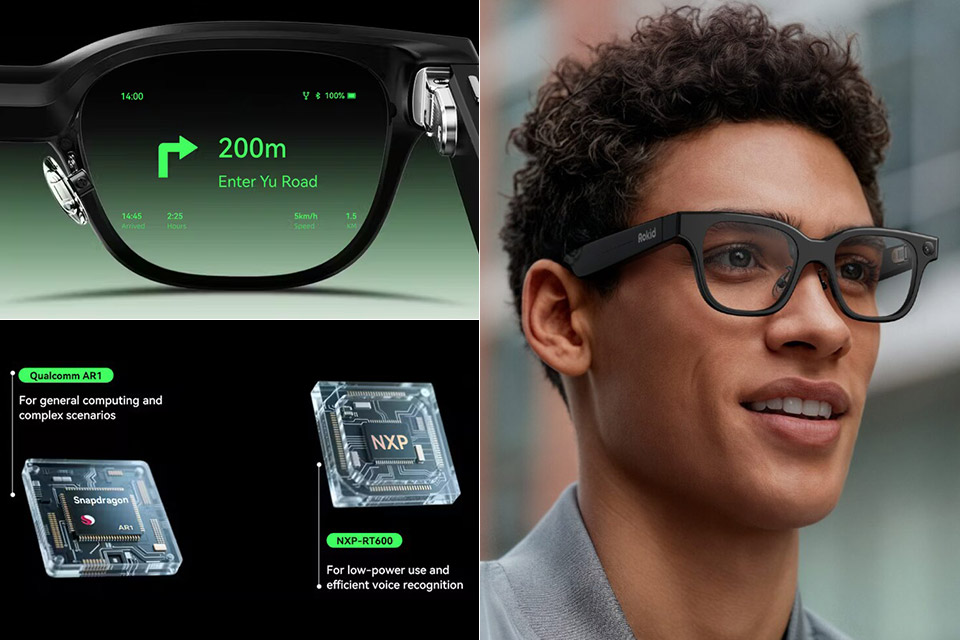
Style is powered by a dual-chip setup, with an NXP RT600 handling low-power, always-on tasks and a Qualcomm AR1 taking on heavier AI and imaging workloads. Rokid claims this architecture helps it reach up to 12 hours of battery life under typical use.
A 12MP camera with a Sony sensor on the front supports 4K capture. Video can be shot in three different aspect ratios, which Rokid says makes it easier for creators to make content for different platforms. Style can record up to 10 minutes of continuous footage, which Rokid is quick to point out exceeds the roughly three-minute limit on Meta Ray-Bans.
The glasses weigh 38.5 grams and sport ultra-thin lenses with anti-scratch coatings. Style is a bit lighter than the Rokid smartglasses thatwe reviewedearlier this year, which include a display. The company also offers transition lenses in a variety of colors and the frames are offered in two.
Style is available for reservation now with a one dollar deposit and will officially release globally January 19. The AI smart glasses will retail for $300. Glasses purchased for a vision-impaired user will receive a 20 dollar subsidy from Rokid.
Andre Revilla Contributing Reporter Tue, January 6, 2026 at 9:00 AM GMT+8
]]>
https://global.rokid.com/blogs/news/rokid-s-new-ai-glasses-are-a-lighter-longer-recording-answer-to-meta-ray-bans2026-01-07T17:16:43-08:002026-01-07T17:16:47-08:00Rokid’s new AI glasses are a lighter, longer-recording answer to Meta Ray-BansKuoAnnaRokid AI Glasses Style hit 10-minute 4K videos, 12-hour battery for $299.
What you need to know
Rokid's new AI glasses ditched the display to create a 38.5g frame you can actually wear all day.
Instead of AR overlays, you get a voice-first interface powered by ChatGPT and DeepSeek, paired with a 12MP Sony camera designed for instant, social-ready vertical video.
The glasses have up to 12 hours of battery life, prescription-ready frames, and a sub-$300 price.
CES 2026 just started in Las Vegas, but Rokid is already making waves with a radical move:smart glasseswithout a traditional microdisplay. While most companies are trying to fit displays into lenses, Rokid chose to focus on AI, camera features, and comfort for day-long comfort.
Display technology has arguably been the main challenge for smart glasses. Screens make them heavier, drain the battery more, and are uncomfortable to use for long periods. Rokid’s answer is simple: take out the display and rely on AI. The Style glasses weigh only 38.5 grams, making them feel more like regular spectacles than most other smart glasses.
AI does the heavy lifting instead of visuals
Rokid puts real-world help first instead of focusing on visuals. A 12MP Sony camera handles photos and videos, including vertical shots for social media. That means you can grab a clip or snap a photo without pulling out your phone or repositioning later.
The glasses have built-in microphones and open-ear speakers, so you can use AI assistants like ChatGPT and DeepSeek. You can ask for directions, get a meeting summary, or translate speech instantly.
Inside, Rokid uses two chips for better efficiency. The NXP RT600 chip manages low-power tasks, and Qualcomm’s AR1 platform takes care of AI and imaging.
Rokid says the battery can last up to 12 hours with normal use. Audio plays through speakers in the arms, so you can hear responses or notifications and still stay aware of what’s around you.
Design-wise, Rokid clearly wants Style to blend in. The frames support prescription lenses, including transition and tinted options, and the lenses are thin and scratch-resistant.
This isn’t Rokid’s first attempt at smart glasses, but it is its most consumer-friendly one yet. Previous models experimented with displays and QR-style interfaces, aimed more at enterprise or niche use cases.
Pre-orders are open viaRokid's websitewith a non-refundable deposit. Rokid plans a global launch later in January, with a price under $300.
Jay Bonggolto News Writer & Reviewer
]]>
https://global.rokid.com/blogs/news/rokid-unveils-ultra-light-ai-smart-glasses-at-ces-and-they-don-t-even-have-a-display2026-01-07T17:12:43-08:002026-01-07T17:12:49-08:00Rokid Unveils Ultra-Light AI Smart Glasses at CES—and They Don’t Even Have a DisplayKuoAnnaAt CES, Rokid introduced the Rokid Style, ultra-light (38.5g) voice-first AI smart glasses designed for everyday use, featuring no display but support for multiple AI platforms like ChatGPT, DeepSeek, and Qwen, along with global services such as Google Maps and AI translation. Priced from $299, the glasses offer prescription-first customization, up to 12 hours of use, a 12MP camera with 4K video, and will launch globally online on January 19.
Rokid has just announced new smart glasses at CES, the Rokid Style. The company says these are its “ultra-light, prescription-first, and designed for everyday life” smart glasses.
The Rokid Style smartglasses don’t have a display, and are ultra-light
These smart glasses are display-free, actually. As in, they don’t have a display, but are voice-centric AI glasses. Rokid says they’re combining an open AI ecosystem, prescription-first design, dual-chip architecture, and a strong commitment to global accessibility.
These glasses weigh only 38.5 grams, which makes them “the lightest full-featured AI glasses on the market,” at least according to Rokid. Unlike most similar glasses out there, these glasses support multiple AI engines, they’re not locked into one platform.
They support multiple AI platforms
The Rokid Style glasses support ChatGPT, DeepSeek, and Qwen platforms. They also integrated with global services such as Google Maps and Microsoft AI Translation, which enables AI use across regions and languages
Rokid also introduced a comprehensive global online prescription service, along with these glasses. Rokid Style glasses support a correction range from plano to ±15.00D covering: Myopia, Astigmatism, Presbyopia, Progressive lenses, and Functional lenses (photochromic, tinted, blue-light, UV, polarized, anti-reflective).
The Rokid Style glasses also feature ultra-thin lenses with anti-scratch coatings, and dynamic photoghromatic lenses available in six color options. They can transition from indoor glasses to outdoor sunglasses in 25 seconds.
You can get prescription lenses in 7-10 days
You can get your prescription lenses within 7-10 days thanks to Rokid’s new prescription platform.“AI glasses are becoming the most natural interface for the next era of computing. Clarity is a fundamental human right,”said Zoro Shao, Global General Manager at Rokid.
The Rokid Style smart glasses come with aviation-grade titanium alloy hinges, air-cushioned liquid-silicone nose pads, and a classic D-shaped frame design.
Thanks to their dual-chip architecture they can deliver up to 12 hours of typical daily use, and over 24 hours of standby on a single charge, says Rokid.
Rokid offers two color options, and the glasses can shoot 4K video
Rokid offers two frame colors, Jet Black and Translucent Gray. Rokid included a 12-megapixel Sony sensor in there, open-ear audio, and a creator-ready triple-format imaging system (3:4/4:3/9:16). They can shoot in 4K, by the way. They can keep recording for up to 10 minutes, unlike some other offerings out there.
The global retail price for Rokid Style starts at $299, and go all the way up to $398 for a ‘Premium Bundle’ That bundle includes Rokid Ai Glasses Style, 1.60 Prescription lens, and Photochromic lenses.
They’re now available for reservation, with an early-bird offer that allows customers to place a $1 deposit and receive a $20 discount. The global online launch will follow on January 19. The glasses will be available via Rokid’s website and some other online and offline retail channels.
Kristijan Lucic Editor
]]>
https://global.rokid.com/blogs/news/rokids-new-smart-glasses-might-be-the-best-ray-ban-meta-alternative-for-now2026-01-07T17:08:48-08:002026-01-07T17:13:19-08:00Rokid's new smart glasses might be the best Ray-Ban Meta alternative (for now)KuoAnnaThe new glasses feature a 12MP camera and a claimed 12-hour battery life. But Android XR is on the horizon.
TL;DR
Rokid has officially launched the Rokid AI Glasses Style.
These smart glasses take on the Ray-Ban Meta glasses with a 12MP camera and ChatGPT-powered assistant.
There’s no word on pricing just yet.
Rokid has been making glasses for a while now, including portable display glasses and AR spectacles. Now, the company has formally launched the Rokid AI Glasses Style as an alternative to the standard Ray-Ban Meta shades.
As the name implies, Rokid’s new smart glasses emphasize a sleek design rather than bleeding-edge specs. The company also claims that these are the lightest smart glasses on the market at 38.5 grams, although it’s unclear if this weight includes the lenses. Speaking of lenses, Rokid says it offers 11 prescription lens options.
The Rokid AI Glasses Style is also equipped with a 12MP camera on the left-hand side, with the company claiming that it offers three “native” capture formats (4:3, 3:4, 9:16). You can find an open-ear speaker in each arm for audio playback or listening to AI responses.
As for AI capabilities, the new glasses have a built-in AI assistant powered by ChatGPT’s GPT 5 tech. The assistant supports general queries, navigation, meeting summaries, and real-time translation across 89 languages. That’s broadly on par with most smart glasses released in the last year or so.
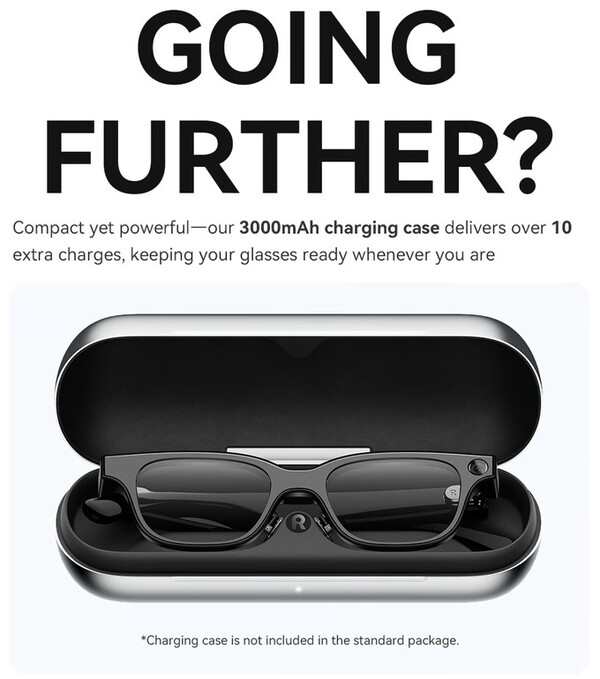
Rokid also claims that the AI Glasses Style supports up to 12 hours of “typical” use via the 210mAh battery. The company is also offering an optional 3,000mAh charging case and a 1,700mAh “capsule” battery.
The Rokid AI Glasses Style is available in Jet Black and Translucent Grey colors, starting at $299 and $309, respectively, for the sunglasses. These glasses are also available in photochromic options, starting at $349. The product goes on sale from January 19. The announcement comes as Google, Samsung, and other partners gear up to offerAndroid XRglasses. So you might want to wait for those products if you value a rich app ecosystem and access to Google’s services.
By Hadlee Simons
January 5, 2026
]]>
https://global.rokid.com/blogs/news/these-smart-glasses-beat-the-meta-ray-bans-for-me-with-useful-features-and-a-cheaper-price2026-01-07T17:04:44-08:002026-01-07T17:04:50-08:00These smart glasses beat the Meta Ray-Bans for me with useful features and a cheaper priceKuoAnnaThe new Rokid Style glasses have debuted at CES, and are lightweight, comfortable, and surprisingly functional.
ZDNET's key takeaways
Rokid AI Glasses are lighter and more comfortable than Meta Ray-Ban.
AI features are solid, but speakers and responses lag behind Meta.
At $299, Rokid undercuts Meta, despite a clunky charging system.
I have been using theMeta Ray-Ban (gen 1) smart glasses for two years now, and while I love them for the most part, I've consistently found myself wishing they were lighter. They tend to get uncomfortable when I'm using them for long durations. And that's where the new Rokid smart glasses come in.
AtCES 2026, Rokid unveiled the Meta Ray-Ban glasses rival that many have been waiting for. The name, Rokid AI Glasses Style, might be a mouthful, but they deliver exactly where the Meta glasses fail. I've been using them for a couple of days, and here's how they differ from the Meta Ray-Ban glasses.
Lighter profile is a welcome change
Prakhar Khanna/ZDNET
As a long-time Meta Ray-Ban user, it was refreshing to move to the Rokid AI Glasses Style. At 38.5 grams, they are lighter than their Meta counterpart (around 50 grams, depending on the variant you go for). Even if you opt for polarized lenses, you get a 45.5-gram pair of smart glasses. The lightweight design is apparent as soon as you unbox them.
They look good and wear slightly raised but comfortably, thanks to the added nose pads. I'm a sweaty person, and my Ray-Bans get slippery after a while. So the air-cushioned liquid-silicone nose pads are a good addition -- they keep my glasses in place. Like the Meta Ray-Ban glasses, you get touch controls and a button on the right stem, and a camera with LED light (for privacy) on the front.
As for the lens itself, I have the Jet Black sunglasses variant. They are decent lenses that block sunlight comfortably. You can replace them or opt for Rokid's global online prescription service if you want a corrective lens. I prefer the polarized lenses of my Ray-Bans because of the green tint, but these function well, too.
Rokid AI Glasses Style image samples
Prakhar Khanna/ZDNET
he Rokid AI Glasses Style are powered by the Qualcomm AR1 chipset for AI and imaging workloads.
They offer multiple AI engines, including ChatGPT, DeepSeek, and Qwen -- the system chooses which one to opt for based on your queries. However, I only had the option to choose ChatGPT in my testing process. You can trigger the AI assistant using the "Hi Rokid" wake word. In my moderate internet coverage zone, the responses were slow, but it worked similarly to the Meta AI.
They also feature Microsoft AI Translation in 89 languages, where the glasses support 12 languages for the wearer. Plus, you get Google Maps integration for navigation. It works fine through the open-ear audio, which isn't as immersive as the Meta Ray-Bans. I found the speakers to be inferior in my initial impressions, but I'll use them more before I come to a conclusion.
Prakhar Khanna/ZDNET
Pairing the Style glasses with my iPhone was an easy process. I just had to install the Hi Rokid app and follow its on-screen instructions. The app has four menus at the bottom: AI Assistant (a place to see your queries), Home (to adjust settings for volume, recording, translation, and more features), Gallery (to view photos and videos), and Me (for account management).
You can further customize the settings for video recording resolution, choose the aspect ratio for your photos, and opt for AI models. Overall, it is a clean and user-friendly interface.
Rokid's AI Glasses Style have a 12MP Sony sensor, which supports 4K capture in 3:4, 4:3, and 9:16 aspect ratios. The output looks good and is definitely social media share-worthy.
You can record for up to 10 minutes, but I've yet to test the battery life when going up to that mark. These smart glasses are rated to deliver up to 12 hours of typical daily use and 24 hours of standby time on a single charge.
I don't mind the drawbacks at this price
I don't like the proprietary charging mechanism of the Rokid AI Glasses Style
Prakhar Khanna/ZDNET
The battery life brings me to the most annoying aspect of the Rokid AI Glasses Style -- their charging mechanism.
Unlike the Meta Ray-Ban and Oakley HSTN glasses, they use a proprietary pogo-pin attachment (located on the right stem) to charge. This means I have to carry an extra small wire (pogo-pin to Type-C connector) to charge my smart glasses. As a frequent traveler, I like to keep the wires to a minimum, and I'm not fond of this approach.
Smart glasses are meant to be lifestyle-first products. So comfortable wear, a charging case, and the way they charge are as important as how good they look to me. Meta nailed almost all of these aspects, while Rokid manages to be great at one (comfortable to wear), decent at another (carry case), and annoys me on the third (charging mechanism).
The company bundles a decent-looking carry case and a pouch with its new glasses.
It's a traditional case with no battery, so don't expect to get any extra charges out of the case.
Prakhar Khanna/ZDNET
The Rokid AI Glasses Style are priced at $299, which is cheaper than the latest $379 Meta Ray-Bans. While you can buy the gen 1 Meta Ray-Ban glasses for $224 now, their battery life won't hold up if you record multiple three-minute videos. You can get a $20 discount on the Rokid smart glasses by placing a $1 deposit as an early-bird offer.
Rokid is also offering a "Golden Bundle," which includes 1.60 index prescription lenses with photochromic functionality for $398. The same can cost over $500 if you opt for the Meta AI Glasses.
They will go on sale starting January 19 on the company's global website and "selected online and offline retail channels worldwide." At launch, you can only buy them in the Jet Black color option, whereas the Translucent Gray version is scheduled to launch in March.
]]>
https://global.rokid.com/blogs/news/rokid-glasses-blend-ai-ar-and-style-in-a-featherlight-frame2025-09-02T00:39:29-07:002025-09-02T00:39:36-07:00Rokid Glasses Blend AI, AR, and Style in a Featherlight FrameKuoAnna
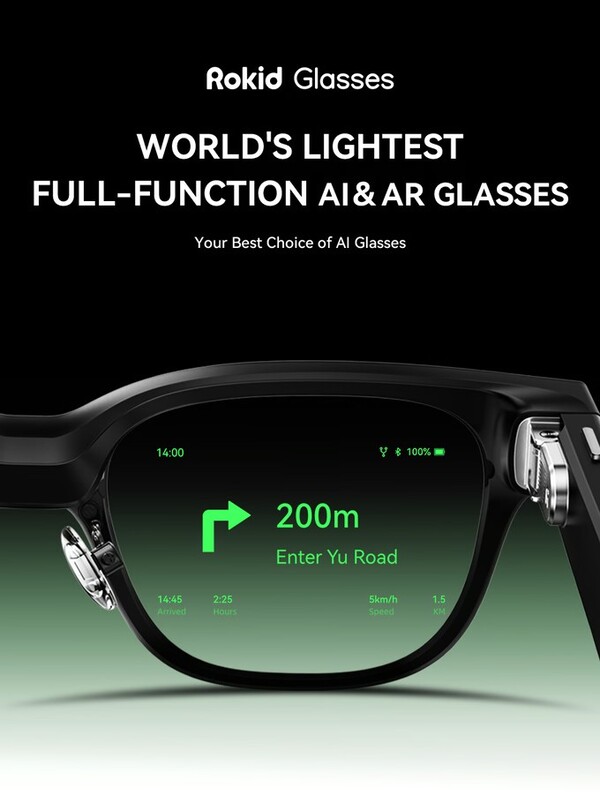
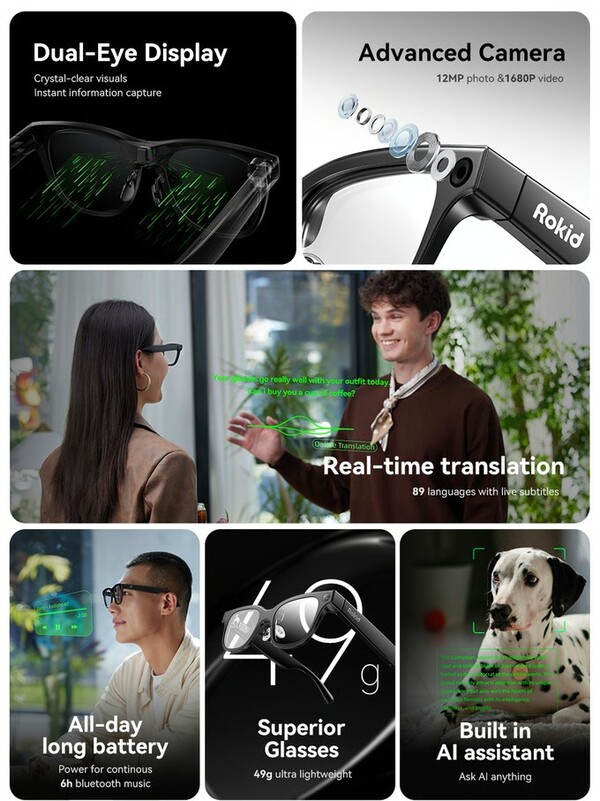
When I travel, I want technology that blends into the background while making my life easier. That’s exactly what Rokid’s new smart glasses deliver. Announced in New York City this week, theRokid Glassesare the world’s lightest full-function AI and AR glasses at just 49 grams. The Glasses combine a 12MP first-person camera, dual Micro LED waveguide displays, integrated directional audio, and AI-driven functions like real-time translation, transcription, object recognition, and navigation.
After spending hands-on time with them, I can say they look and feel just like regular eyewear – even on my somewhat narrow face. They’re light, comfortable, and discreet, a welcome shift from the bulky AR headsets of the past.
Real-world usefulness
The feature that strikes me as the most useful is the integrated real-time translation. I’ve been in situations abroad where conversations quickly become a frustrating mix of hand gestures and guesswork. With Rokid Glasses, the integrated microphones pick up the voice of the speaker, translates the speech using AI, and displays the translation near-instantly as on-screen subtitles.
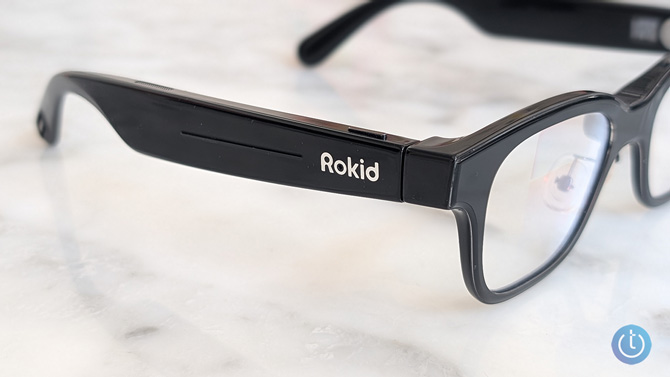
The Glasses also have a built-in 12MP first-person camera, which I’d use constantly for in-the-moment photos. Pressing the button on the side (above the Rokid logo) enables you to take first-person perspective photos and videos. Since the Glasses are always available (they are already sitting on your face, after all), it can make for a more convenient process than pulling out your phone while exploring a new city, especially if you need your hands free.
And with integrated ChatGPT (Rokid lets you select other LLMs through the app, if you have an alternative preference), I can get local restaurant recommendations, directions, or even a quick history lesson on a landmark – it’s like having a personal tour guide always with you.
Rokid’s Head of Global Operations & Business Innovation, Irene Long, emphasized that Rokid views the glasses not just as a product, but as a means to break down barriers. Long told me she relies most on the teleprompter and translation features herself. “Personally, I love traveling. Whenever I was in Eastern Europe or the Middle East, I couldn’t understand the local language. I used Rokid Glasses to translate,” she explained. She also highlighted how the glasses help her capture photos and videos while hiking or running marathons – moments that would be nearly impossible to record with a phone in hand.
Specs and ecosystem
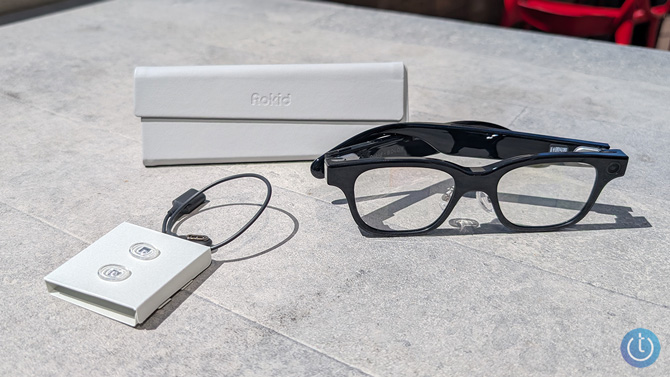
The Rokid Glasses run on Qualcomm’s new AR1 platform, with dual Micro LED waveguide displays (480×398 resolution per eye, up to 1500 nits brightness), directional speakers, and a four-microphone array with AI noise cancellation. They’re water-resistant (IPX4), include a charging case that provides up to 10 recharges, and support prescription lens inserts via a magnetic clip. The clip in lenses are a smart solution if you'll occasionally be using the Glasses both with and without contacts, because you can pop them out when you don't need them and back in when you do.
Beyond hardware, Rokid is pushing for a global developer ecosystem, expanding its 15,000-member XR developer community from China to the rest of the world. That means more localized apps, real-world use cases, and, ideally, a richer experience for users that will expand over time.
Price and availability
The Rokid Glasses have launched onKickstarterfor $499 (MSRP $599) and will ship to backers in November.
My take
AR glasses have been hyped before, but Rokid seems to have nailed the formula: lightweight, stylish, and genuinely useful. I wouldn’t wear something that looked awkward or drew stares, but these glasses pass the style test. For travel, especially, the combination of translation, AI assistance, and hands-free photography makes them a device I’d actually want to wear.
If smart glasses are ever going to move beyond novelty, this is the kind of design and functionality that could make it happen.
]]>
https://global.rokid.com/blogs/news/rokid-delighted-folks-with-a-high-profile-marketing-event2025-09-02T00:32:38-07:002025-09-02T00:32:43-07:00Rokid Delighted Folks with a High-Profile Marketing EventKuoAnnaRokid, a company specializing in augmented reality technology, executed a high-profile marketing event in New York City's Times Square to generate public interest for its forthcoming product launch. The campaign utilized a coordinated live performance by dancers and a digital billboard takeover to physically demonstrate the advertised features of Rokid's new smart glasses, which offer high-end capabilities like voice commands, gesture controls, and real-time translation. The brand also strategically emphasizes that its glasses are "the world's lightest full-function" device. This directly addresses a significant historical barrier to consumer adoption of AR wearables — discomfort and impracticality due to bulkiness and weight.
Through its high-profile marketing event, Rokid hoped to transform an abstract technological concept into a tangible and visually engaging public spectacle. The event is framed as a precursor to a formal product unveiling, where technical specifications and hands-on experiences will be provided to industry professionals and the press.
Trend Themes
1. Augmented Reality Event Marketing -Leveraging live performances and digital billboards enhances consumer engagement by showcasing AR technology in an interactive and memorable way.
2. Lightweight AR Wearables -Addressing common consumer concerns about device weight opens opportunities for broader adoption of augmented reality glasses in everyday life.
3. Interactive Product Demonstrations -Executing live demonstrations allows companies to transition complex tech features from abstract ideas into engaging, real-world applications for consumers.
Industry Implications
1. Augmented Reality -The focus on lighter, more user-friendly AR devices addresses key challenges in expanding this industry's market reach.
2. Live Entertainment -Integrating technological elements into live performances adds a new dimension to audience engagement and broadens the scope for entertainment experiences.
3. Outdoor Advertising -High-profile digital displays and interactive events revolutionize traditional ad strategies by fusing technology and live interaction in public spaces.
]]>
https://global.rokid.com/blogs/news/rokid-glasses-are-lightweight-ar-smart-glasses-with-micro-led-displays-and-a-499-price-tag2025-09-02T00:18:53-07:002025-09-02T00:18:57-07:00Rokid Glasses are lightweight AR smart glasses with Micro-LED displays and a $499 price tagKuoAnnaRokid's new AR smart glasses feature Micro-LED displays, real-time translation, and an integrated camera. The glasses also have AI features and a battery life of up to 8 hours.
Nearly a year after itsdebutin China, Rokid has decided to bring its AR smart glasses, the Rokid Glasses, to global markets. Touted as the world's lightest camera-equipped smart glasses, Rokid says the Rokid Glasses are designed for both consumer and professional use.
The Rokid Glasses boast features such as real-time translation of up to 89 languages. The glasses will display a translation of written text, and with the integrated speakers, they can also read out loud what they hear, too. The integrated microphones can also pick up conversations and translate them for the user. The Rokid Glasses uses ChatGPT and Microsoft's online translation engine. Rokid also says there's support for offline translation of 5 languages using a proprietary LLM. It can also transcribe conversations during a meeting, and using AI, create a summary.
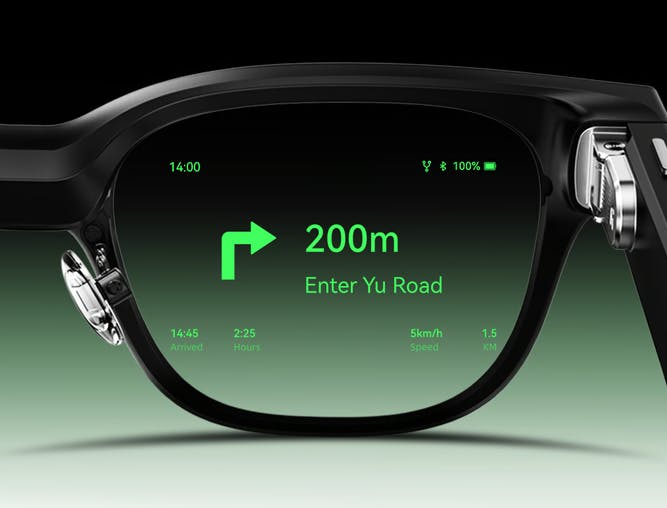
The Rokid Glasses can be used as a teleprompter, allowing users to ditch speech notes. Another feature is the ability to take down voice notes and reminders. The Rokid Glasses support AR navigation and will display not just directions, but also speed, duration, and arrival time.
Weighing just 48 grams, Rokid says its IPX4-rated smart glasses have a magnesium-aluminium alloy frame and TR90 temples with support for prescription lenses. The Rokid Glasses feature dual monochrome green Micro LED displays with a diffractive optical waveguide. Each display has a 480 x 398 resolution, 1500 nits of brightness, and a 23° Field of view. Users will be able to adjust the text size and brightness of the display.
There's a 12MP f/2.25 Sony IMX681 camera with a 3024 x 4032 resolution and a 109° field of view. A capture button sits on the right temple, and a long-press allows users to switch between video and audio recording. Rokid has included a privacy indicator light to alert people when you are filming. The glasses have two AAC speakers and four microphones with AI noise reduction.
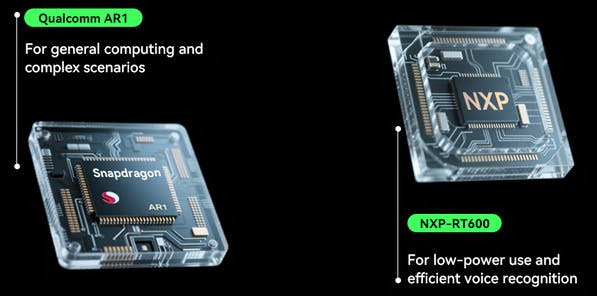
The Rokid Glasses are powered byQualcomm's AR1 processorwhich handles general computing and complex tasks while a secondary NXP RT600 chip handles voice recognition and low-power tasks. There's 2GB of RAM, 32GB of storage, Bluetooth 5.3, and Wi-Fi 6. The Rokid Glasses works with a companion app on your mobile phone. Users will be able to adjust various settings within the app, access recorded and captured content, and also update the glasses.
The smart glasses are equipped with a 210mAh battery capacity, and while they have a proprietary charger with support for fast charging (80% in 20 minutes), there's an optional case with a 3,000mAh battery that holds up to 10 full recharges. Rokid says the glasses should provide up to 10 hours of mixed use but real-life usage will vary depending on whether you are just recording or have the displays permanently on.
The Rokid Glasses are available to back on Kickstarter now for $499 but will cost $599 when they launch. As at the time of writing, Rokid has already received almost $686,000, surpassing by no small margin its $20,000 goal despite having 43 days left.
]]>
https://global.rokid.com/blogs/news/rokid-launches-worlds-lightest-full-function-ai-ar-smart-glasses2025-09-02T00:14:51-07:002025-09-02T00:14:53-07:00Rokid Launches World's Lightest Full-Function AI & AR Smart GlassesKuoAnna
Rokid has officially launched Rokid Glasses, the world's lightest full-function AI & AR smart glasses. The glasses are lightweight, AI-powered, and offer real-time translation, object recognition, navigation, transcription, notifications, and other AI-driven functions. Built on the Qualcomm AR1 platform, they strike a balance of style, performance, and industrial-grade reliability, making them ideal for everyday life. Rokid has also partnered with over 50 universities worldwide and has a large XR developer community in China.
Rokid, a leading innovator in human-computer interaction and augmented reality, has officially launched Rokid Glasses, the world's lightest full-function AI & AR smart glasses. The glasses, weighing in at 49 grams, combine advanced AI capabilities with a sleek design, making them ideal for both consumer and professional use.
Rokid Glasses feature a 12MP first-person camera, Micro LED waveguide displays, and integrated audio, offering real-time translation, object recognition, navigation, transcription, and notifications. Built on the Qualcomm AR1 platform, these smart glasses deliver enterprise-grade performance with consumer-ready comfort and design [1].
The launch event in New York City marked the beginning of a new chapter for Rokid. The company aims to redefine wearable computing and make immersive computing accessible, light, and ready for real life. Rokid has partnered with over 50 universities worldwide and boasts a large XR developer community in China, with over 15,000 developers and 5,000 corporate developers already leveraging Rokid's open SDK and platform resources [2].
The launch event featured a thought-leadership panel titled "From Mobile to Wearable: The Rise of AI Glasses," where experts explored the shift from smartphones to wearable AI devices. The panel included Andrea Smith, Dr. Vasant Dhar, Dr. Orson Xu, and Dr. Shawn Shen, who discussed the adoption curve of AI glasses, their impact on human-computer interaction, healthcare applications, privacy, trust, and the future role of wearable AI in society.
Rokid also introduced a special podcast session titled "AI Glasses For Social Good," featuring Liang Guan from Rokid in conversation with executive speakers from CaringKind. The discussion explored how AI-powered glasses can enhance accessibility, caregiving, and memory support for communities facing cognitive decline.
The launch of Rokid Glasses comes at a critical time for the wearable market. Qualcomm's Snapdragon W5+ Gen 2 and W5 Gen 2 platforms, built on a 4nm process, offer enhanced performance, efficiency, and connectivity, addressing several foundational barriers that have hindered the growth of the wearable market [2]. These advancements, such as NB-NTN satellite connectivity and machine learning GPS accuracy, aim to transform wearables into trusted companions, enabling two-way emergency messaging without cellular or Wi-Fi coverage.
Rokid's Kickstarter campaign for Rokid Glasses reached 400,000 USD in just 8 hours, demonstrating strong global demand for intelligent, lightweight wearable computing. The glasses are now available for early supporters on Kickstarter, offering backers the chance to be the first to experience the future of AI-powered wearable computing.
]]>
https://global.rokid.com/blogs/news/smarter-than-the-average-smart-glasses2025-09-02T00:06:30-07:002025-09-02T00:06:34-07:00Smarter Than the Average Smart GlassesKuoAnna
Rokid's new smart glasses offer both AI and AR capabilities in a compact design with long battery life and a reasonable price.
With a smartphone already in virtually every pocket these days, mobile device developers are looking for the next frontier in portable computing. Earbuds are a strong contender, especially since Apple introduced their AirPods. But you can only do just so much with an earable. Smart glasses are a much more promising platform, as they can interact with both the eyes and the ears. However, these devices are still more experimental, which is limiting their penetration in the market.
Broadly speaking, smart glasses have taken two primary forms — those that focus on integrating artificial intelligence (AI) into the wearer’s daily life, and those that overlay an augmented reality (AR) display on the real world. The former style tends to be more compact, but they are limited to audio interactions. AR smart glasses, on the other hand, can project digital information onto the real world, offering a more immersive experience but often at the cost of being bulkier or having more limited battery life.
A Kickstarter recently launched by Rokid is heating up fast because they promise to offer the best of both worlds in one compact device. Their Rokid Glasses provide both the typical AI and AR functions of smart glasses, along with a reasonable battery life and cost, yet they have only slightly chunky frames. If the device works as well as advertised, it could be one of the first pairs of smart glasses that people actually want to use in their daily lives.
The 49 gram aluminum-magnesium alloy frames hide a Snapdragon AR1 chip that was custom-designed for capturing images and videos and running local AI algorithms on smart glasses platforms and an NXP RT600 low-power microcontroller for voice recognition applications. A forward-facing camera can capture 12MP photos and 1680p video. A high-resolution, binocular green display superimposes information on top of the wearer’s field of vision, and a pair of speakers are positioned over the ears.
The 210mAh battery does not have an exceptionally high capacity, but the low-power components used by the Rokid Glasses can stretch it pretty far. That does, of course, depend on how you use the glasses, however. Rokid claims you can get up to 10 hours of mixed use, but if you have the display on all the time, or are continuously recording video, battery life could drop to as little as 45 minutes. If you happen to be a power user, the good news is that there is a quick charge capability that recovers an 80% charge in 20 minutes.
So what exactly can you do with Rokid Glasses? They offer a lot of possibilities, including two-way, real-time language translation, AR navigation, and ChatGPT integration. Given the mix of technologies available on the platform, the list of capabilities should grow over time.
At the time of writing, the glasses are available for a pledge of just under $500. The Rokid team expects to start shipping the devices in November, but keep in mind that Kickstarter campaign timelines can slip (or they may not deliver at all), so caveat emptor.
]]>
https://global.rokid.com/blogs/news/rokid-s-new-ai-glasses-are-official2025-09-02T00:03:25-07:002025-09-02T00:03:53-07:00Rokid’s New AI Glasses are OfficialKuoAnnaSmart wearable brand Rokid has certainly made a name for itself throughout the past few years, and the brand recently announced the launch of its new Rokid Glasses, the latest addition to its lineup of smart glasses. Powered by Qualcomm’s AR1 platform, Rokid says that the glasses are designed for both personal and professional use.
The Rokid Glasses manage to stay pretty lightweight at just 49 grams, and come with a design that’s mostly discreet—you probably wpuldn’t even realize that they’re smart glasses at first glance. Capable of supporting full-function AI and AR capabilities, the glasses also come with a 12-megapixel camera in addition to built-in Micro-LED waveguide displays.
Rokid says that the new glasses offer a wide range of AI-driven features, including real-time translation, object recognition, navigation, transcription, as well as access to notifications. Currently up on Kickstarter, Rokid has managed to raise more than $400,000 in just a number of hours.
The company adds that it’s expanding its developer ecosystem globally, and is targeting over 1,000 international developers in an initiative that will support localized apps and services for users worldwide. Rokid has also partnered with more than 50 universities to foster innovation, with over 200 projects already developed using Rokid’s software.
]]>
https://global.rokid.com/blogs/news/rokid-glasses-teases-the-future-of-smart-eyewear-with-chatgpt-integration2025-09-02T00:00:02-07:002025-09-02T00:00:06-07:00Rokid Glasses Teases the Future of Smart Eyewear with ChatGPT IntegrationKuoAnna
Smartglasses have been teasing us for years with promises of convenience and coolness. Rokid, a company that has been working on AR tech for over a decade, has finally launched the Rokid Glasses. They pack AI and AR into a slim, lightweight device that weighs only 49 grams.
The Rokid Glasses weigh less than a deck of cards and feel like a feather on your face. The frame is made of magnesium-aluminum alloy and strikes a balance between strength and comfort, with TR90 temples that bend just enough to hug your head without pinching. At 49 grams, they’re lighter than Meta’s Ray-Ban smartglasses, but they have something those don’t—a dual monochromatic green Micro LED display with 480×398 resolution per eye and 1,500 nits of brightness.
A 12-megapixel Sony camera sits front and center, capable of taking photos and video up to 60fps. Whether you’re shooting a sunset in 4:3 or a vertical video for social media in 9:16, the camera is super flexible. It has HDR optimization, night vision mode and electronic stabilization so your video won’t stutter.
Dual speakers sit above your ears and deliver great sound for music, calls and podcasts without earbuds. A 4-mic array reduces background noise so voice commands to the built-in AI assistant sound natural, even in a crowded café. Speaking of AI, the glasses have ChatGPT which can do real-time translation in 89 languages, object recognition and text transcription.
These smartglasses are powered by a Snapdragon AR1 chip, designed for wearables, for imaging and AI tasks while an NXP RT600 microcontroller handles voice recognition. Wi-Fi 6 and Bluetooth 5.3 provide smooth connectivity to your phone or other devices. The 210mAh battery is small but Rokid gets great performance out of it. Mixed use can last up to 10 hours, and heavy use (continuous video recording or display activity) reduces it to around 45 minutes, but a 20 minute charge can get you back to 80%. A portable charging case with 10 recharges is perfect for all day use.
Besides translation, they have turn-by-turn navigation that appears in your vision, perfect for touring a new place without looking at your phone. A teleprompter option shows scrolling text during presentations which could be a game changer for public speakers. There’s also a posture monitor to help you get into better alignment during long work sessions. The glasses are powered by Rokid’s YodaOS-Master, an Android based system that seems easy to use, with swipe controls on the frame for app and menu navigation.
Price is always a concern with new tech and Rokid’s Kickstarter starts at $499, full retail price is $599. That’s more than Meta’s Ray-Bans but the extra screens and AI features are worth it for those who want more than just audio only glasses. Is there a catch? These are still a Kickstarter project with delivery until November 2025.
]]>
https://global.rokid.com/blogs/news/rokid-ar-spatial-wins-zona-sarpi-design-award-at-milan-design-week-2025-bridging-aesthetics-and-practical-ar-innovation2025-09-01T21:18:12-07:002025-09-01T21:18:17-07:00Rokid AR Spatial Wins ZONA SARPI Design Award at Milan Design Week 2025, Bridging Aesthetics and Practical AR InnovationKuoAnnaAt this year’s Milan Design Week, one award stood out not just for celebrating aesthetic excellence but for highlighting the practical future of wearable technology in creative industries.Rokid AR Spatial, the latest AR glasses set from Chinese tech pioneerRokid, received the MILANO DESIGN WEEK ZONA SARPI AWARD for AR Technological Aesthetic Design, honoring its refined balance of fashion, functionality, and user-centered design.
Presented annually as part of the Zona Sarpi cultural initiative during Milan Design Week, the Zona Sarpi Award recognizes groundbreaking technologies and cross-cultural innovations that reflect outstanding design standards.
The jury commended Rokid AR Spatial for its elegant product language, minimalist material treatment, and its ability to integrate advanced technology into everyday creative environments.
What distinguished Rokid AR Spatial was not a promise of far-fetched futurism, but its sophisticated, real-world usability. Weighing just 75 grams and constructed from aerospace-grade materials, the glasses evoke the look and feel of premium eyewear. During its showcase at the ADI Design Museum, the product sparked deeper conversations about the role of augmented reality in modern creative practice.
While it does not claim full spatial computing capabilities or advanced room anchoring, Rokid AR Spatial excels in delivering prosumer-grade AR tools to those who need them most: architects sketching on-site, design students analyzing 3D models in context, and creative teams needing lightweight, multi-screen productivity tools while on the move.
As one visiting design professor from Switzerland noted:
“These AR glasses wouldn’t feel out of place in a studio or classroom. It’s subtle, and that’s powerful.”
For Rokid, the award represents more than just a product milestone—it’s a signal of growing international recognition for Chinese innovation through a design-centric lens. Already active in over 80 countries, Rokid has quietly built a reputation as a leader in AI and AR-integrated hardware. Yet Milan offered something distinct: validation from the global design community, an audience that prioritizes craftsmanship, ergonomics, and elegance as much as functionality.
Following its earlier showcase at CES 2025, where Rokid first teased AR Spatial in portable immersive media, the company continues evolving its smart eyewear line, bringing it into direct conversation with the world’s leading designers.
As AR technology matures, Rokid’s win at Milan shows that the design sector is ready to embrace augmented reality as an extension of creative workflows. From storyboarding and site visits to concept presentations and team collaboration, AR is no longer just a hypothetical concept. It’s wearable, testable, and now award-winning.
]]>
https://global.rokid.com/blogs/news/rokid-ar-spatial-showcases-at-milan-design-week-2025-amplifying-human-computer-interaction-designs-and-ar-applications2025-09-01T21:14:54-07:002025-09-01T21:16:01-07:00Rokid AR Spatial Showcases at Milan Design Week 2025, Amplifying Human-Computer Interaction Designs and AR ApplicationsKuoAnna
Milan Design Week 2025successfully concluded last week in Milan, drawing global visitors and design professionals to celebrate innovation, culture, and technology. Among the standout exhibits wasRokid AR Spatial, a pioneering AR product that garnered widespread attention throughout the event.
As a leading Chinese enterprise in AR and AI technologies,Rokidintroduced its latest smart glasses, Rokid AR Spatial, to the international design stage, specifically exhibiting under Milano Design Week China & Design. This offered attendees a firsthand look at the company's strength in innovation and its vision for immersive technology.
Rokid AR Spatial on Display at the ADI Design Museum
Rokid’s AR Spatial was exhibited at theADI Design Museum, the main venue for the China Pavilion, where visitors were invited to interact with the device. The immersive AR experience provided by Rokid's glasses resonated strongly with audiences, garnering praise for both its design and usability.
Founded in 2014, Rokid is a technology platform company dedicated to human-computer interaction. Recognized as a National High-Tech Enterprise in 2018, the company has positioned itself as a pioneer and leader in the AR field. Its work spans AR hardware and software development, centered around its proprietary YodaOS operating system and ecosystem.
Through extensive research in voice recognition, natural language processing, computer vision, optical display, chip design, and hardware development, Rokid integrates AI and AR technologies into real-world applications, empowering industries, enhancing user experiences, and supporting public safety initiatives. Its products are now deployed in over 80 countries and regions.
At first glance,Rokid AR Spatialresembles a pair of stylish sunglasses. With a sleek, minimalist design, the glasses use multi-layer coatings, masking, and high-precision finishing techniques to deliver a polished look. The industrial design pays special attention to ergonomics, featuring air-cushioned nose pads and soft-hinged temple arms that reduce pressure on the nose and improve overall comfort and compatibility.
Crafted with aerospace-grade magnesium-aluminum alloy, titanium, and TR90 composite materials, the glasses weigh only 75 grams. Despite their lightness, they deliver an expansive visual experience equivalent to a 300-inch screen, enhanced by professional-grade image tuning and next-gen ultra-linear speakers for a powerful audiovisual effect.
Beyond entertainment, Rokid AR Spatial supports a multi-screen display mode, making it suitable for light productivity, especially for mobile professionals.
Milano Design Week Zona Sapi Award Winner
During the exhibition, Rokid AR Spatial was honored with theMilano Design Week Zona Sapi Award for AR Technological Aesthetic Design, recognizing its excellence at the intersection of design and frontier technology.
Visitors from fields such as architecture and product design expressed great interest in the product. Many noted that Rokid AR Spatial brings new possibilities to creative workflows, allowing real-time viewing and editing of virtual models within physical environments, which enhances both precision and efficiency.
Its multi-screen interaction capability also proved useful for collaborative design presentations and discussions, particularly in fields like spatial planning, architecture, and product prototyping. The blend of virtual and physical space enabled by AR technology significantly boosts visual communication and interactivity during the design process.
Through its participation in Milan Design Week 2025, Rokid not only expanded its global brand presence but also demonstrated the strength and potential of Chinese innovation on an international stage. Rokid will continue to push the boundaries of AR development, pioneering smarter and more efficient tools for users worldwide.
]]>
https://global.rokid.com/blogs/news/rokid-returns-to-the-global-spotlight-at-milan-design-week-with-the-ar-spatial2025-09-01T21:13:50-07:002025-09-01T21:13:53-07:00Rokid Returns to the Global Spotlight at Milan Design Week with the AR SpatialKuoAnna
Following its impressive display at CES 2025, where Rokid impressed global viewers with its stunning applicability and comfort, Rokid is back in the global limelight, this time at Milan Design Week 2025.
At the center of Rokid’s presentation in Milan is theRokid AR Spatial, an advancement in AR eyewear that fully leverages the Max 2’s advantages—portability, visual clarity, and comfort—to create a comprehensive, immersive spatial computing experience. Located inside the ADI Design Museum, AR Spatial enthralled both visitors and design experts with its sophisticated multi-screen functionality, smooth real-world integration, and stylish, contemporary industrial design.
While the Max 2 features a 215-inch cinematic display, the AR Spatial elevates the experience to a 300-inch equivalent augmented setting, not just for visual media but also for multitasking, modeling, collaboration, and creativity. It connects with Bluetooth mice and keyboards, supports multiple screen displays, and merges high-definition visuals with a design crafted from aerospace-grade materials for ergonomic comfort.
Appropriately, Rokid AR Spatial received the MILANO DESIGN WEEK ZONA SARPI AWARD for AR Technological Aesthetic Design, recognizing its balance of functionality and style. With a profile resembling high-end sunglasses and a lightweight build of just 75g, the glasses garnered acclaim for their comfort and design.
Additionally, Rokid’s YodaOS platform supports streamlined AR workflows, while ultra-linear speakers and distinctive lens coatings enhance the sensory experience. Together, they establish what prosumer-grade AR technology can achieve in real-life creative and enterprise applications.
Established in 2014, Rokid has been pioneering human-computer interaction for over a decade. With AR solutions now utilized in over 80 countries, its strategy merges core R&D with extensive applications in public safety, enterprise, and consumer sectors.
CES 2025 may have unveiled Rokid AR Spatial to the global audience, but Milan Design Week 2025 solidified its pioneering positioning in wearable AR.
]]>
https://global.rokid.com/blogs/news/rokid-ar-glasses-at-beyond-expo-2025-the-future-of-lightweight-ai-wearables2025-07-25T04:28:52-07:002025-09-01T19:59:51-07:00Rokid AR Glasses at BEYOND Expo 2025: The Future of Lightweight AI WearablesKuoAnnahe 5th BEYOND Expo has come to a successful close. This grand event focused on innovative products that lead to future trends. As one of the top AR brands honored with the prestigious "BEYOND BEST CHOICE" award, we proudly presented our next-generation Rokid AR glasses. Through compelling live demonstrations and immersive experiences, the glasses garnered significant attention from industry experts and attendees alike, showcasing the future development direction of lightweight AI wearable devices.
Overview of BEYOND Expo 2025
BEYOND Expo 2025, one of Asia's most vibrant platforms for innovation and cross-border dialogue, attracted over 1,000 exhibitors, 30,000 attendees, and more than 500 investors from over 120 countries and regions. During the event, BEYOND Expo 2025 hosted a diverse range of forums and summits, including the BGlobal Summit, Wealth Summit, and Global Investment Summit. These activities covered a wide range of cutting-edge topics, including AI, health innovation, clean energy, and financial technology, demonstrating the latest scientific achievements and development trends.
Rokid AR Glasses at BEYOND Expo 2025
Our Rokid AR glasses made a striking appearance at the BEYOND, drawing widespread attention with sleek design, powerful lens translation capabilities, and adaptability to multiple scenarios.
1. Lightweight
Staying true to the brand vision of "making technology invisible," this smart headset seamlessly integrates cutting-edge technology into an ultra-lightweight body. Weighing just 49 grams and featuring minimalist, fluid lines, it offers an almost imperceptible wearing experience.
Hidden within this compact design is a series of impressive hardware configurations and functions:
2. AI-driven Camera
The AI-powered 12-megapixel camera with ultra-high resolution and precise image recognition capabilities can effortlessly handle tasks from capturing high-definition footage to complex object identification.
3. Real-time Subtitles
The real-time captioning feature breaks down the language barrier. From multilingual communication in international meetings to everyday conversations during overseas travel, it instantly converts speech into text displayed right before the user's eyes, ensuring smooth and seamless cross-language interaction.
4. 1000nits Brightness
The exceptional 1000nits brightness guarantees clear visibility of on-screen content even under direct sunlight, effectively addressing the common AR device pain point of blurry displays in bright environments. Whether you're navigating outdoors, checking reference materials, or working under sunlight, our Rokid AR glasses deliver a consistently stable and crystal-clear visual experience.
5. Collaboration Strategy
Depending on the immense influence of the BEYOND platform, we successfully reached a broader global audience and actively deepened our collaborations across various sectors, including automotive, education, and lifestyle.
l In the automotive sector, our Rokid AR Glasses can be seamlessly integrated with in-vehicle systems, providing drivers smarter and safer driving assistance features.
l In education, our smart wear glasses can help create brand-new immersive learning scenarios, leveraging AR immersion to transform traditional classrooms into interactive, engaging environments.
l In the lifestyle domain, Rokid AR Glasses can furnish a more personalized and intelligent living experience for users.
Conclusion
Amidst the ongoing challenges of hardware fatigue and barriers in the wearable devices industry, our Rokid AR Glasses have redefined what wearable AR/VR solutions mean. From real-time translation that transcends cultural boundaries to smart glasses prompts that aid public speaking, our innovations are reshaping accessibility, global collaboration, and personal empowerment.
]]>
https://global.rokid.com/blogs/news/ces-2025-highlights-how-rokid-nbsp-ai-and-ar-nbsp-innovation-redefine-smart-glasses2025-06-18T00:28:27-07:002025-09-01T20:00:54-07:00CES 2025 Highlights: How Rokid AI and AR Innovation Redefine Smart GlassesRokid Global
Over the years, Rokid has been committed to leveraging AI and AR technologies to create smarter, more efficient, and more immersive viewing experiences. In 2025, we took the global stage at CES in Las Vegas, unveiling our latest immersive AR solutions to demonstrate our continued innovative power and global vision in the convergence of AI and AR. Our newly launched Rokid Glasses, Rokid AR Spatial, and Smart Tour Solutions captivated audiences and industry experts alike, receiving overwhelming praise for their practical applications, outstanding visual quality, and user-centric design.
Rokid AR Spatial: Redefining Spatial Computing
Our Rokid AR Spatial—comprising the Rokid Max 2 AR Glasses and Rokid Station 2—is a groundbreaking spatial computing solution that reshapes how we interact with digital spaces. Powered by SONY’s advanced micro-OLED display, the Rokid Max 2 delivers a virtual screen experience equivalent to 300 inches, boasting a 100,000:1 contrast ratio and 600 nits of brightness, ensuring rich and vibrant visuals in any environment. Furthermore, the industry’s first intelligent myopia and pupillary distance adjustment system guarantees maximum comfort and personalized clarity for every user.
Paired with the Android-compatible operating system of Station 2, Rokid AR Spatial crafts a deeply tailored and seamless experience, whether for immersive gaming, remote collaboration, or field applications.
Rokid Glasses: Lightweight, Stylish, and Powerful AR Lens Glasses
Our Rokid glasses were a crowd favorite at CES 2025. Weighing just 49 grams, the smart AI and AR glasses combine an array of advanced features, including real-time translation, AI object recognition, automated meeting transcription, and even a presentation teleprompter.
Our integrated waveguide AR display puts notifications directly into your line of sight, enabling unprecedented hands-free multitasking. A built-in first-person camera, hi-fi speakers, and customizable lenses for users with nearsightedness and astigmatism make Rokid Glasses the perfect combination of form and function.
As praised by a CES participant and tech journalist, “Rokid has achieved a rare balance between utility and elegance. These glasses could finally be the ultimate solution for how we integrate AI and AR into daily life.”
Brand Mission: Practical, Personalized, and Powerful AI and AR Technology
As we continue building on our AI and AR ecosystem, one thing remains crystal clear: our focus is always on practical, user-first innovation. From remote education and travel to enterprise collaboration and healthcare, our Rokid AI and AR solutions are designed to integrate smoothly and intuitively into the real world.
Our participation in CES 2025 is not just about showcasing Rokid AI and AR products but also about reshaping the future narrative of AR. Through interactive demos and real-life scenarios at CES, we offered attendees a first-hand look at how Rokid AR technology can simplify daily tasks, enhance communication, and open up new possibilities. The response was overwhelmingly positive, with many hailing Rokid products as the most practical AR solutions at the show.Curious if it’s really as impressive as what CES attendees said. Try it for yourself.
Today, Rokid serves over 1 million users across over 100 countries worldwide, and this is just the beginning. Looking ahead, we will stay true to our founding mission—continuing to cultivate the AI and AR fields, expand R&D investment, drive technological innovation, and strive to deliver more advanced, more accessible, and more human-centric visual immersion experiences to users around the globe.